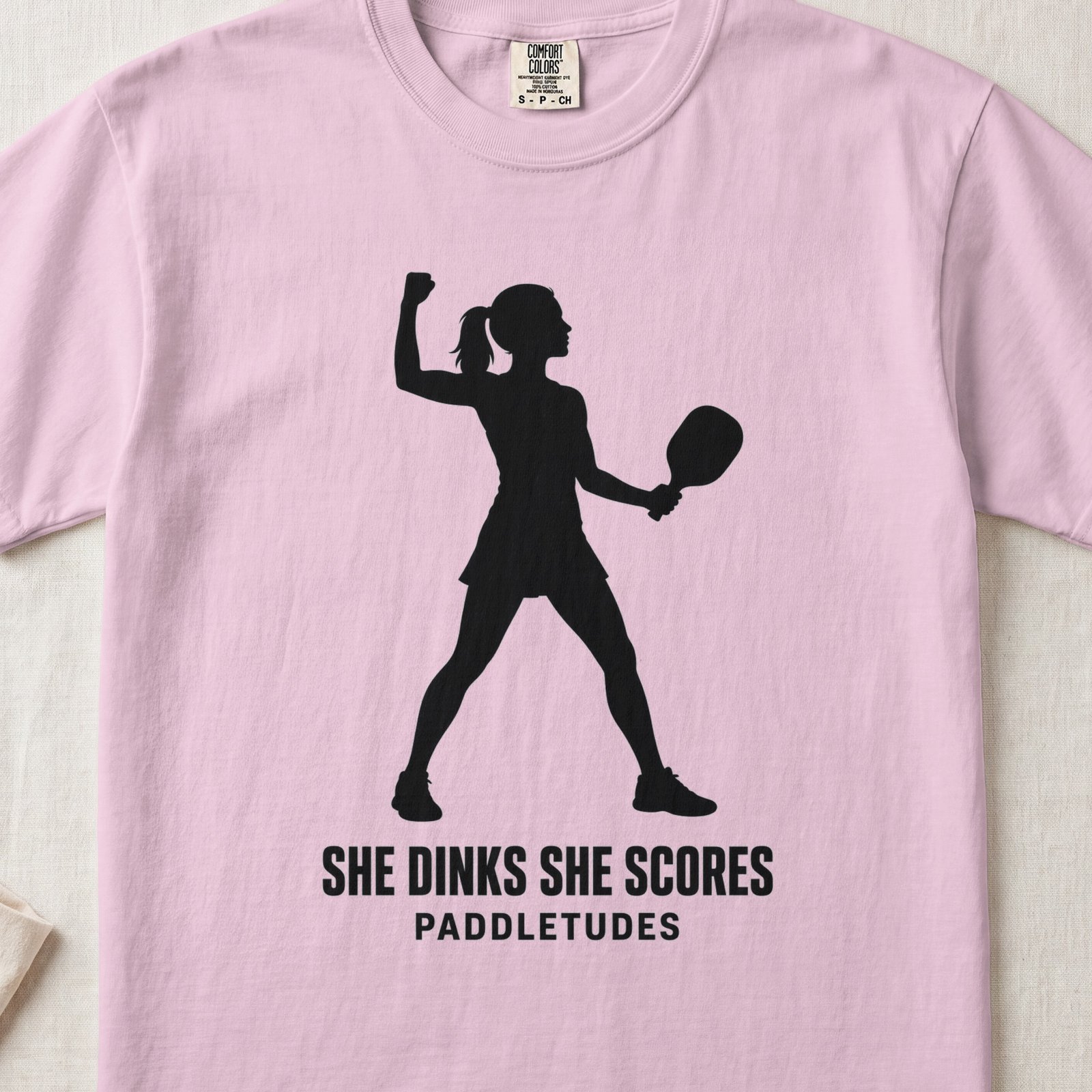
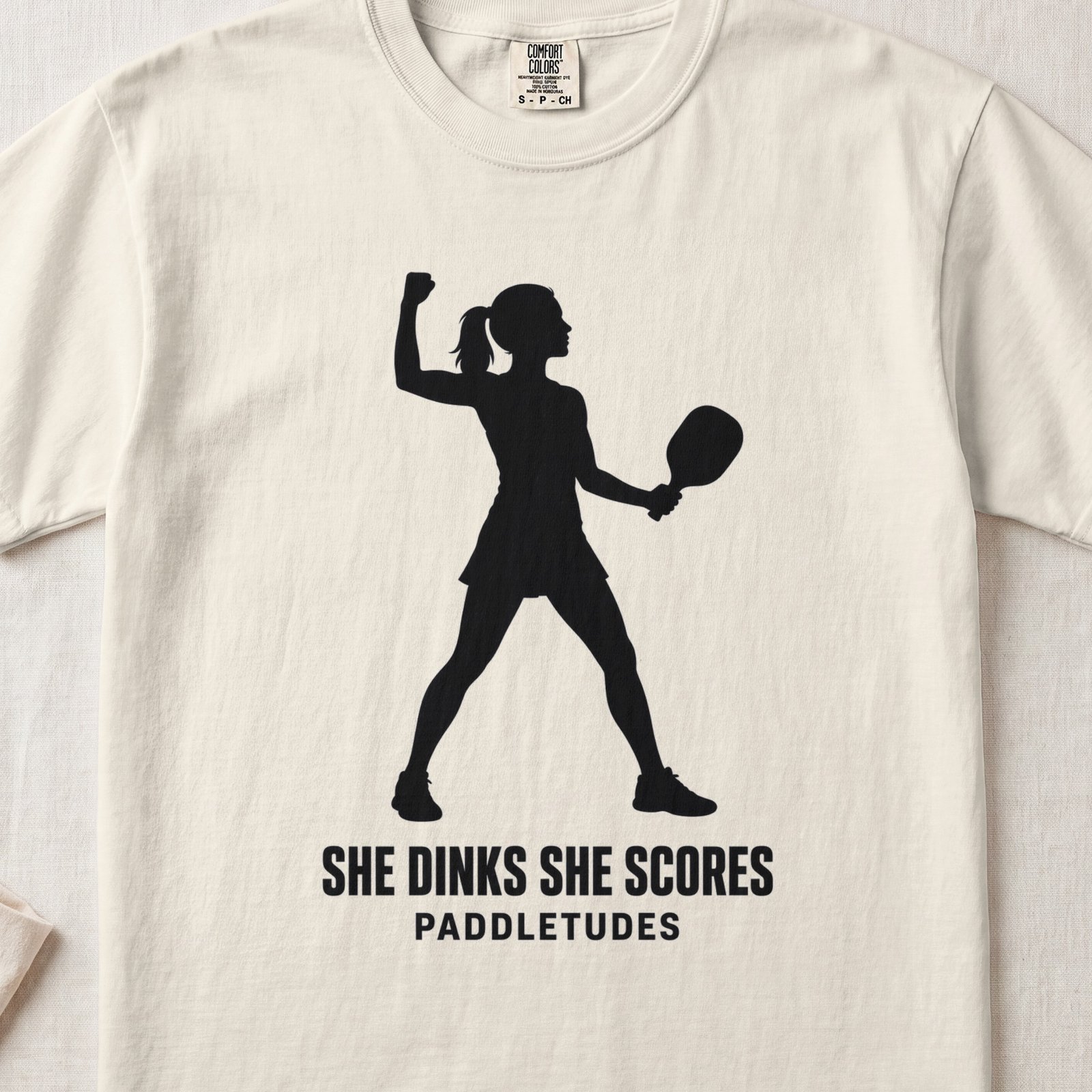
Sports Comfort Colors 1717
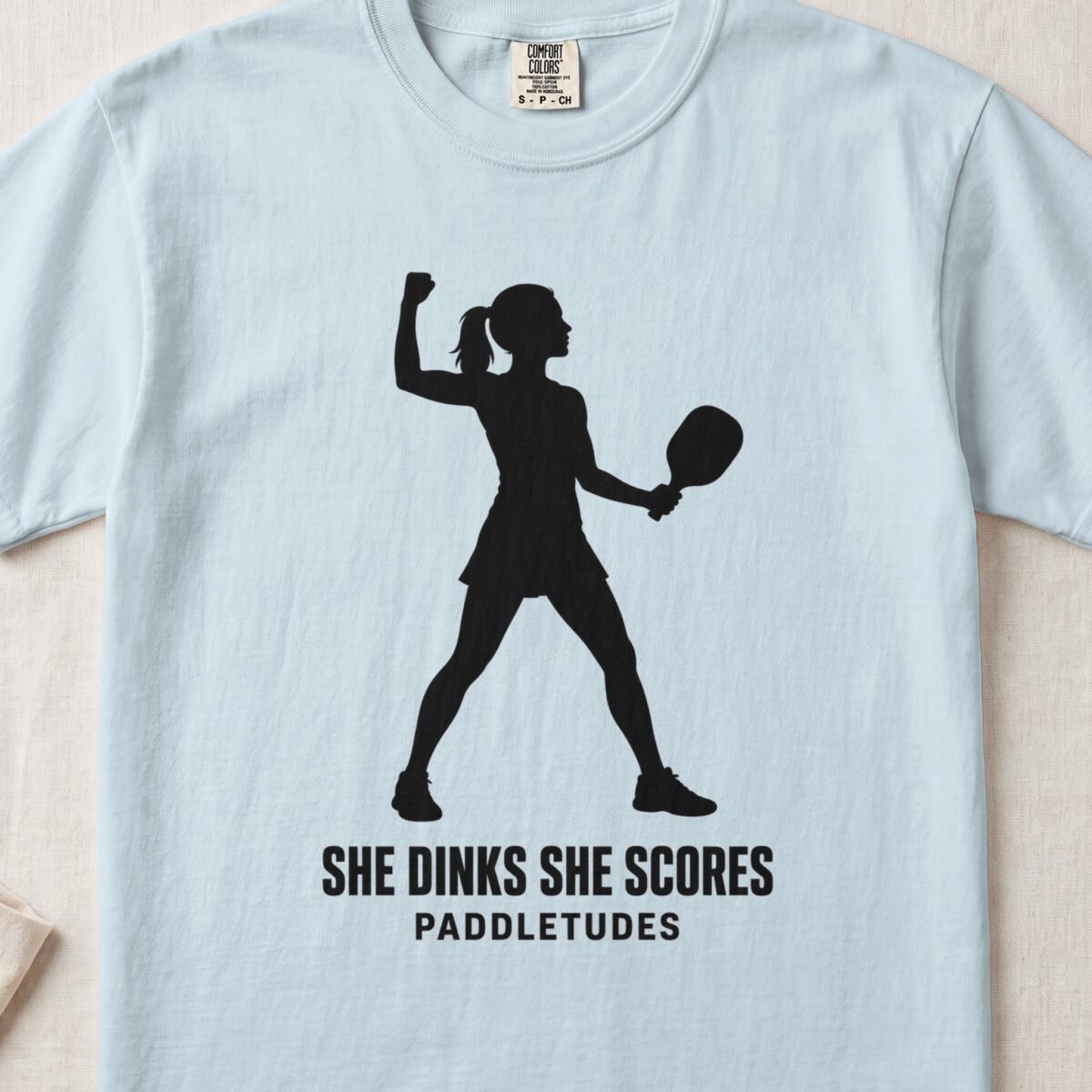
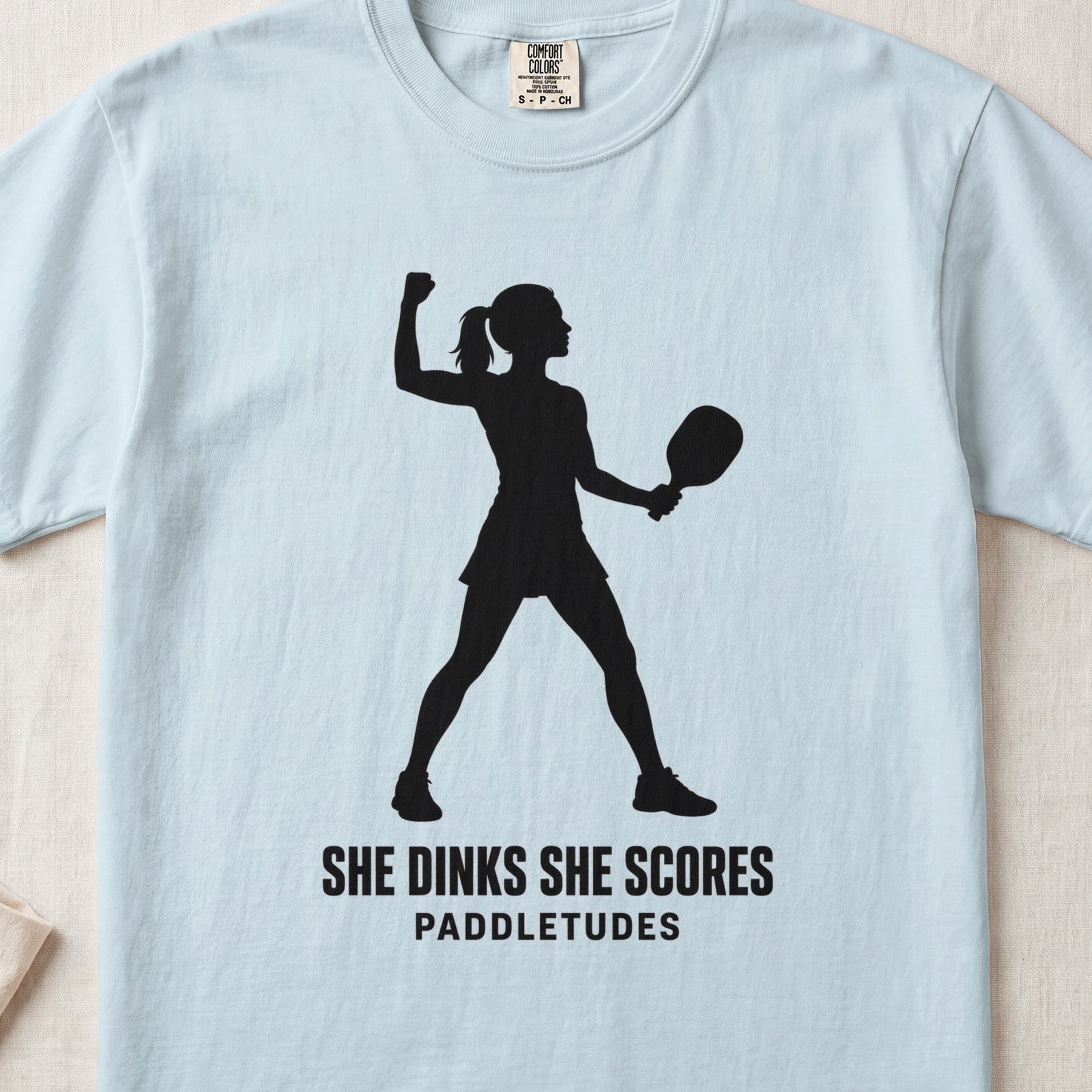
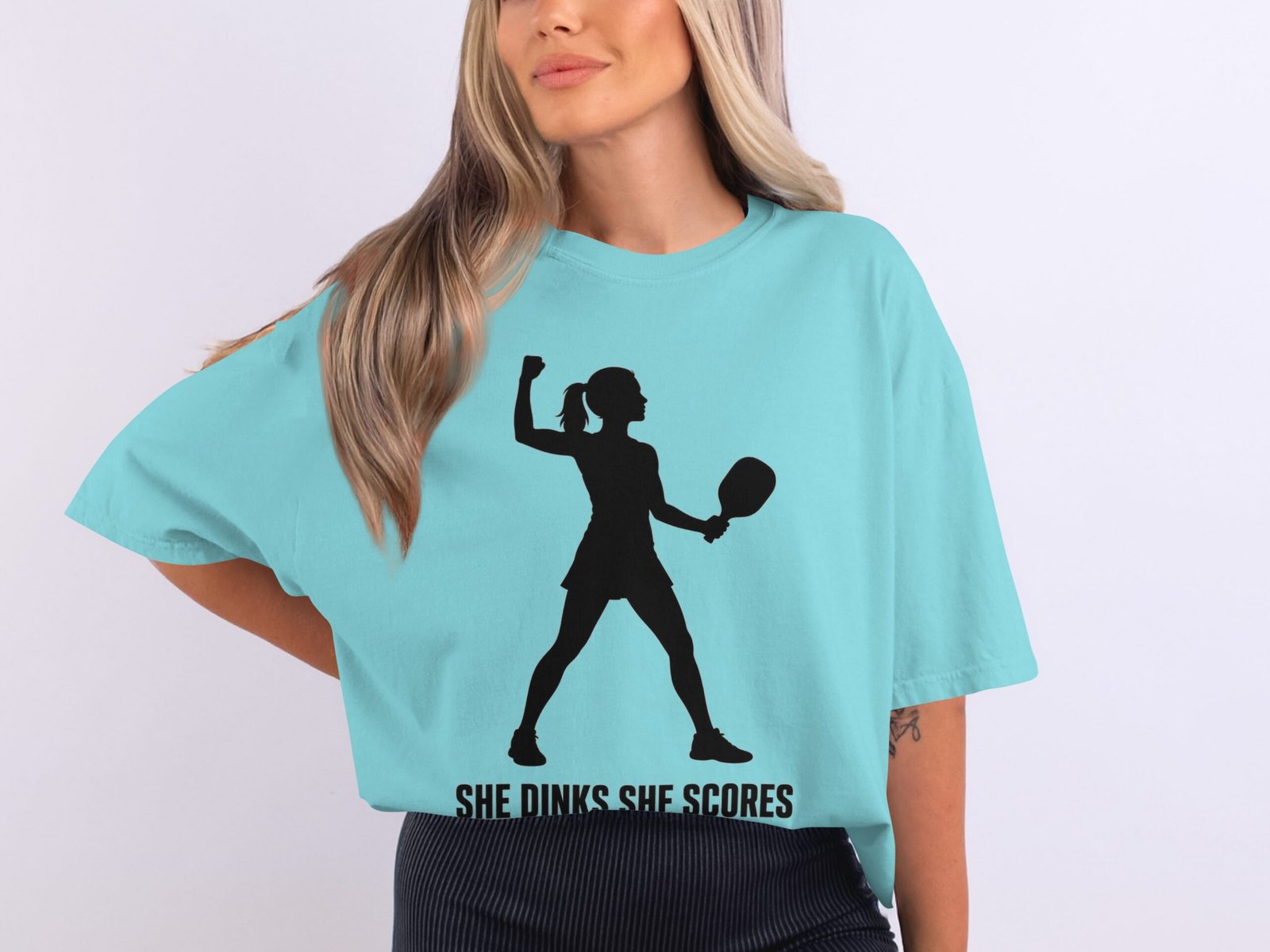
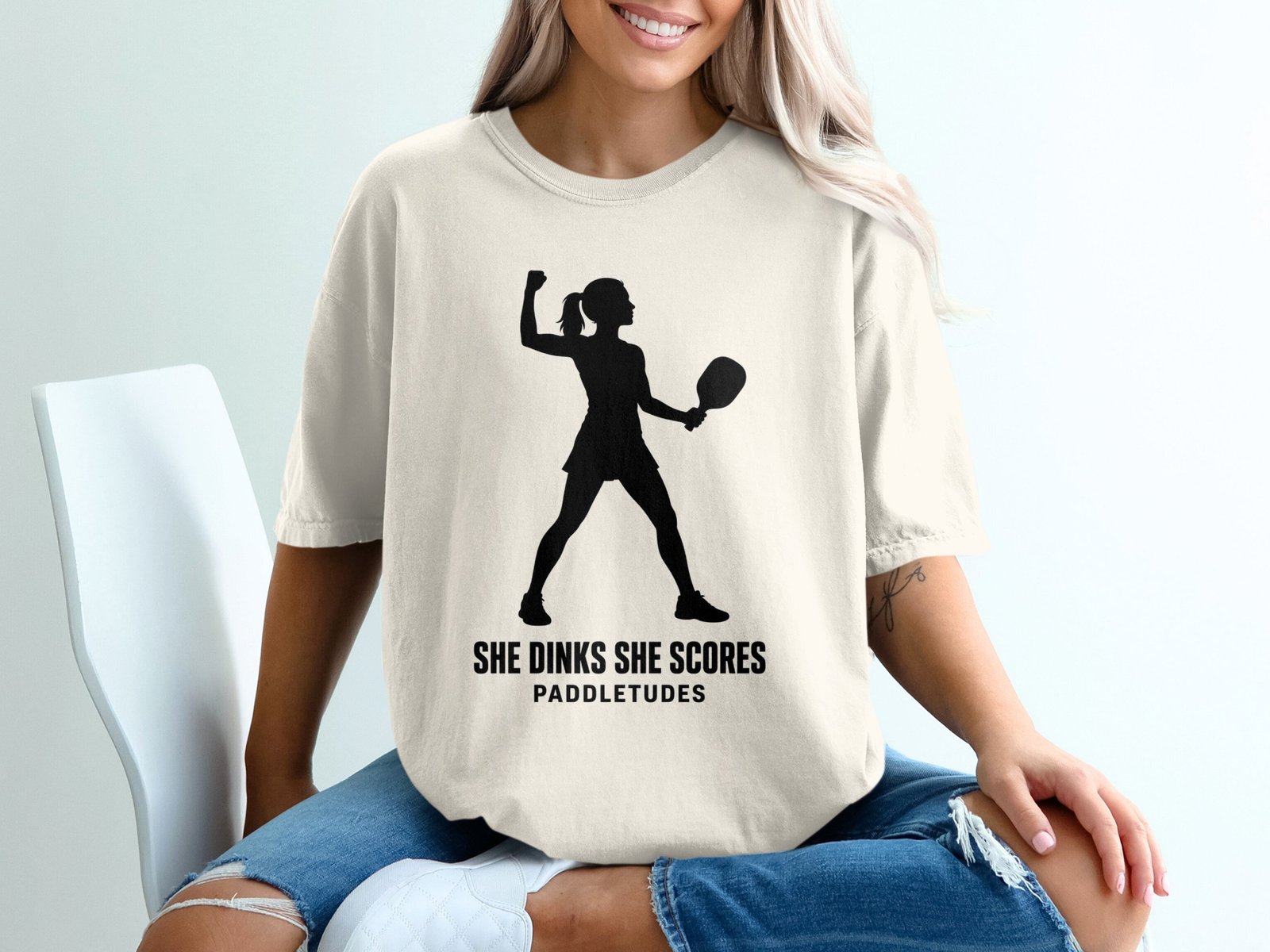
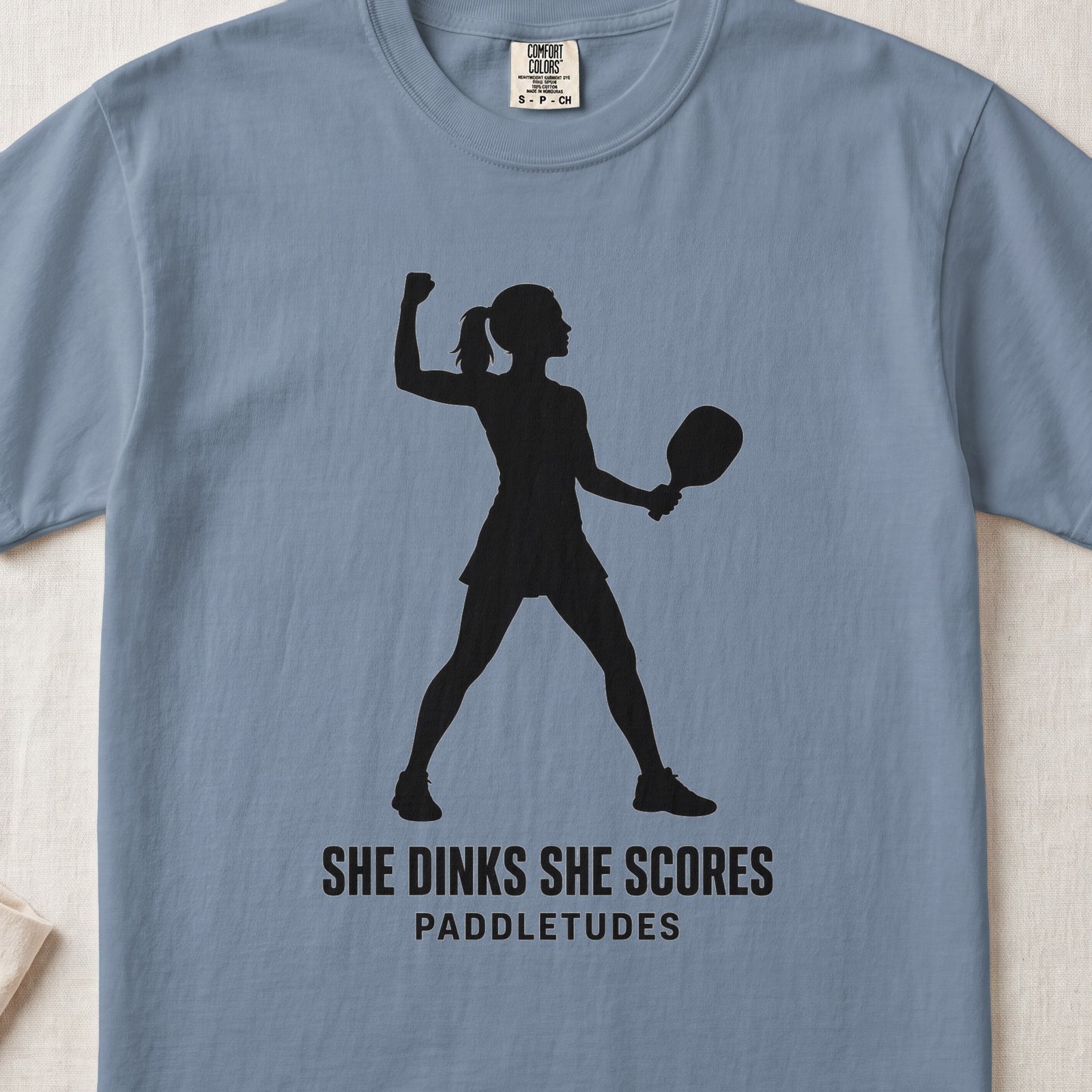
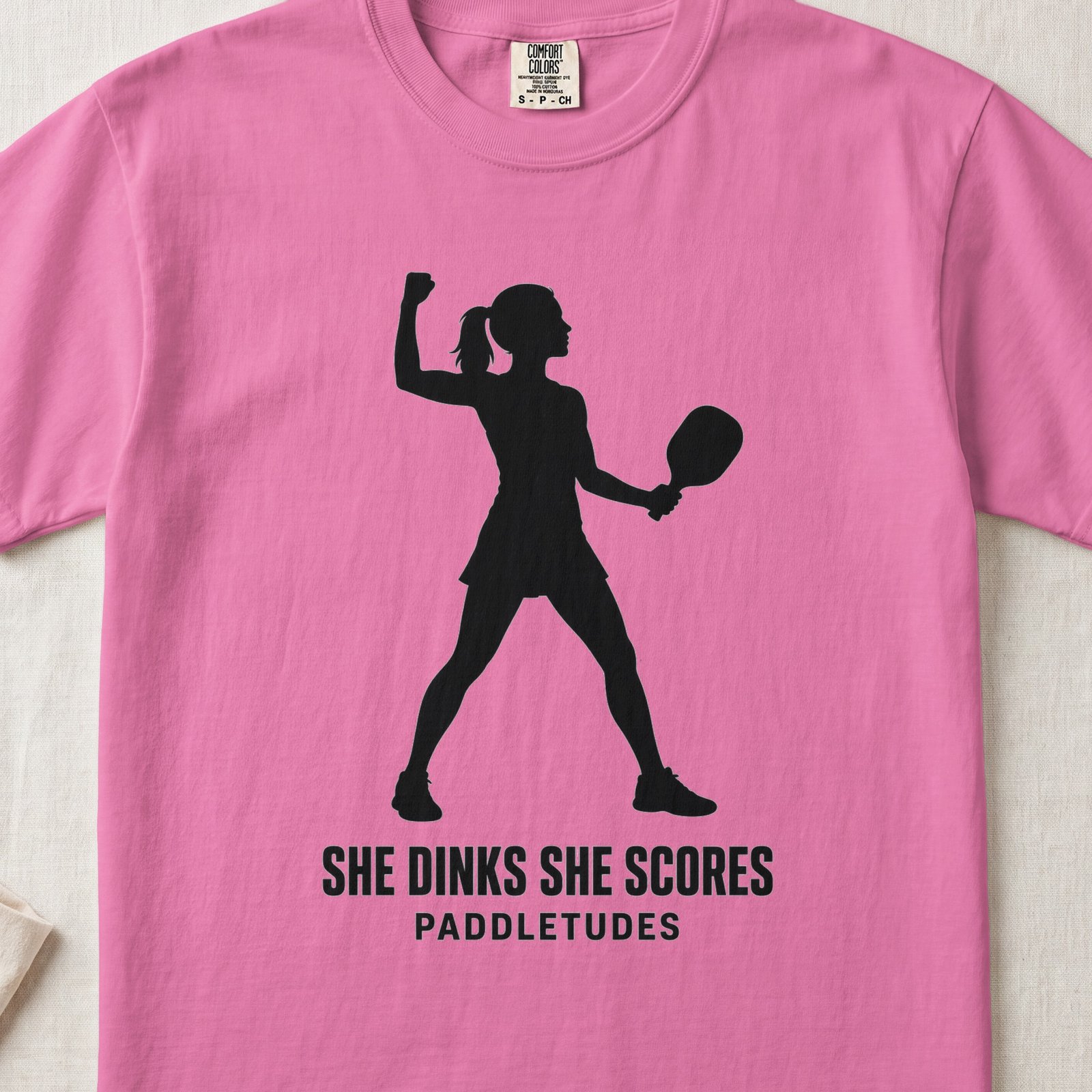
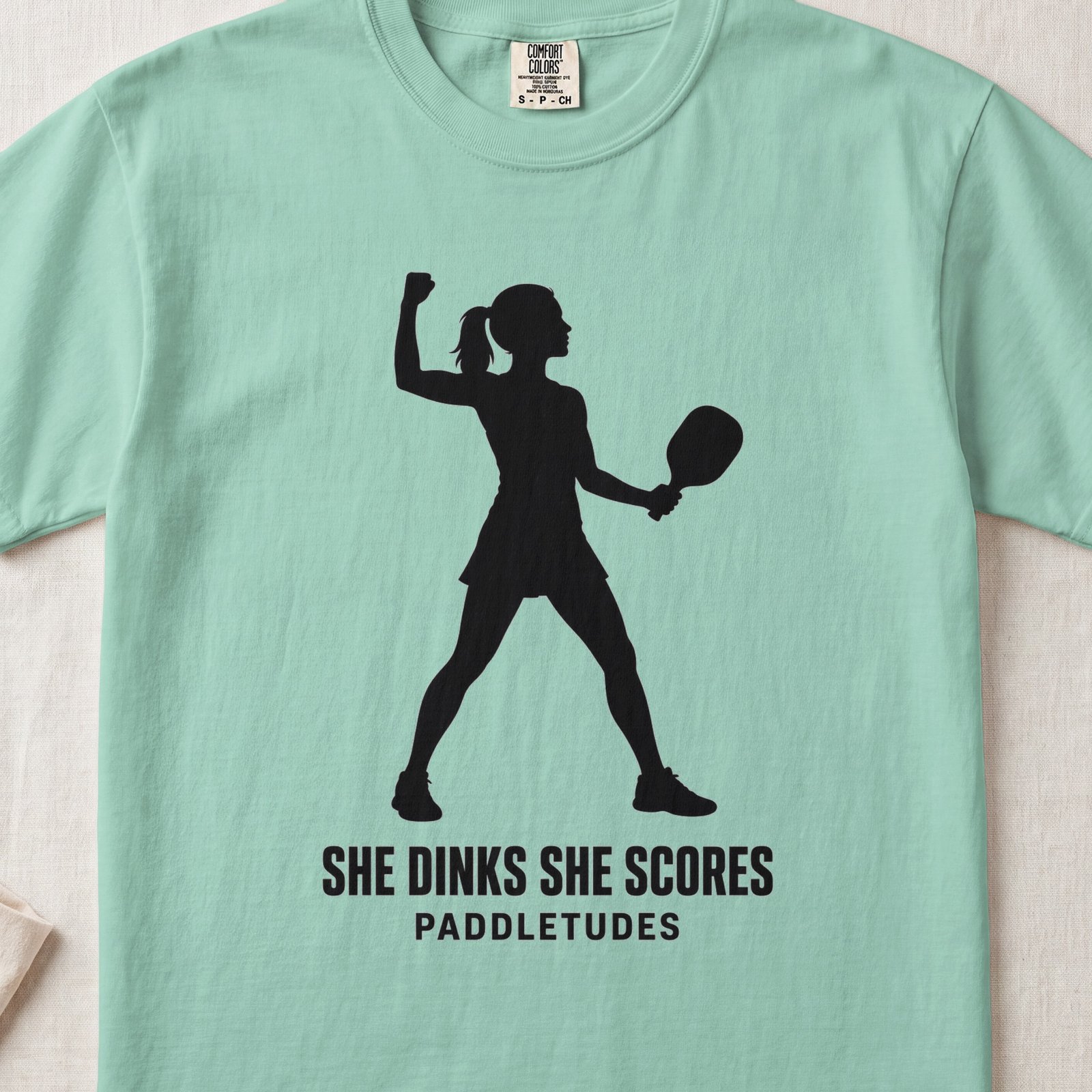
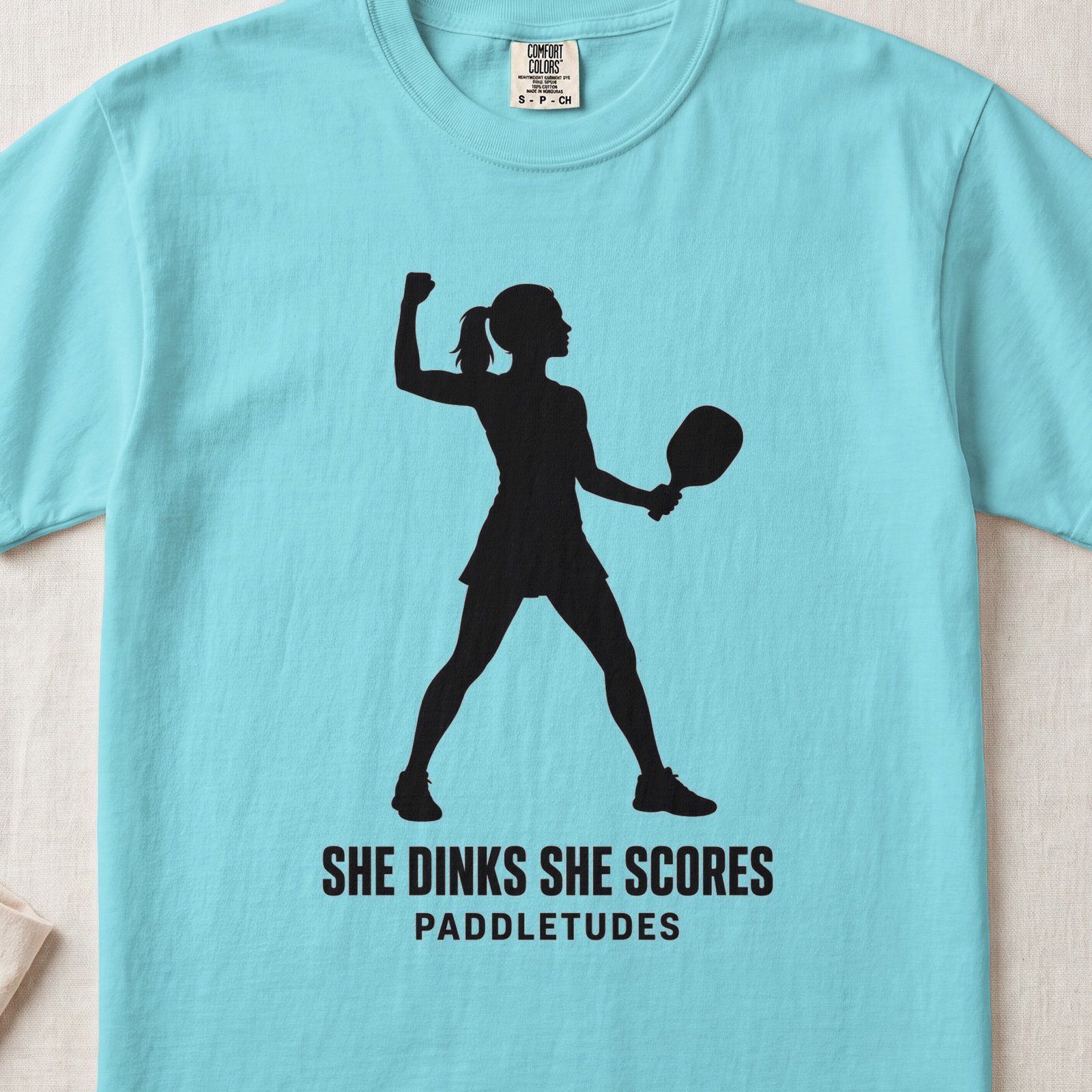
She Dinks She Scores
$29.99
- Comfort Colors 1717 heavyweight cotton
- Original design · printed to order
- U.S. print partners
She Dinks She Scores — A Pickleball Gift for Women Who Win With the Soft Game
She didn’t hit it hard. She didn’t jump. She didn’t grunt or wind up or do anything that looked like it should produce a point. She just moved her paddle three inches forward, and the ball crossed the net, died in the kitchen, and sat there while her opponent bent down and had nothing to say about it except “nice shot” through teeth that weren’t smiling.
She Dinks. She Scores. That’s the whole play.
This shirt is for the woman who has been underestimated on the court at least once — by someone who saw the soft game and assumed it meant a soft player. That assumption costs points. It costs games. And by the time the person across the net figures out that the woman with the quiet paddle and the composed footwork has been systematically dismantling their position for the last eight exchanges, the score is already out of reach.
Off the court, this is the woman who’s been the most competent person in the room more times than anyone noticed. The one whose work speaks before she does. The one who doesn’t announce what she’s about to do — she just does it, and the results make the announcement unnecessary. The She Dinks She Scores player isn’t performing. She’s producing. And the production is so quiet that the people watching from the bench don’t always see the strategy unfolding until the paddle tap happens and the scoreboard tells the story.
The women’s game in pickleball has specific tactical patterns that make dinking even more critical. In women’s doubles, dink rallies tend to run longer than in men’s doubles because both teams are more patient, more disciplined, and more willing to let the soft game develop before forcing the action. The player who breaks first — who speeds up from a bad position, who tries to muscle through a rally that demands touch — usually loses the point. This creates an environment where feel, placement, and composure separate the levels more than power or athleticism.
The women who dominate at 4.0 and above are almost always elite dinkers who can also drive when the opening appears. The opening appears because the dink created it. Not the other way around.
The gear connection here is about control, not power. A paddle with a thicker core for absorbing pace — 16 millimeters — and a textured face for spin on low dinks is the standard loadout. Joola’s Scorpeus shape gives a wider hitting surface with a sweet spot that forgives the off-center contacts that happen during extended rallies. Selkirk’s widebody models are built for the same purpose — maximum feel at the kitchen line, where the game this shirt celebrates is played.
At Pictona near Daytona Beach, the women’s open play sessions and league nights run some of the longest dink rallies you’ll see at any facility in the country. At community courts across the Pickleheads map, the woman wearing this shirt is the one whose games run longer and whose opponents leave the court wondering what just happened. The match didn’t feel hard. The rallies didn’t feel fast. But the score said 11-4 and nobody can pinpoint the moment it went sideways.
If you play on a women’s league team and the captain built the identity around the soft game — the person who drilled the dink into every warmup, corrected paddle angles during practice, and proved in the bracket that patience beats power — this is the team gift. Matching shirts for the lineup. Different sizes. Same statement. It also works for the mixed doubles partner whose dink game keeps getting overlooked because her partner’s drives get all the applause. This shirt corrects that.
For the touch that makes the scoring dink possible, Can’t Teach Touch is the natural companion — same skill set, different declaration. For the humor version of the same soft-game pride, Dink Responsibly frames the philosophy as a PSA. And for the group identity when the whole squad shows up together, Ladies Who Dink is the team shirt for the women who’ve turned the soft game into a collective weapon. The USA Pickleball community is growing fastest among women players, and the women leading that growth are the ones whose dinks land exactly where they decided — quietly, precisely, and always for the point.
Printed on a Comfort Colors 1717 garment-dyed heavyweight tee with water-based DTG ink — sizing and care details here.
How Do You Win a Dink Rally in Pickleball
Change one variable at a time — direction, depth, or pace — until the opponent’s adjustment is a fraction too slow and the ball sits up. A dink rally isn’t a holding pattern. It’s a slow-motion chess match where each shot moves the opponent slightly out of position.
The practical pattern: two or three cross-court dinks to establish rhythm, then a redirect down the line that pulls the opponent laterally. They recover, but their weight is shifted. The next cross-court goes slightly shorter than the previous ones — now they’re reaching forward and off-balance. That’s the ball that sits up. That’s the speed-up opportunity. The rally lasted eight shots. The winning shot was the eighth. The first seven built it.
The biggest mistake in dink rallies is trying to win on a single shot. Players see a ball they think they can attack and go for it — but the ball was below the net and the angle wasn’t there. The speed-up goes into the tape or gets blocked into open court. Patience is the hardest skill to teach. Harder than paddle angle. Harder than footwork.
The player who wins the dink rally is almost always the player who was willing to hit one more soft shot than the opponent. One more time. One more exchange. Let the error come to you instead of forcing one for yourself. The player wearing this shirt figured that out, and the scoreboard keeps confirming it.
What Makes a Good Dink in Pickleball
A good dink peaks on your side of the net and descends into the opponent’s kitchen with minimal bounce, landing at or below their knee height. It forces an upward return, which limits the opponent’s options to another dink or a high-risk speed-up. Three variables separate a good dink from a mediocre one: height over the net, landing depth within the kitchen, and placement relative to the opponent’s body.
Height is the most critical. A dink that crosses the net six inches above the tape gives the opponent nothing to attack — they’re playing the ball from below net level, and every shot they produce goes upward. A dink that crosses two feet above is an invitation. That extra eighteen inches turns an unattackable ball into a speed-up opportunity. The difference between those two outcomes is often less than an inch of paddle face angle at contact.
This is why grip pressure matters so much. A tight grip eliminates the micro-adjustments that control the paddle face, and without those adjustments, height varies wildly from shot to shot. Soften the grip to a three or four out of ten and the precision returns.
Placement is the second variable. A dink aimed at the opponent’s feet is harder to return than one aimed at center kitchen, because the feet shot forces a bend-and-scoop from an awkward contact point. Cross-court dinks have a longer path over the net — more margin, more angle. Down-the-line dinks travel shorter and arrive faster — less margin, harder to defend. The best dinkers alternate between both, using the cross-court to build the rally and the down-the-line to break the opponent’s rhythm. A good dink isn’t one shot. It’s the right shot for that moment in the rally, chosen and executed before the opponent knows which one is coming.
-
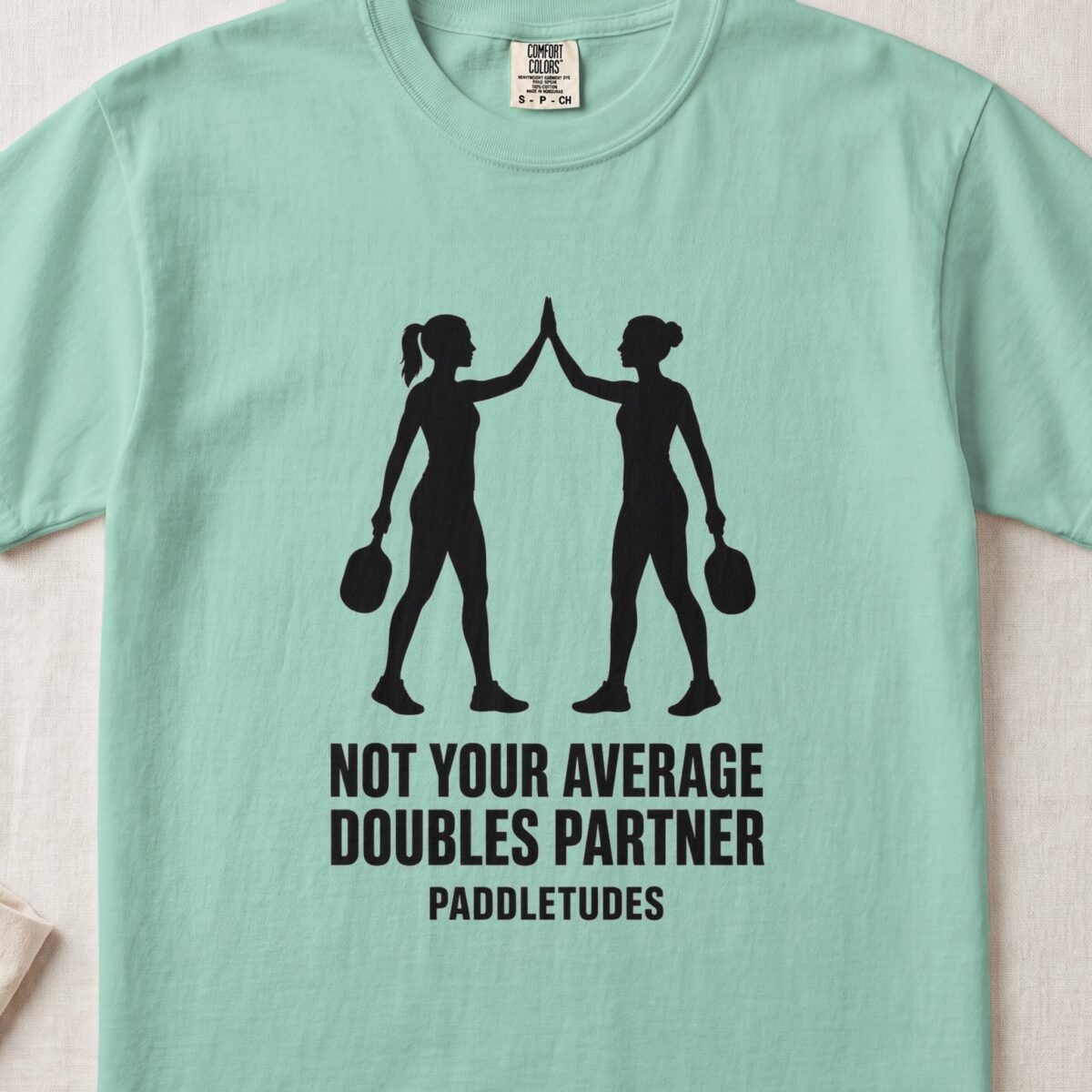
Not Your Average Doubles Partner
$29.99 Select options This product has multiple variants. The options may be chosen on the product page -
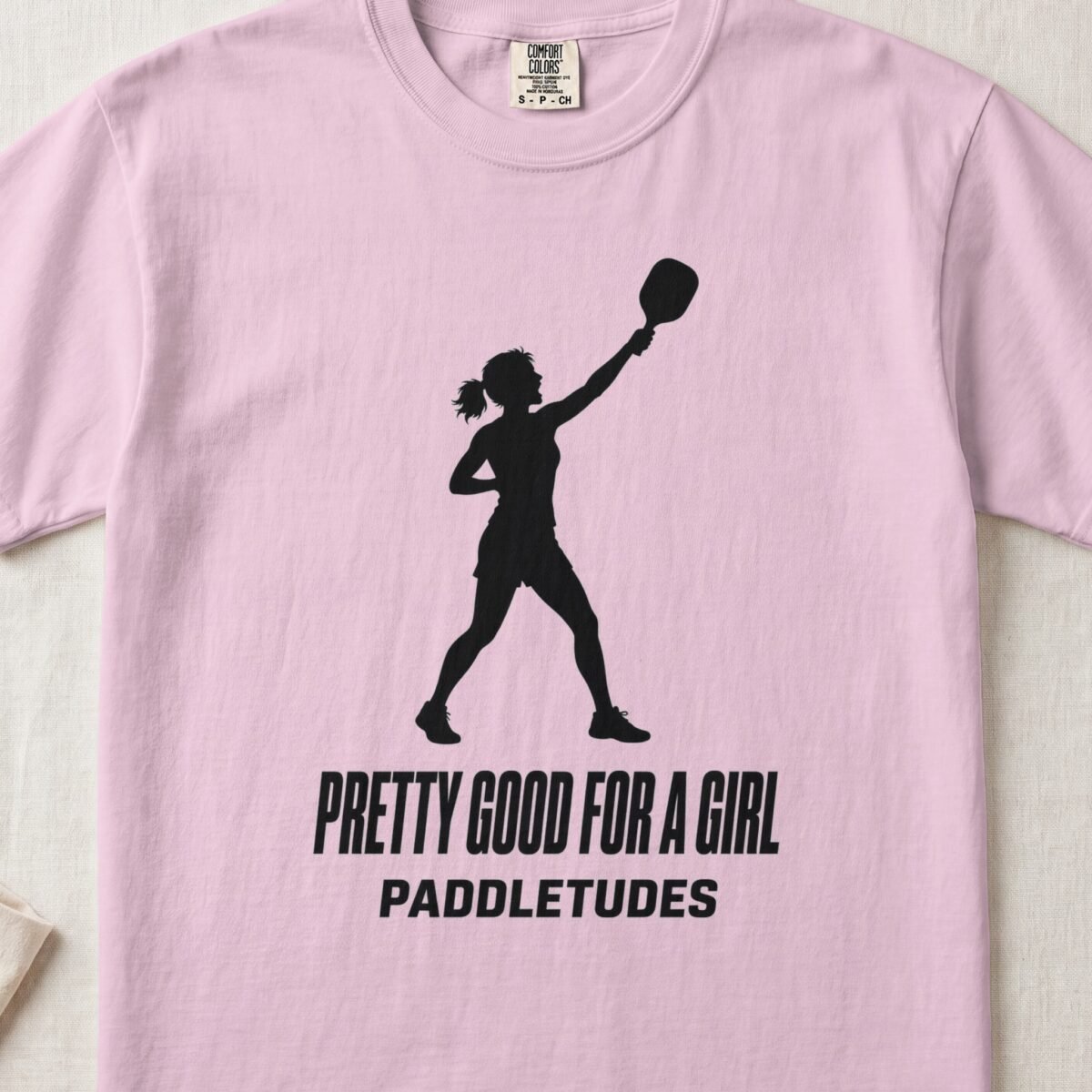
Pretty Good For A Girl
$29.99 Select options This product has multiple variants. The options may be chosen on the product page -
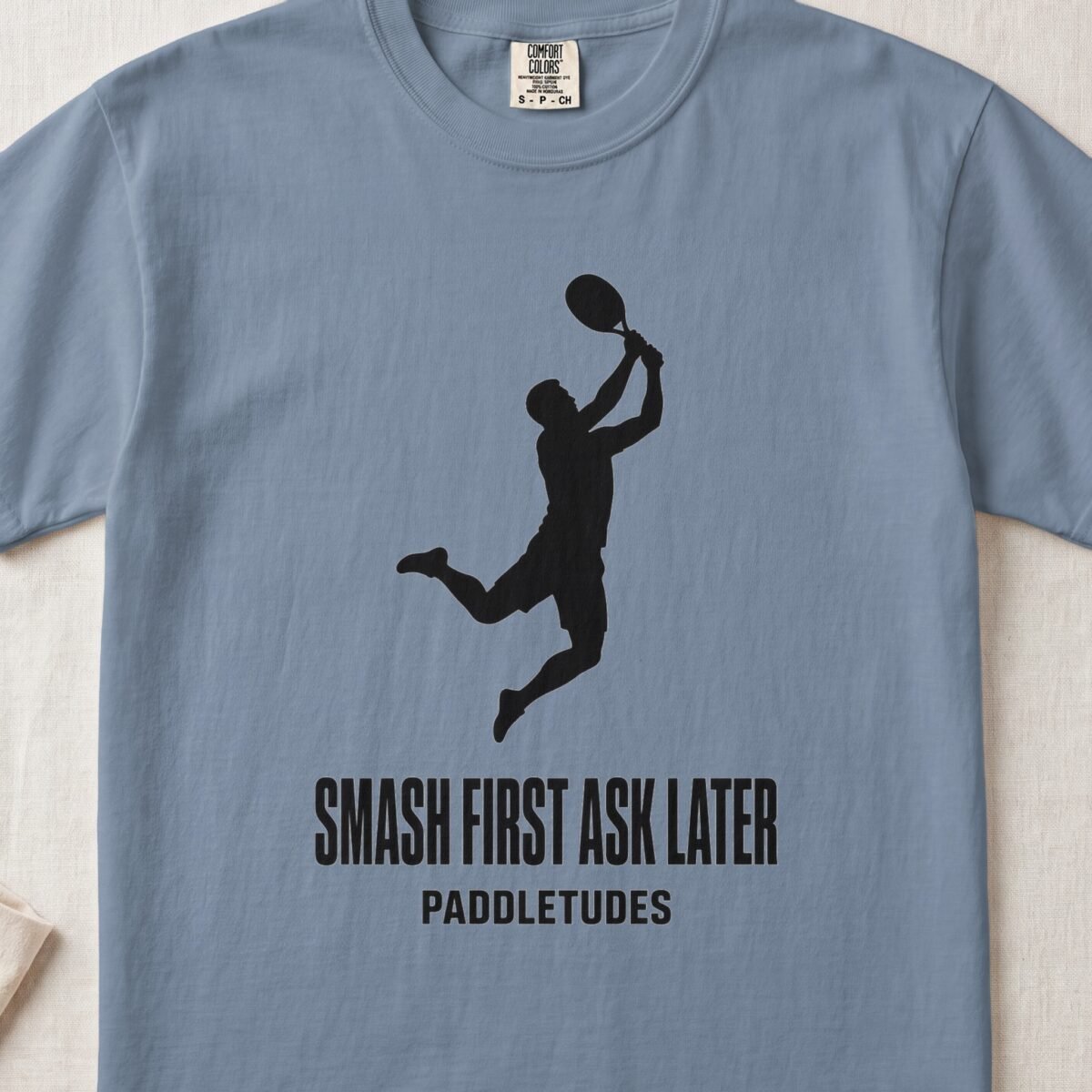
Smash First Ask Later
$29.99 Select options This product has multiple variants. The options may be chosen on the product page