Charleston Says Sorry After Winning and Means Every Word
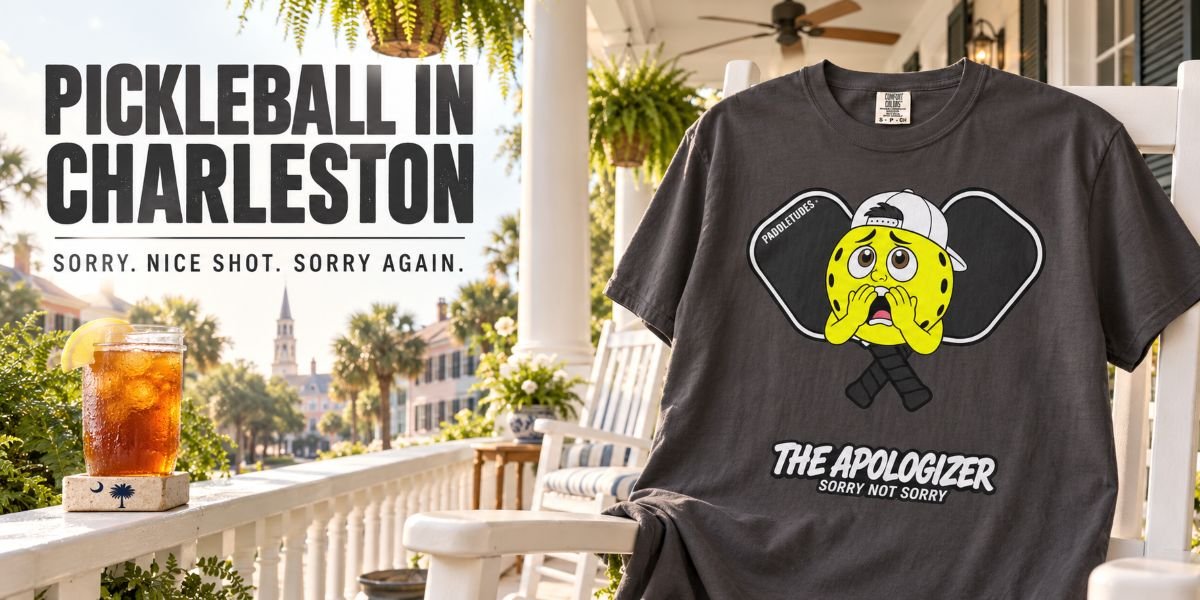
Pickleball in Charleston has a sound you won’t hear anywhere else. Not the crack of the paddle or the bounce off the court. Those are universal. The sound specific to the Lowcountry is a quiet “sorry” muttered after a winning shot, followed by a tap of paddles, followed by a genuine question about whether everyone is still having a good time. It happens at the outdoor courts at The Pickle Bar in Summerville. It happens during social round-robins at LTP on Daniel Island. It happens under the live oaks at Seabrook Island where the Spanish moss hangs low enough that you could reach up and touch it between points. Charleston plays pickleball the way it does everything else: politely, socially, and with an apology loaded for any situation where someone might have accidentally enjoyed winning too much.
That is not a criticism. It is the reason the scene here works.
Charleston Pickleball Sounds Like a Cocktail Party with Paddles
The Pickle Bar in Summerville sits on 40,000 square feet that someone designed for the specific purpose of making pickleball feel like a night out. Nine outdoor courts, four of them covered. A casual restaurant and sports bar. A game yard. A live music stage. Their tagline is “Eat. Drink. Play. Repeat.” and the order of those words is not accidental. The eating and drinking come first. The playing happens in between. The repeating is what brings people back three times a week until they’ve joined a league and signed up for a tournament and started introducing themselves as pickleball players to strangers at dinner parties.
Court bookings at The Pickle Bar run through a mobile app, and they offer leagues, clinics, open play sessions, and tournaments on a regular calendar. The league registration fills because the format is right for this market: competitive enough to matter, social enough that the post-match conversation lasts longer than the match. They have over 7,000 likes on Facebook, which for a single pickleball facility in a mid-size metro is significant. That number represents something about how Charleston adopts activities. This city doesn’t just participate. It builds community around the participation. The leagues fill. The round-robins draw regulars who greet each other by first name. The fried green tomatoes with pimento cheese and bacon jam get ordered between games, and the conversation at the table is as much about the last rally as it is about someone’s daughter’s graduation or the contractor who’s been putting off their kitchen renovation since February.
Over in Mount Pleasant, Crush Yard fills the indoor gap with what they call “pickleball meets nightlife.” Food, craft drinks, high-energy leagues. Where The Pickle Bar leans into the outdoor Lowcountry social vibe, Crush Yard leans into energy. Friday night league play there has a different volume than Tuesday morning open play at a public park, but the culture is still recognizably Charleston. People are competitive. People also say “nice shot” and mean it.
Where the Lowcountry Actually Plays
The facility that carries the most instructional weight in the Charleston area is LTP Pickleball on Daniel Island. LTP sits on the same campus as Credit One Stadium, home of the Charleston Open tennis tournament, which just became the first standalone WTA 500 event to match its purse to comparable men’s events. That tennis pedigree shows up in how LTP runs its pickleball programs. Professional coaching clinics. Structured social round-robins organized by skill level. Multi-day intensive camps for players who want measurable improvement, not just exercise. The staff treats pickleball development the way a tennis academy treats court time: seriously, with progressions and feedback and drills that have a purpose beyond making you tired. LTP also hosts Pickleball Charleston tournament events, which makes Daniel Island the closest thing the Lowcountry has to a competitive home court.
Seabrook Island Racquet Club has seven courts shaded by live oaks that have been growing longer than the sport has existed. This is where the resort circuit plays. Private community. Ocean breezes. A tight-knit group of regulars who treat morning pickleball like a standing appointment that happens to be the best part of their week. Kiawah Island has eight courts and instruction from staff who understand that the person across the net might have flown in yesterday from Chicago and needs to remember what it feels like to play outside in September without sweating through their shirt. These resort courts serve a demographic that overlaps almost perfectly with the Lowcountry real estate market: affluent, active, recently retired or close to it, and looking for a sport that replaces golf’s social function without requiring four hours and a tee time. Real estate agents in Charleston now list proximity to pickleball courts as a selling feature alongside beach access and school districts.
Where can I play free pickleball in Charleston, South Carolina?
Free pickleball courts in Charleston are managed by the City of Charleston Parks and Recreation department, which maintains multiple locations for indoor and outdoor play across the city at little or no cost. The city’s own website lists locations, hours, and open play schedules. These public courts attract a different crowd than the resort clubs and the eatertainment facilities. Less curated, more drop-in. The regulars at the public courts are the backbone of the scene. They play year-round, they know every crack in the surface, and they’ll invite you into a game before you finish lacing your shoes. If you’re visiting Charleston and want to feel the Apologizer culture at its purest, the free courts are where that hospitality lives without a cover charge.
The Scene That Keeps Growing
Pickleball Charleston has built itself into the connective tissue of the Lowcountry scene. They host tournaments at venues like LTP Daniel Island and The Pickle Bar. They run a Partner Finder Group on Facebook where players connect for events and leagues. Their Facebook presence sits at over 1,200 likes, and the engagement in those comments reads like a neighborhood bulletin board: who’s playing Thursday, who needs a doubles partner for the tournament in two weeks, who just moved to Summerville and wants to know where to start.
The indoor facility gap that Charleston lived with for years is closing. PickleRage opened its first South Carolina location in North Charleston at 5101 Ashley Phosphate Road, marking the franchise’s entry into the state. Indoor courts, climate control, community events, programs for every skill level. The location sits at a high-traffic intersection that sees over 71,000 vehicles a day, which is PickleRage’s way of putting pickleball directly in the path of people who haven’t tried it yet. Summerville and North Charleston are the fastest-growing suburban markets in the Charleston metro, and both are adding courts through their parks and recreation departments. The indoor option matters here more than people outside the Lowcountry realize. Charleston summers are humid in a way that makes outdoor play between noon and 4 PM feel medical. The mornings are playable. The evenings are playable. The middle of the day in July is a decision you make once and then learn from. Indoor facilities with climate control aren’t a luxury in this market. They’re what lets the scene operate twelve months a year instead of eight.
The growth pattern here is different from what you see in a market like DFW, where private capital builds 50-court mega-facilities and franchise chains open five locations at once. Charleston’s growth is more organic. A Facebook group hits 1,800 followers. A restaurant adds courts to its footprint. A resort club hires a second pickleball instructor because the first one’s schedule is booked through the season. The community is pulling the infrastructure forward, not the other way around.
-
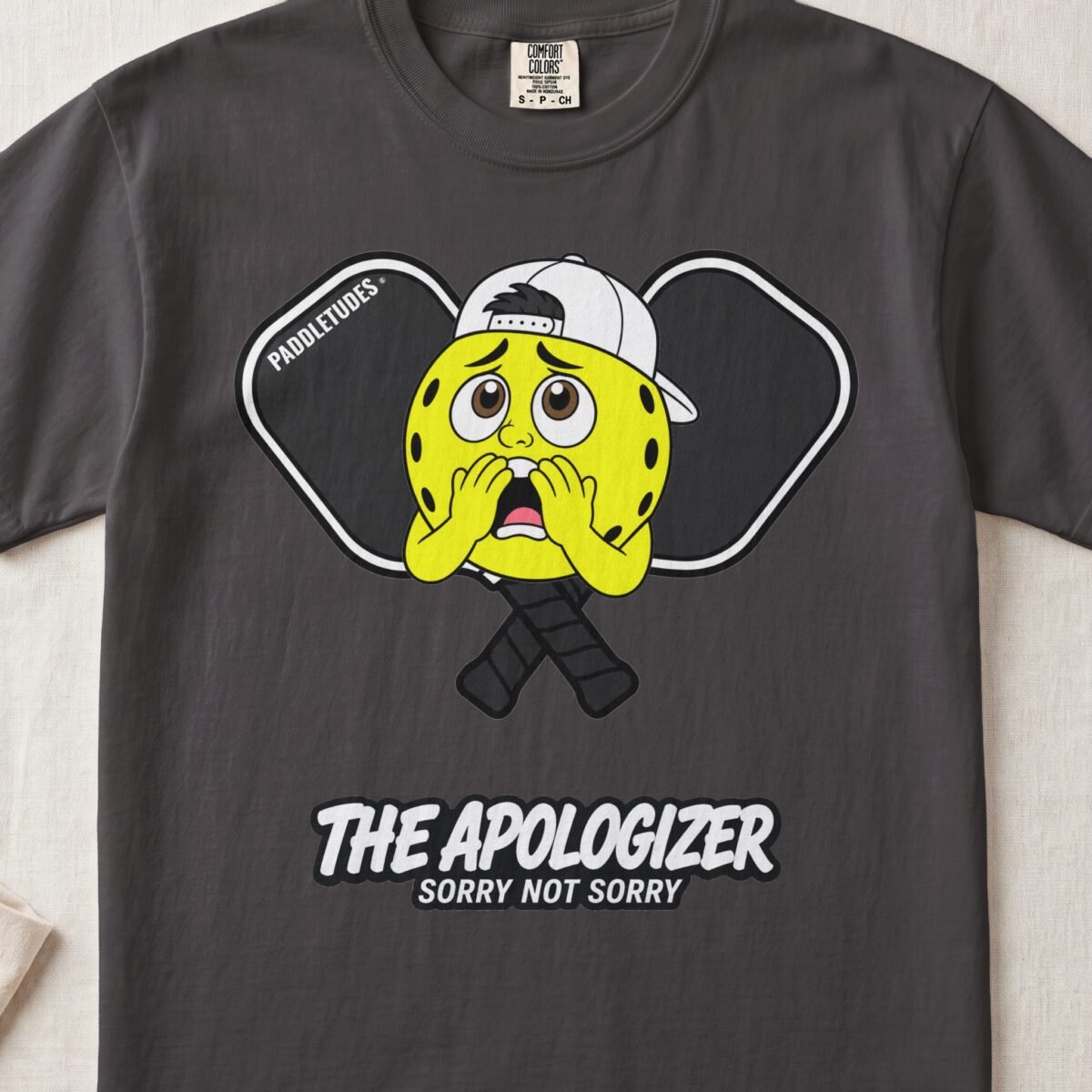
The Apologizer – Pickleball Personality
$39.99 Select options This product has multiple variants. The options may be chosen on the product page -
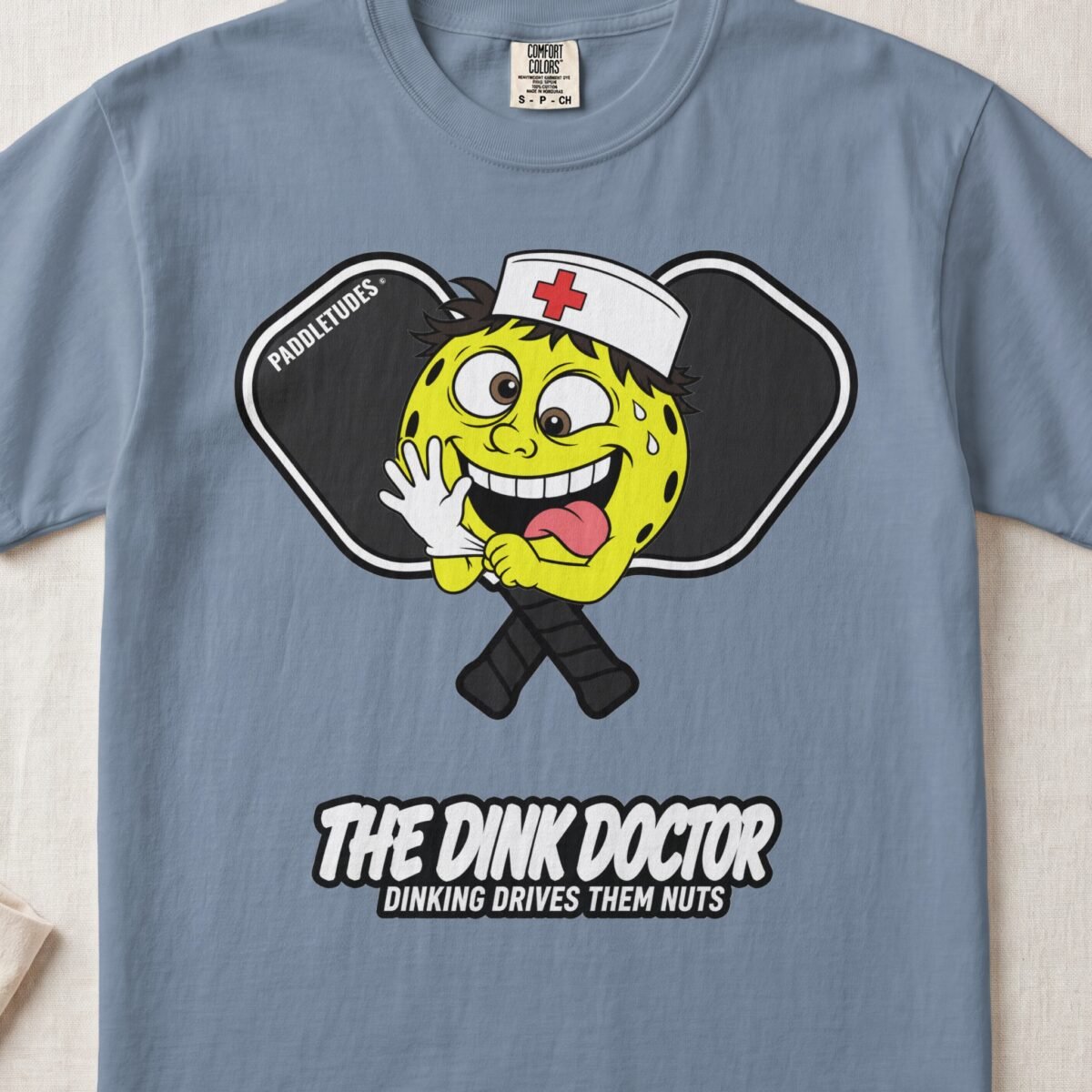
The Dink Doctor – Pickleball Personality
$39.99 Select options This product has multiple variants. The options may be chosen on the product page -
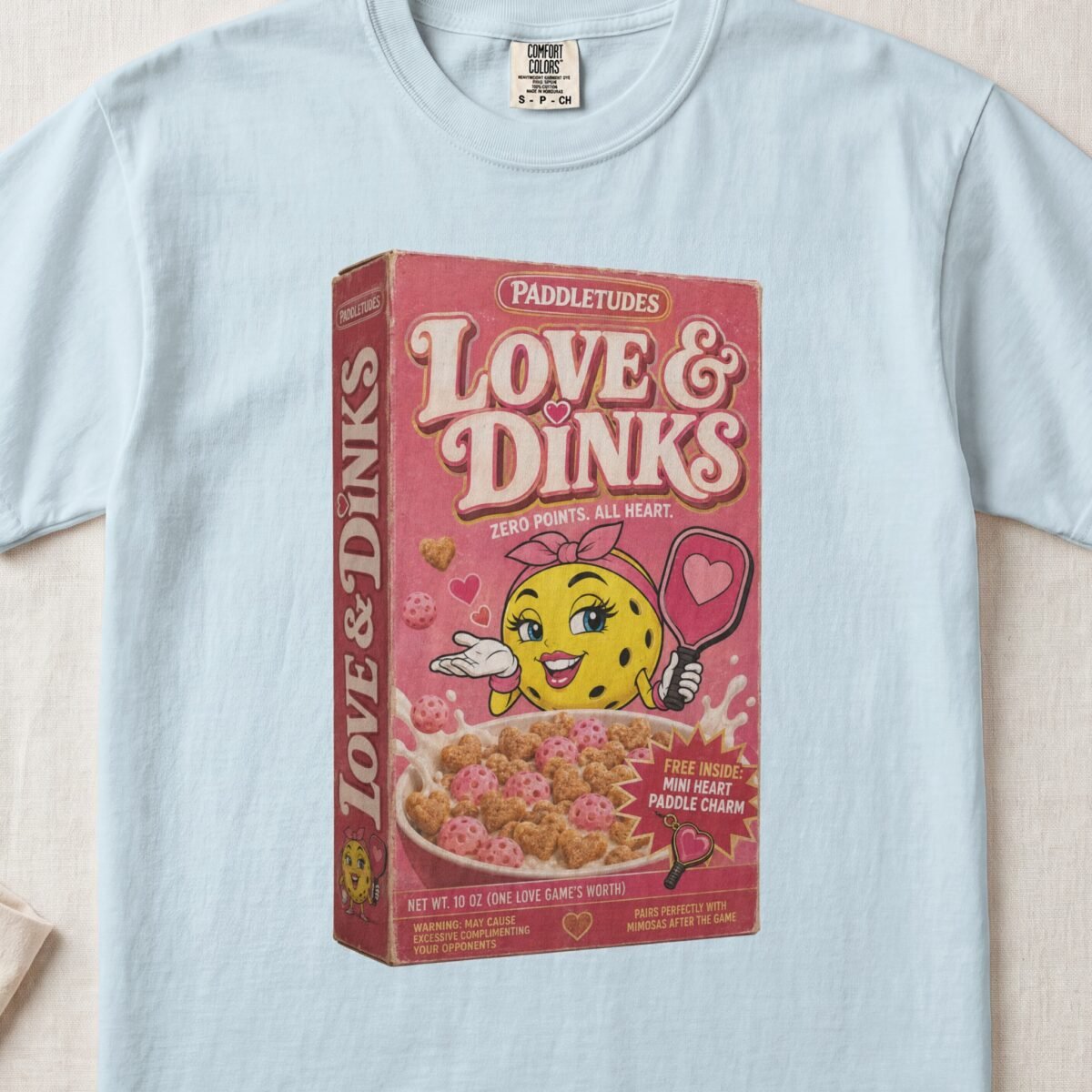
Love & Dinks
$39.99 Select options This product has multiple variants. The options may be chosen on the product page -
Dink Responsibly
$29.99 Select options This product has multiple variants. The options may be chosen on the product page
What the Apologizer Says About This City
Every pickleball court in America has player archetypes. The Body Bagger who aims at your chest and grins about it. The coach who can’t stop giving unsolicited advice between points. The banger who treats every shot like a personal vendetta. Charleston has all of those. But the player this city produces in higher concentration than anywhere else is the Apologizer.
The Apologizer says sorry after a net cord that won him the point. He says sorry after an ace. He says sorry when his partner hits a winner, because he feels like the setup shot was a little aggressive and maybe that wasn’t fair. He has apologized to opponents for beating them. He has been told to stop apologizing more times than he has been told to watch the kitchen line. Nothing changes. The apology comes out before the ball lands because somewhere in his wiring, winning a point in a recreational game feels like an imposition on the other person’s morning.
That sounds like a weakness. It is the opposite.
The Apologizer is the most requested doubles partner at every facility in Charleston because underneath the constant sorrys is a person who cares more about the experience everyone is having than he cares about the score. He never trash talks. He never argues a line call. He never makes his partner feel bad about a missed shot. He absorbs mistakes the way the soft-game players absorb pace. When someone has had a rough morning and just needs a partner who’s going to be kind to them for an hour, they look for the Apologizer. He delivers every time, with a side of forty-seven sorrys nobody asked for and everybody secretly finds endearing.
I’ve played with this person. You have too, if you’ve spent any time on courts south of the Mason-Dixon line. What separates the Charleston version from the apologizers in other cities is that the culture here reinforces it instead of trying to coach it out. Nobody at a Lowcountry round-robin is going to tell you to stop being polite. Nobody is going to suggest that your game would improve if you developed a killer instinct. The community rewards the behavior because the community was built by people who genuinely prefer kindness over intensity on a court. That preference is not soft. It is a choice made by adults who already have enough competition in their lives and chose pickleball specifically because it offered something different.
What are some unspoken rules of pickleball etiquette?
The unspoken rules of pickleball etiquette in Charleston include calling the score clearly before every serve, tapping paddles after every game regardless of outcome, acknowledging an opponent’s good shot sincerely rather than performatively, and rotating on and off courts fairly during open play. These rules exist in the national pickleball culture, but Charleston enforces them at a level that visitors from more competitive markets sometimes find startling. At Lowcountry courts, the paddle tap after a game isn’t a formality. It’s a handshake. The “nice shot” after a winner isn’t strategy. It’s manners. And the apology after a net cord isn’t weakness. It’s Charleston.
-
The Coach – Pickleball Personality
$39.99 Select options This product has multiple variants. The options may be chosen on the product page -
Mystery Partner
$39.99 Select options This product has multiple variants. The options may be chosen on the product page -
Court Side Radio
$39.99 Select options This product has multiple variants. The options may be chosen on the product page -
Kitchen Confidential
$29.99 Select options This product has multiple variants. The options may be chosen on the product page
There’s a court at Seabrook Island where the live oaks form a canopy thick enough that the light comes through in patches. The salt air sits on your skin. The only sounds are paddles, the occasional laugh, and the rustle of Spanish moss when the breeze comes off the water. Someone hits a backhand passing shot that catches the corner, and before the ball stops rolling, the player who hit it is already raising a hand and saying sorry. His opponent laughs. His partner shakes her head. He means it completely. Nobody wants him to stop.