
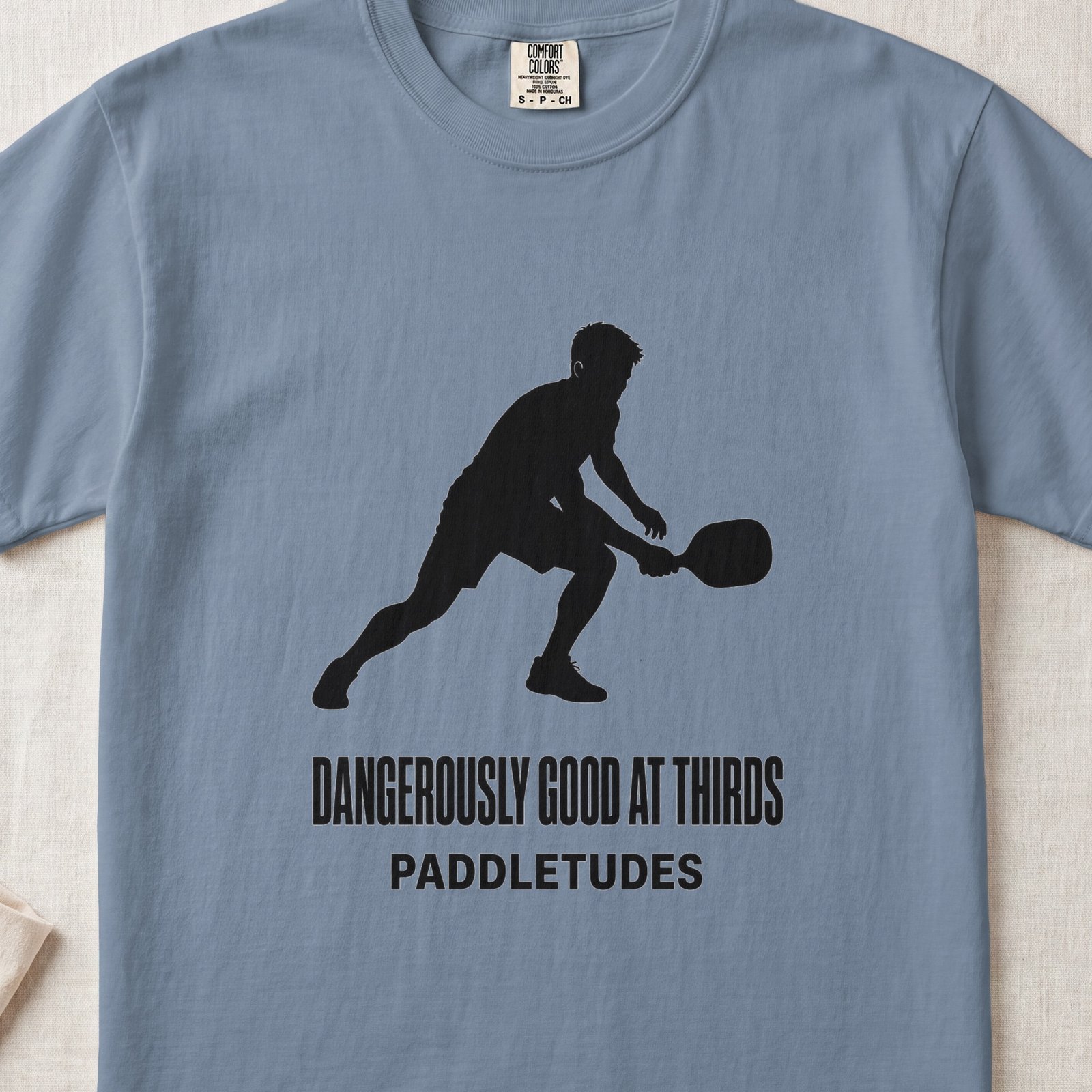
Sports Comfort Colors 1717
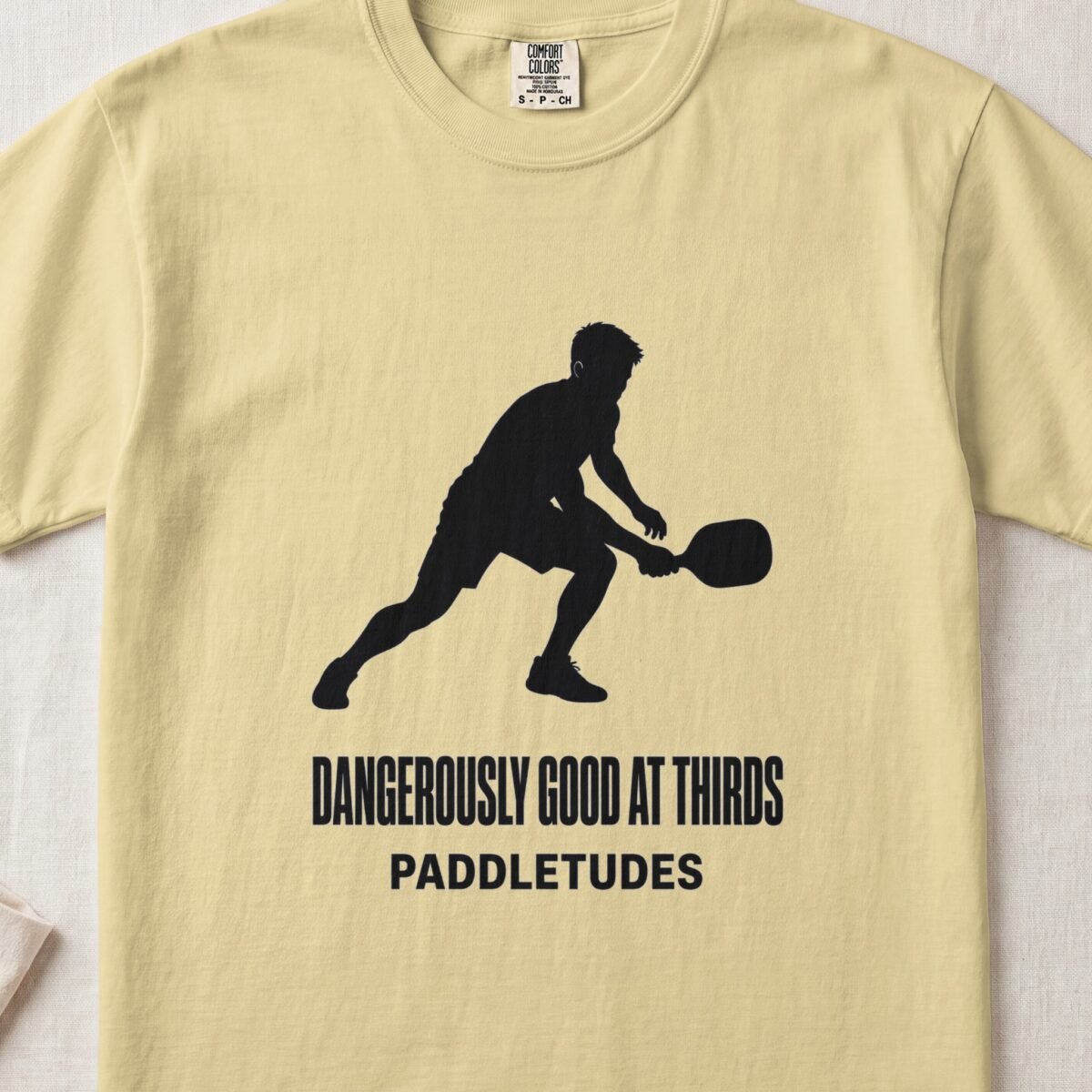
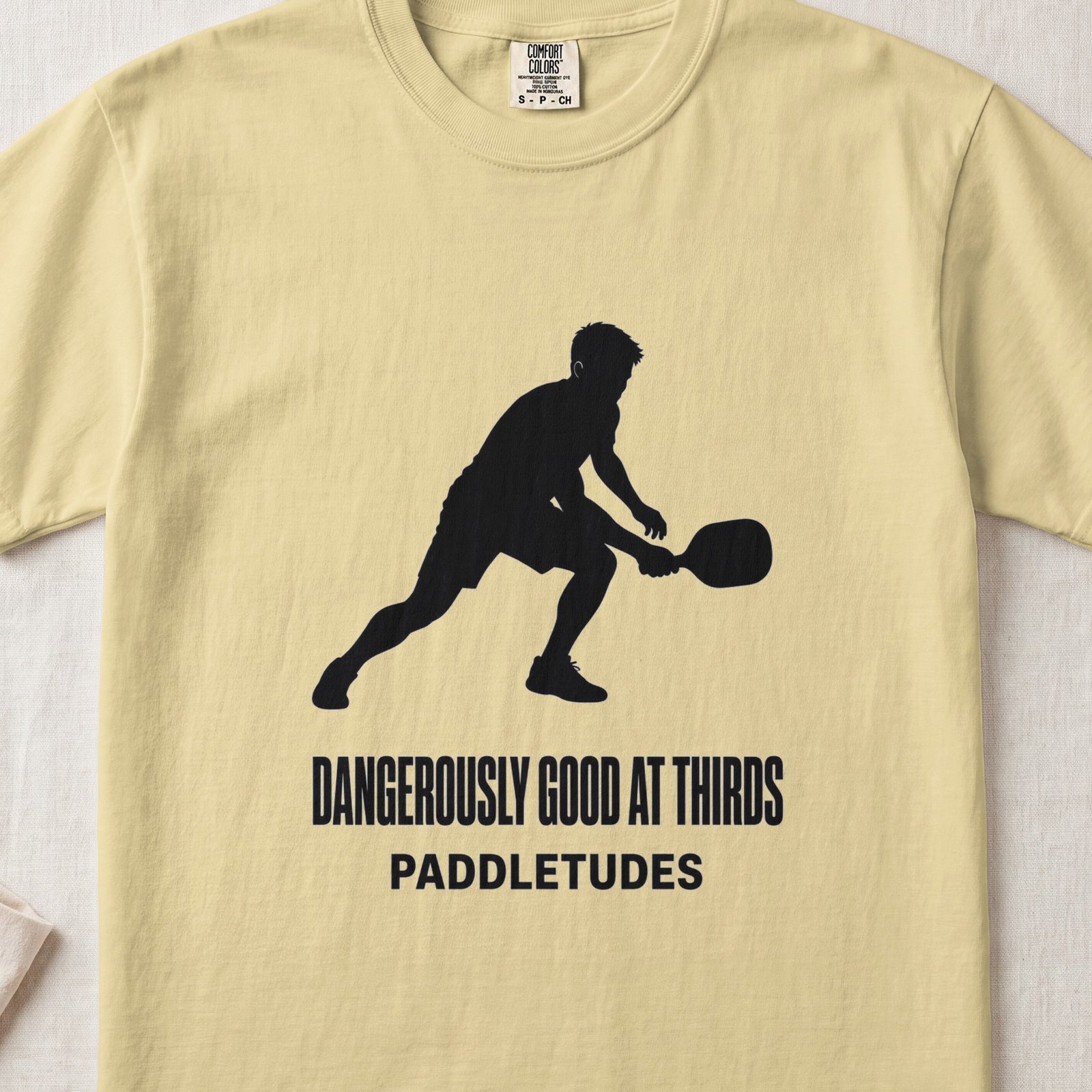
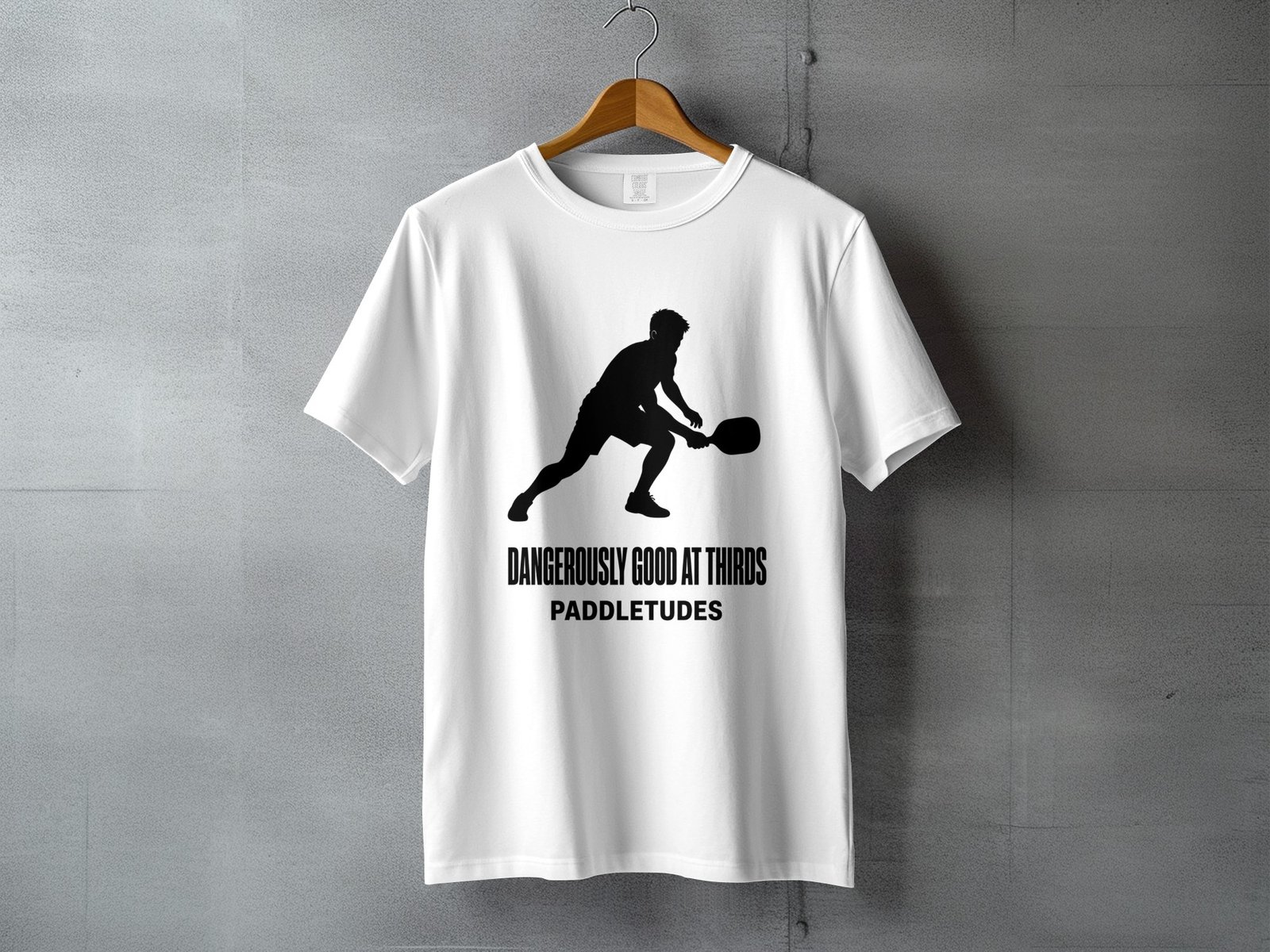
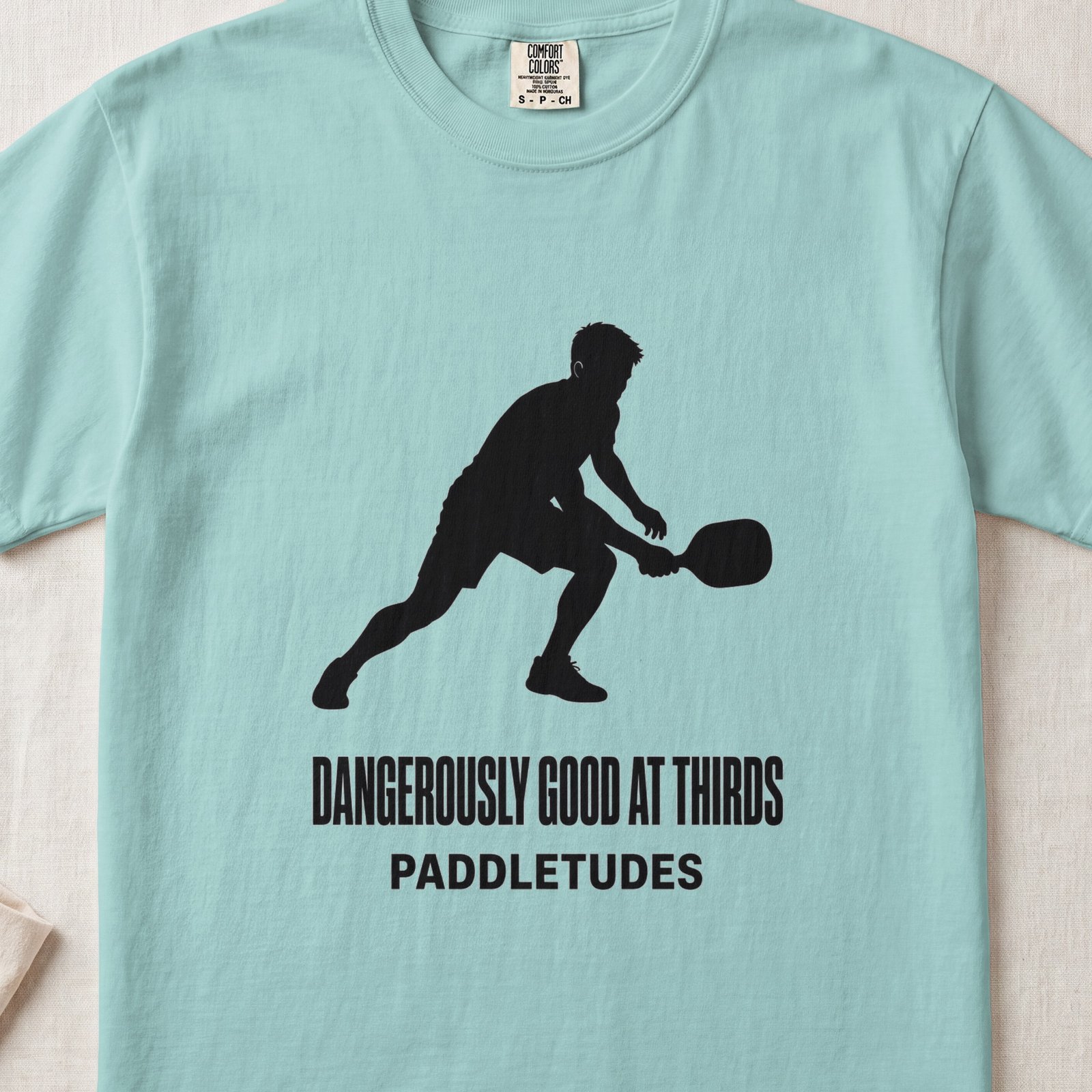
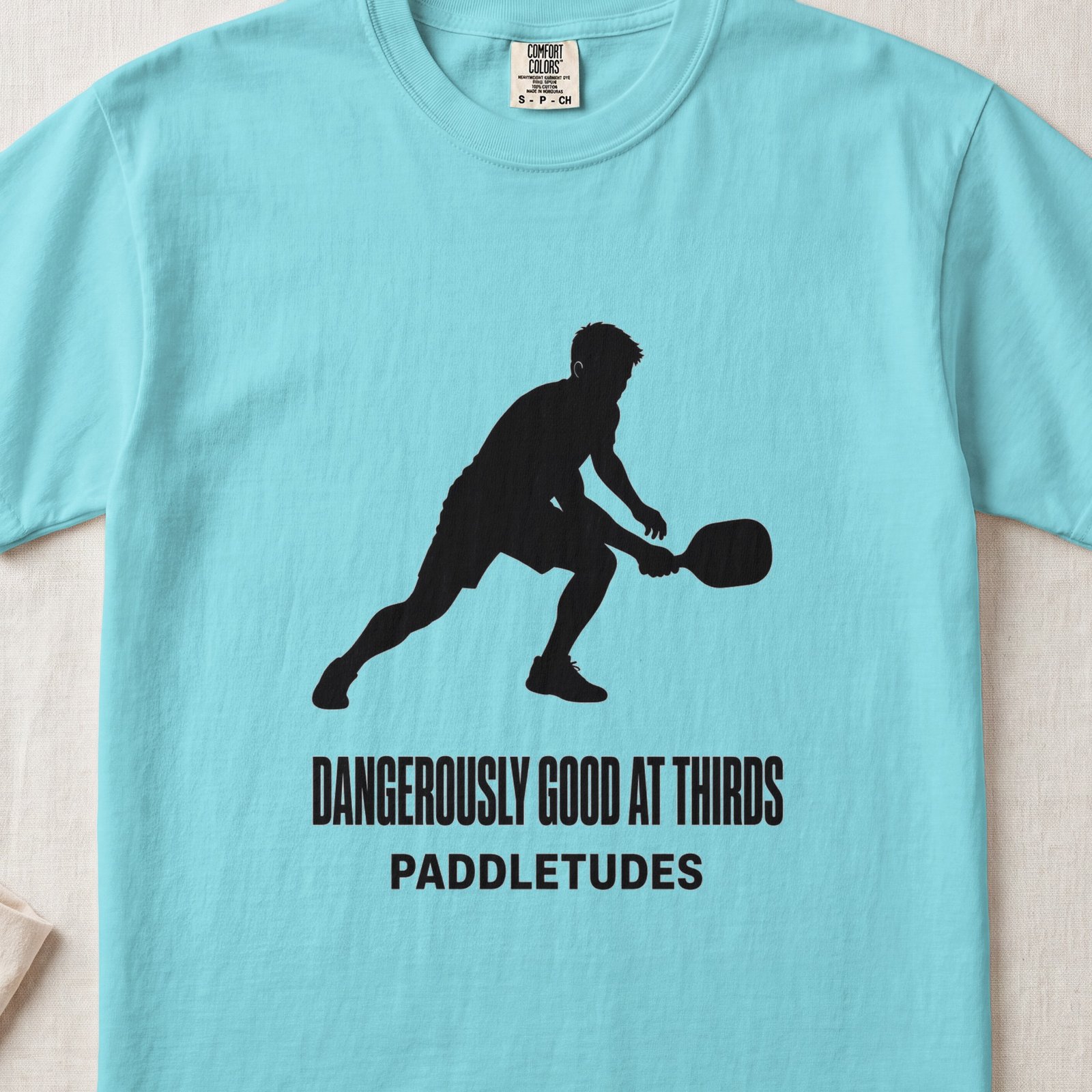
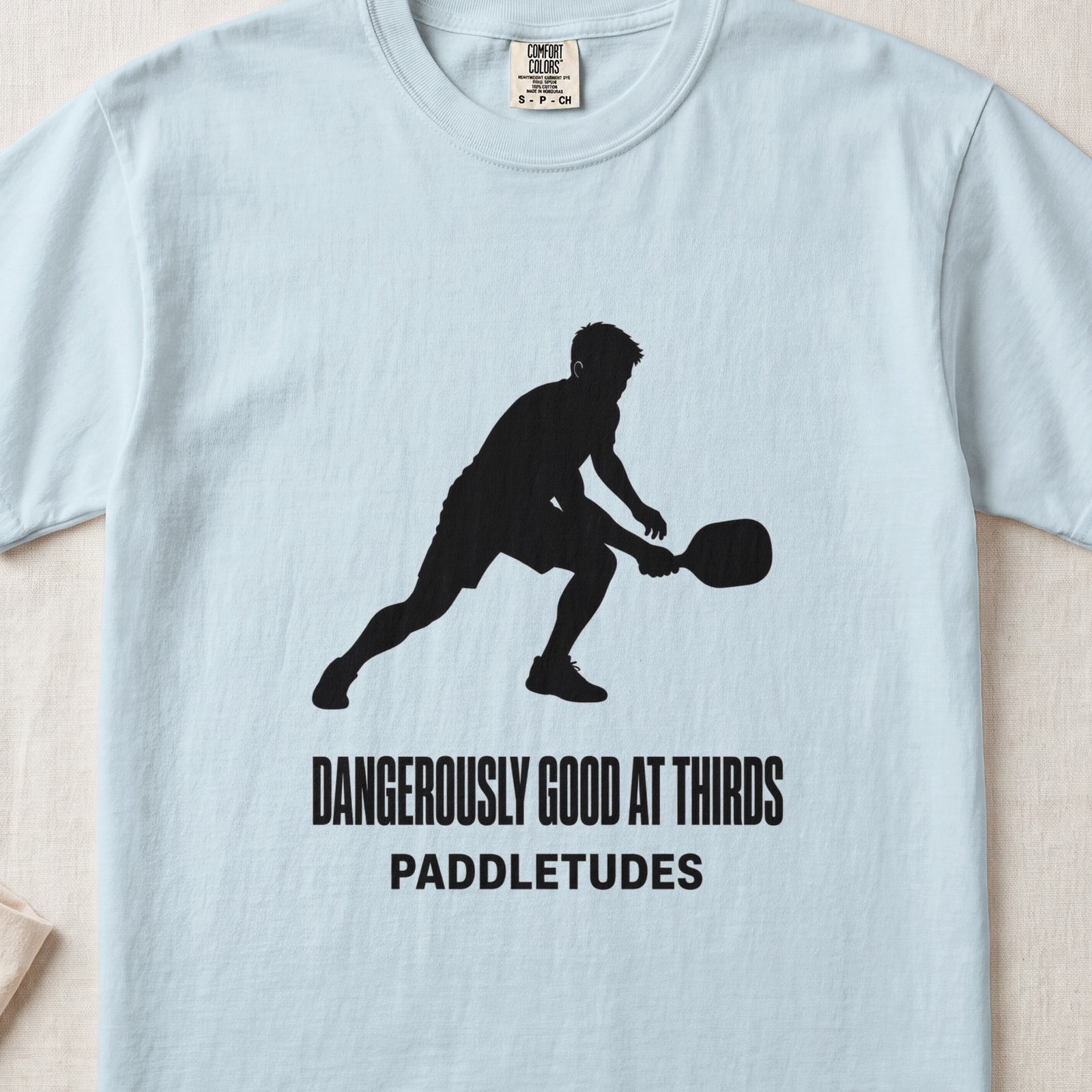
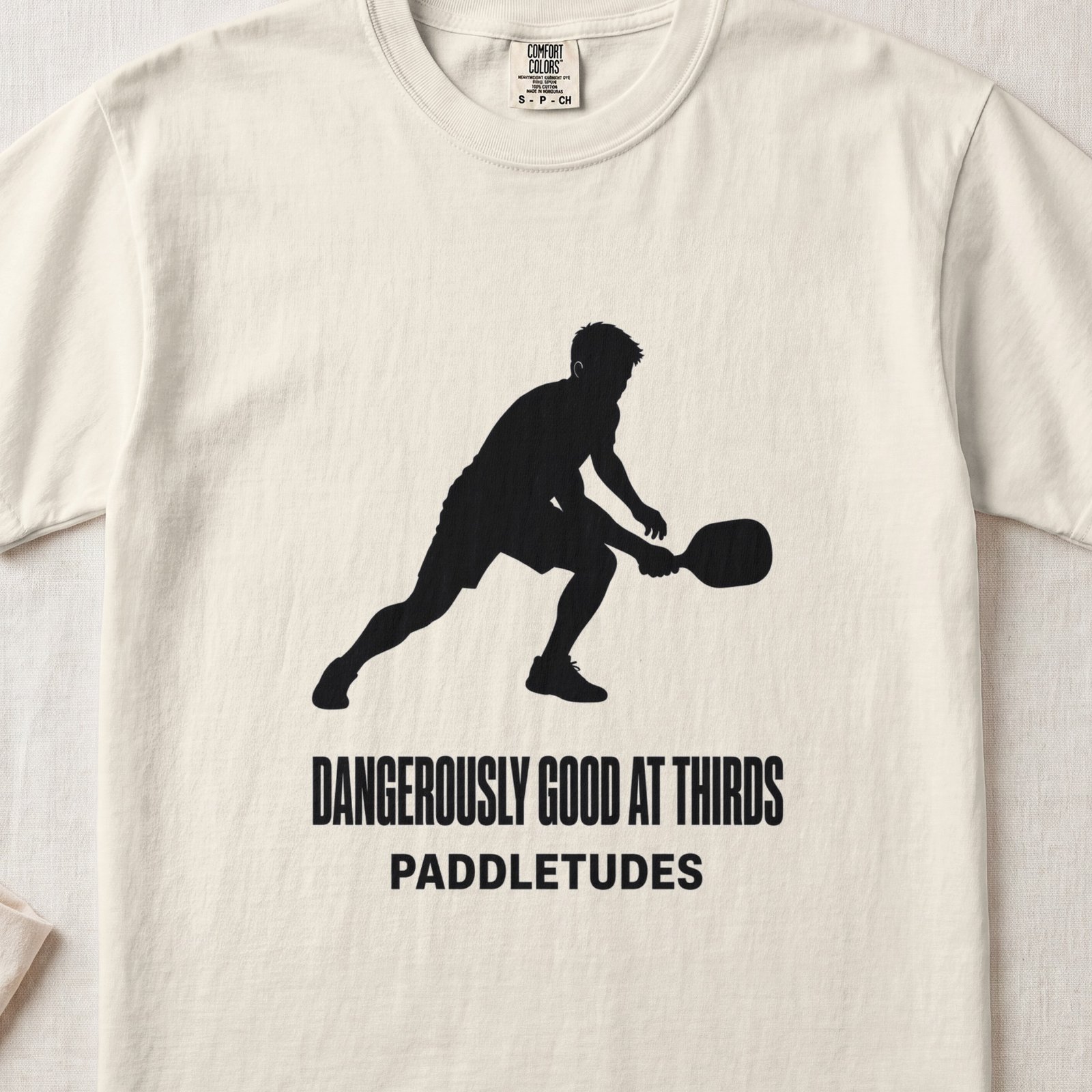
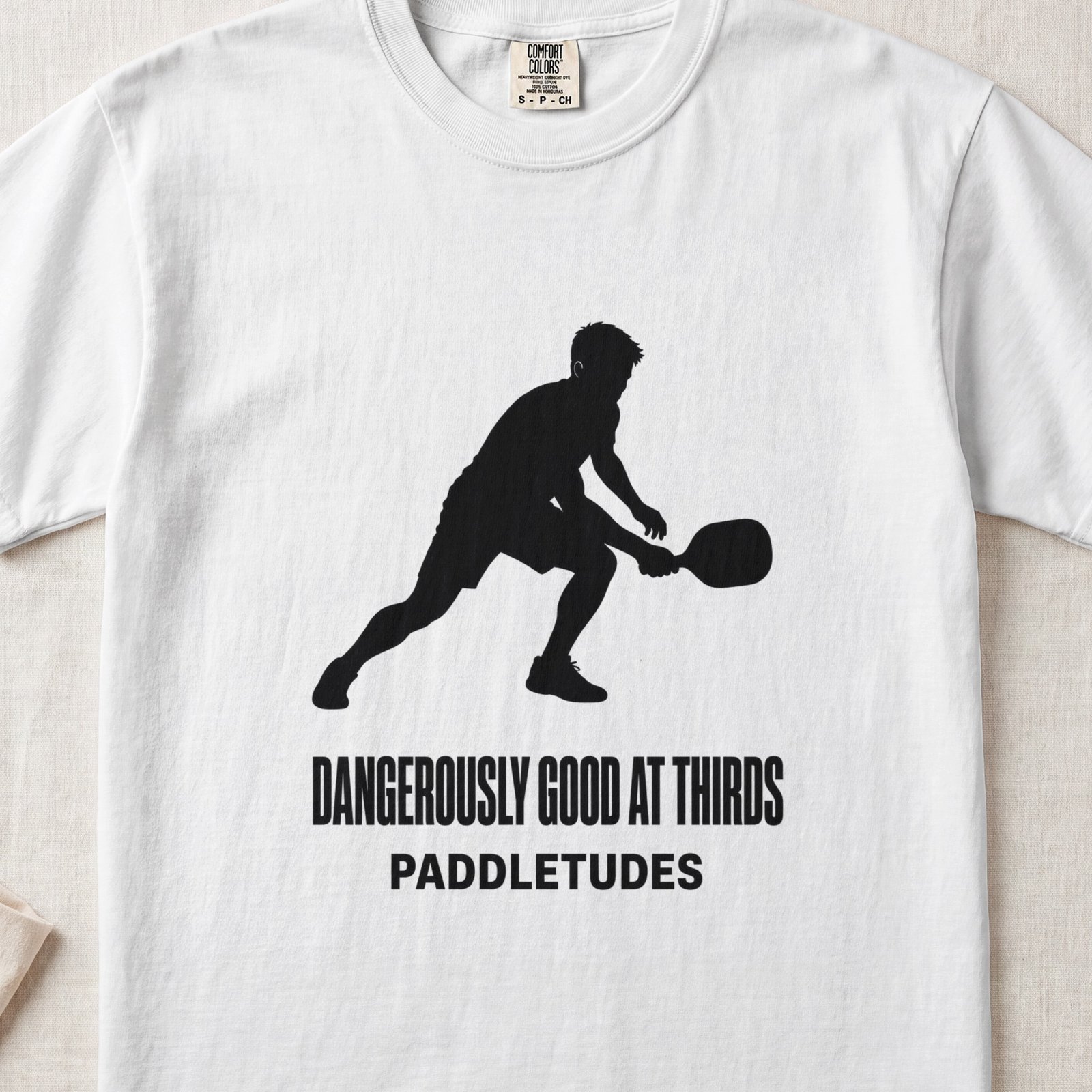
Dangerously Good At Thirds
$29.99
- Comfort Colors 1717 heavyweight cotton
- Original design · printed to order
- U.S. print partners
The Pickleball Third Shot Drop Made Dangerous
The player who hits a perfect third shot drop didn’t wake up with it. They went to the court early, before open play started, and dropped two hundred balls into the kitchen from the baseline. Then they did it again the next morning. And the morning after that. The third shot drop is the most practiced shot in pickleball because it’s the least natural one — your body wants to drive, your instincts say hit hard, and the correct answer is to float a soft arc into the non-volley zone like you’re placing a dinner plate on a table. Dangerously Good At Thirds is for the player who put in the reps until the unnatural became automatic, and now the shot that used to dump into the net lands exactly where they decide it will land, every single time.
Off the court, this is the same person who spent three weekends learning to make bread from scratch because the first loaf wasn’t good enough. The person who watched the YouTube tutorial twice before starting the project, then did it their way anyway because they’d already figured out a better approach. The Dangerously Good At Thirds player is methodical. They don’t have natural touch — or maybe they do, but they built on top of it with volume until the distinction between talent and practice became irrelevant. The Can’t Teach Touch player and the Dangerously Good At Thirds player both hit drops that die in the kitchen. The difference is one of them thinks about it and one of them doesn’t. This shirt is for the one who thinks about it — and whose thinking has become so fast it looks like instinct.
The mechanics of the third shot drop look simple from the sideline and feel impossible the first hundred times you try them. Open paddle face. Soft grip — three or four out of ten, not a death grip. The motion is a lift with the legs and a guide with the arm, more push than swing. Contact happens out in front of the body at roughly knee height. The ball should peak on your side of the net and descend into the kitchen on the other side with a dying bounce. The target is not the net. The target is three to four feet past the net, center kitchen. A drop that clips the line is impressive but risky. A drop that lands mid-zone is boring and effective, and effective is the only adjective that matters when the scoreboard is the audience. Brands like Joola make paddles with thicker cores — 16 millimeters — that absorb pace on contact and give the drop a softer landing, which is why most third-shot specialists aren’t playing with thin, power-oriented paddles. The Joola paddle guide breaks down how core thickness and face material affect touch, and the short version is: thicker core equals more feel, and feel is what makes the drop work.
The third shot is where pickleball separates into two different games. Below 3.5, most players drive the third ball because the dink rally feels uncomfortable and driving feels powerful. Sometimes the drive works. More often it doesn’t, because the returning team is already at the kitchen line and a hard ball into two set players at the net is a bet with worse odds than most people realize. The third shot drop changes the equation entirely. Instead of hitting through the defense, you float a ball that sits below the net on the other side. The opponents can’t attack it. While they’re managing a ball they can only dink back, you and your partner are moving forward to take the line. Drop, split step, forward, arrive. At 4.0 and above, this sequence is the game — and the team that executes it more consistently wins more service games. At Pictona in Holly Hill, Florida, the skill gap between players who own their third shot and players who don’t is visible from the observation deck. One group moves forward after the drop. The other stays pinned at the baseline wondering why they keep losing to people who hit the ball softer than they do.
If someone on your league team has made you watch their third shot transform across an entire season — from dumping it into the net in week one to painting the kitchen in the playoffs — this is the end-of-season gift that says you noticed the work nobody else saw. The early mornings. The solo drill sessions. The two hundred drops before anyone else arrived. It also works for the opponent who stood at the line and watched three consecutive thirds land exactly where they couldn’t attack, because sometimes the best respect comes from the person on the other side of the net who knows they just got beat by repetition, not luck.
The third shot drop gets you to the kitchen line, and once you’re there, Kitchen Confidential is for the player who dominates the space those drops created. For the patience to resist speeding up after a clean drop lands and the rally resets — the discipline to stay soft when every instinct says go hard — No Speed Up is the philosophy that makes the whole strategy hold together. Find a court near you on Pickleheads, grab a hopper of balls, and put in the drops before open play. The shot doesn’t care about talent. It cares about volume.
Printed on a Comfort Colors 1717 garment-dyed heavyweight tee with water-based DTG ink — sizing and care details here.
How Do You Hit a Third Shot Drop in Pickleball
Open your paddle face, soften your grip to about a three or four out of ten, and lift the ball with your legs rather than swinging with your arm. The motion is a controlled push — low to high, contact out in front of the body at roughly knee height, follow-through pointed toward the kitchen. The harder the return comes at you, the softer your hands need to be. The ball should peak on your side of the net and descend into the opponent’s non-volley zone with barely enough bounce to clear the surface.
The most common mistake is aiming too close to the net. New players try to drop the ball an inch over the tape, which looks impressive and also clips the net one out of three times. The correct target is the middle of the kitchen — roughly three to four feet past the net. That margin lets you absorb variations in incoming pace, wind, and your own contact point without dumping it short or floating it high. A drop that lands mid-kitchen and dies is strategically identical to one that barely clears the net. Both sit below net height when the opponent plays them. The difference is the mid-kitchen drop works every time and the net-scraper works when conditions are perfect.
The drill that builds match-ready thirds fastest is partner feeding from the kitchen line. Have someone stand at the net and drive balls at you from different heights and speeds while you drop from the baseline. Do fifty. Then move to midcourt and do fifty more. Then the transition zone — fifty more. The mechanics shift slightly at each distance. From the baseline, you need more lift. From midcourt, more touch. From the transition zone, the drop is shorter and quicker, almost a half-volley. The player who practices from all three depths is the player whose third shot works in a match, because real thirds don’t arrive from the same spot every time. The USA Pickleball skill rating system rewards a reliable third shot at every level above 3.0, and the reason is structural — the two-bounce rule means the serving team starts at a positional disadvantage every point, and the third shot drop is the only tool that reliably closes the gap.
Why Is the Third Shot the Most Important in Pickleball
Because the serving team starts every point at a structural disadvantage, and the third shot is the only play that closes it. After the serve, the returning team hits their return and moves to the kitchen line. The serving team can’t follow — the two-bounce rule requires them to let the return bounce before playing it, which pins them at or near the baseline. The returning team now owns the net. The third shot is the serving team’s answer to that problem.
A well-executed third shot drop buys time and neutralizes the net advantage. The soft arc into the kitchen forces the opponents to hit upward, which limits their options to another dink or a risky speed-up. While they’re managing a ball that sits below the net, the serving team splits and moves forward. By the fourth or fifth shot, the court is level — both teams at the line, the dink battle started, the positional gap erased. Without a reliable third shot drop, the serving team has two options: drive hard and hope it gets past two set players, or stay at the baseline and slowly surrender the point. Neither is a strategy. The drop is.
At competitive levels — 4.0, 4.5, and above — the team that executes better thirds wins more service games. That correlation holds across recreational leagues, sanctioned tournaments, and pro play. Coaches spend more time on the third shot drop than any other single skill because it’s the shot with the highest return on practice investment. A player who improves their third from 40% to 70% accuracy doesn’t just win more individual rallies — they change the math of every service game they play. The third shot doesn’t generate applause. It doesn’t produce highlights. It produces points, and points compound across a match in a way that flashier shots don’t. The player wearing this shirt figured that out, invested the hours, and now hits a drop that makes the returner say “nice drop” through teeth that aren’t smiling.
-
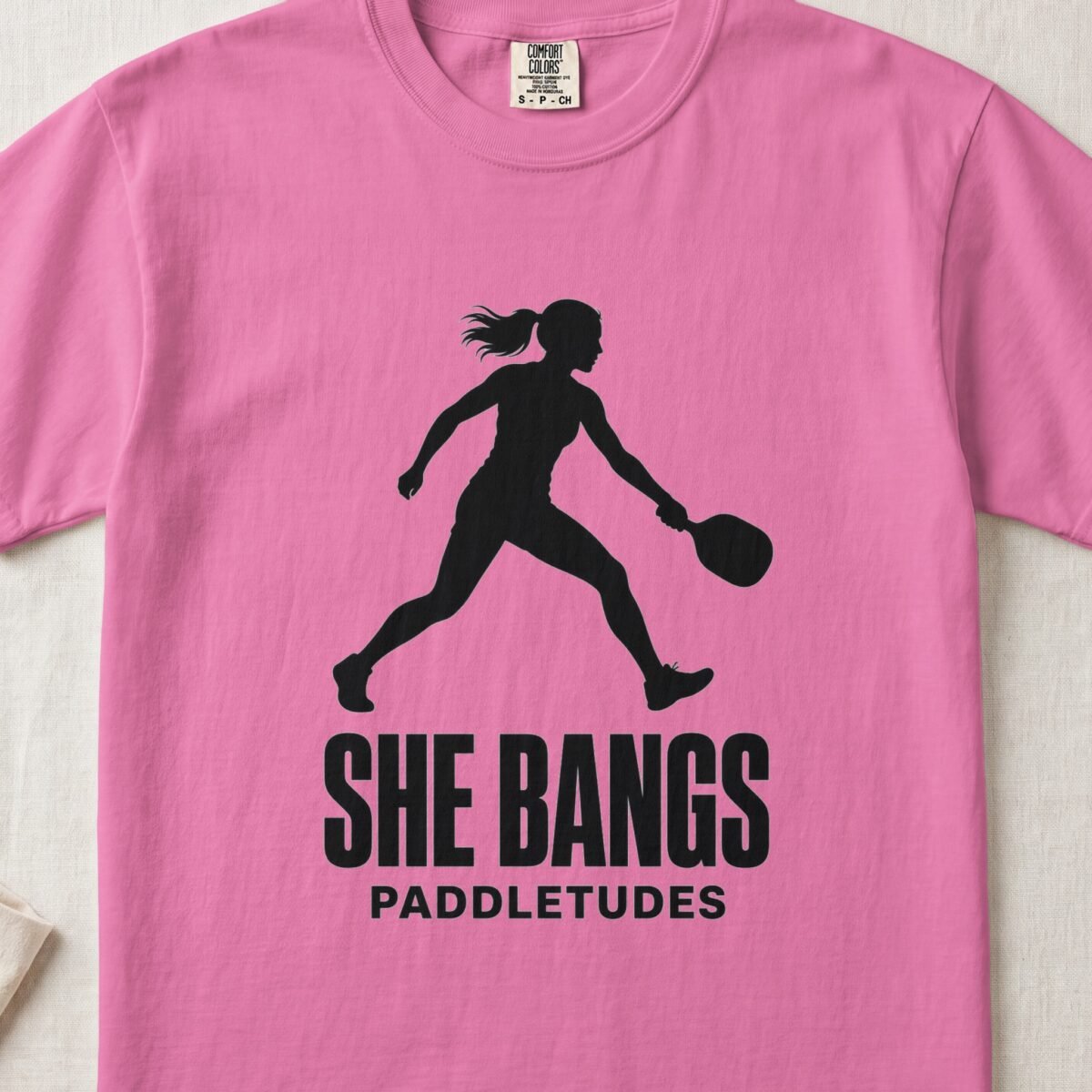
She Bangs
$29.99 Select options This product has multiple variants. The options may be chosen on the product page -
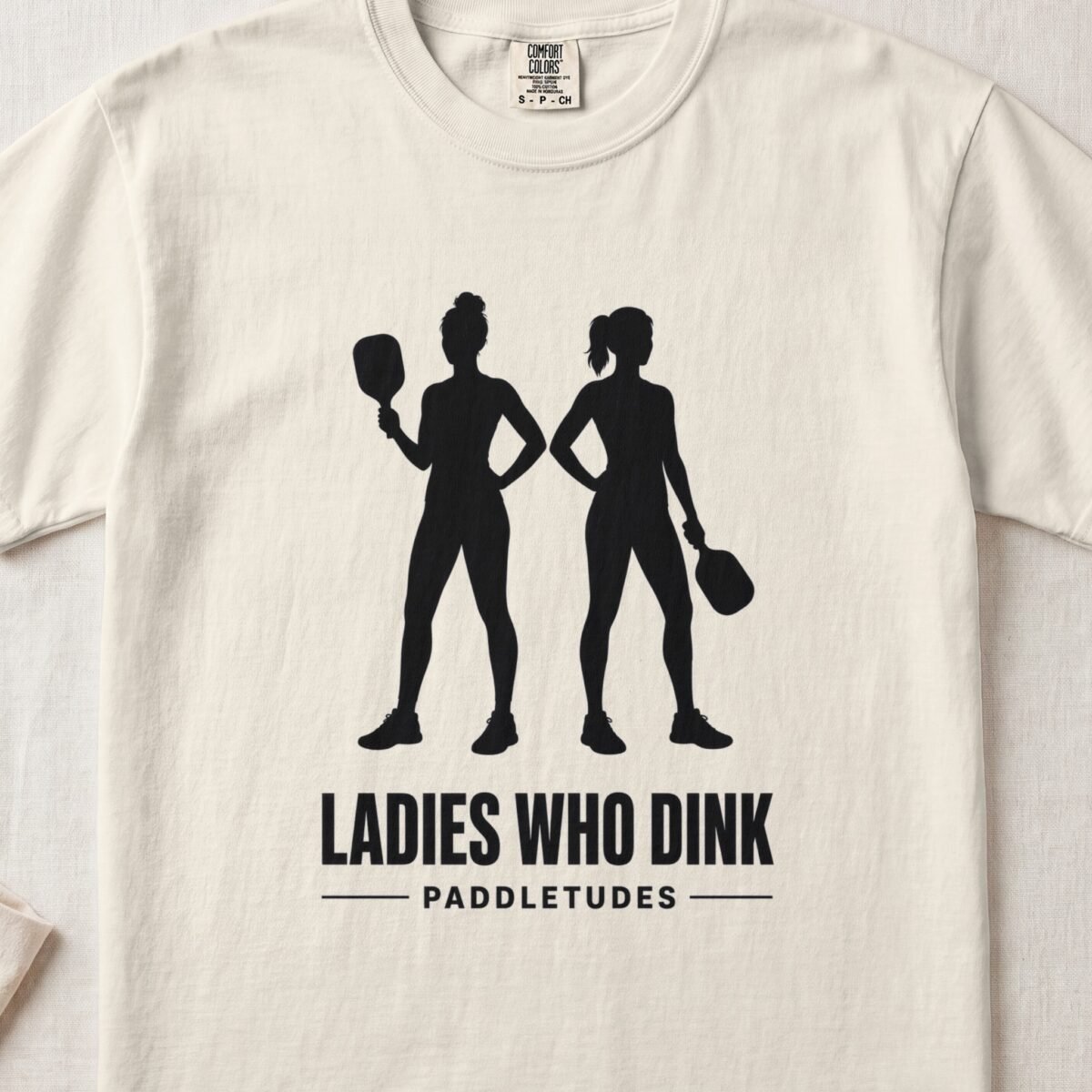
Ladies Who Dink
$29.99 Select options This product has multiple variants. The options may be chosen on the product page -
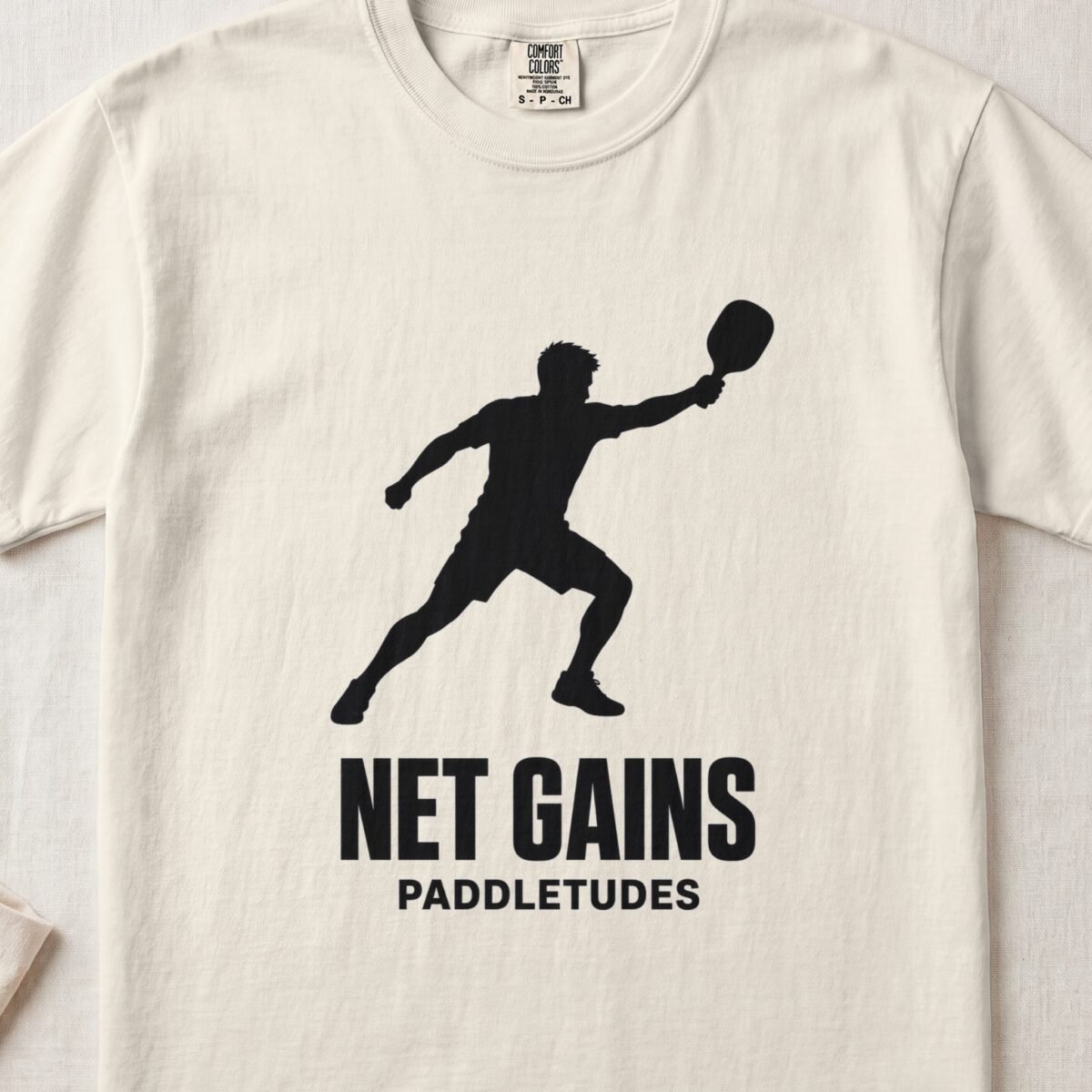
Net Gains
$29.99 Select options This product has multiple variants. The options may be chosen on the product page