Sports Comfort Colors 1717
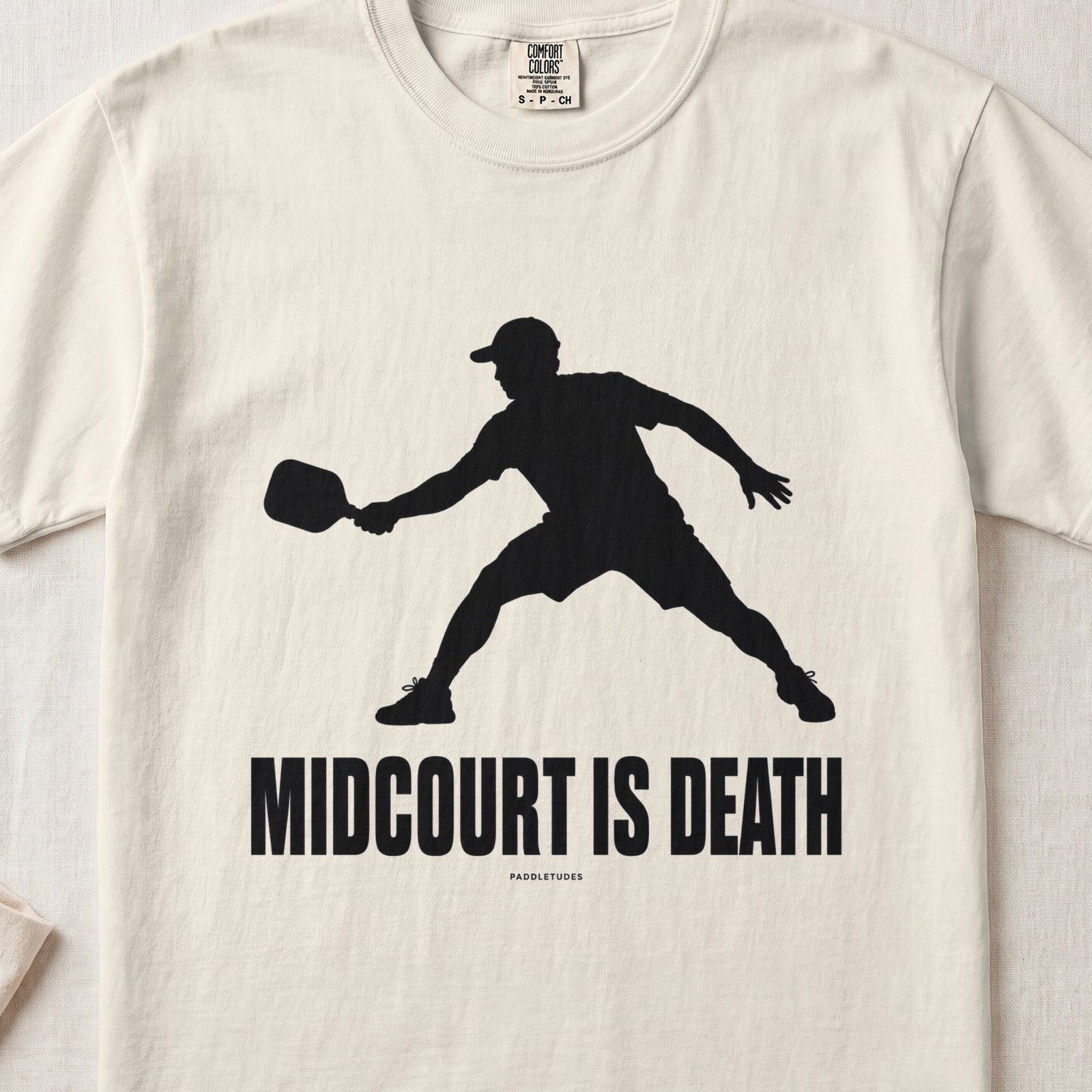
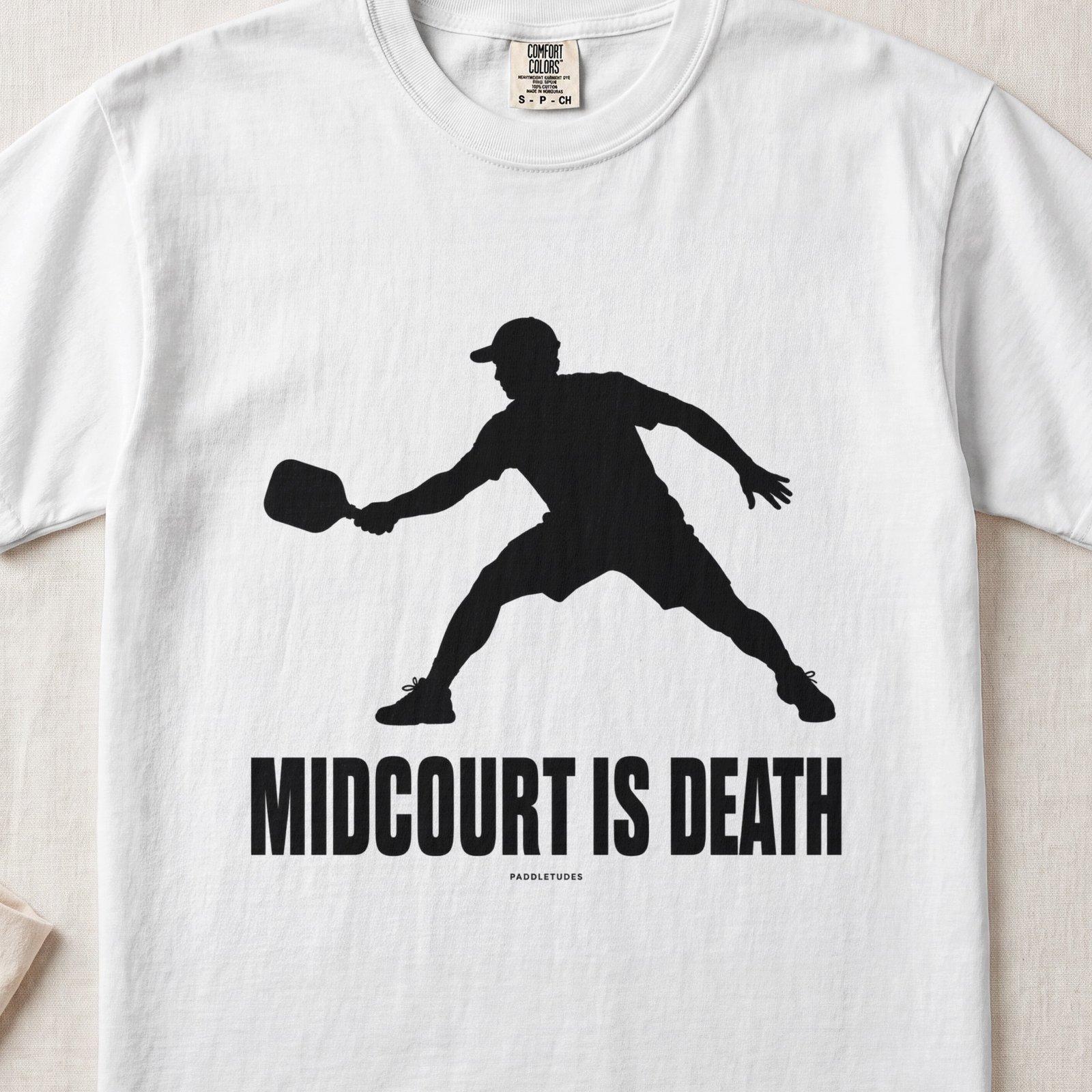
Midcourt Is Death
$29.99
- Comfort Colors 1717 heavyweight cotton
- Original design · printed to order
- U.S. print partners
Midcourt Is Death — Why No Man’s Land Ends Points
You can see it coming before it happens. The serve goes deep. The return comes back deep. And the serving team hits a third shot that doesn’t quite make the kitchen — it lands short, maybe mid-court, maybe a foot past the service line. Now both players are stuck. Too far from the net to dink. Too close to handle a drive without flinching. Feet planted in the worst possible real estate on the court. What happens next is a speed-up aimed straight at their shoelaces, and the point is over in two shots. Midcourt is death. This shirt knows because this shirt has died there.
He’s the 48-year-old software engineer who picked up pickleball eighteen months ago and spent the first six of those months living and dying in no man’s land without knowing why. He’d serve, return, hit his third shot somewhere into the middle of the court, then jog forward and stop — right there, right in the killing zone, with his paddle down and his weight back. Every good player on the other side of the net saw the same thing: a stationary target standing in the one place where angles are worst and reaction time is shortest. He lost fast and he lost often, and nobody told him why until a 4.5 player pulled him aside after open play and said three words: “don’t stop there.”
The problem with midcourt at 3.0 is that players don’t know it exists. They think the court has two zones — the baseline and the net — and the space between them is just walking distance. At 3.5, you know midcourt is dangerous because you’ve been punished there enough times to associate the position with pain. At 4.0, you’ve learned to move through it in stages — drop, split step, take ground, reset if the ball comes back hot, split step again, take more ground. By 4.5, the transition through midcourt is so automatic that you barely notice you’re doing it. The 3.0 player stops in midcourt. The 4.5 player treats midcourt like a highway — the speed limit is “keep moving” and the exits are the kitchen line and the baseline. Standing still is not on the menu.
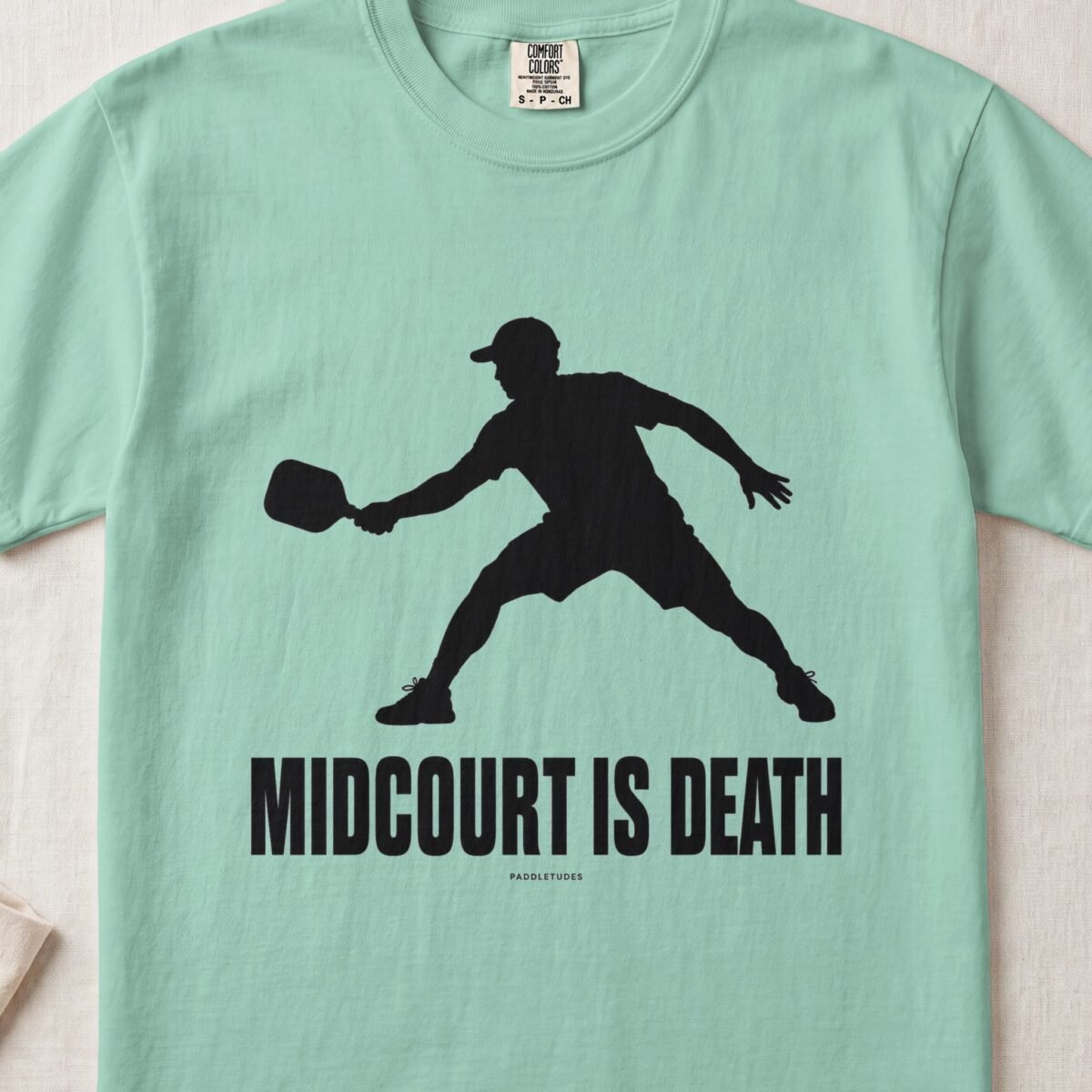
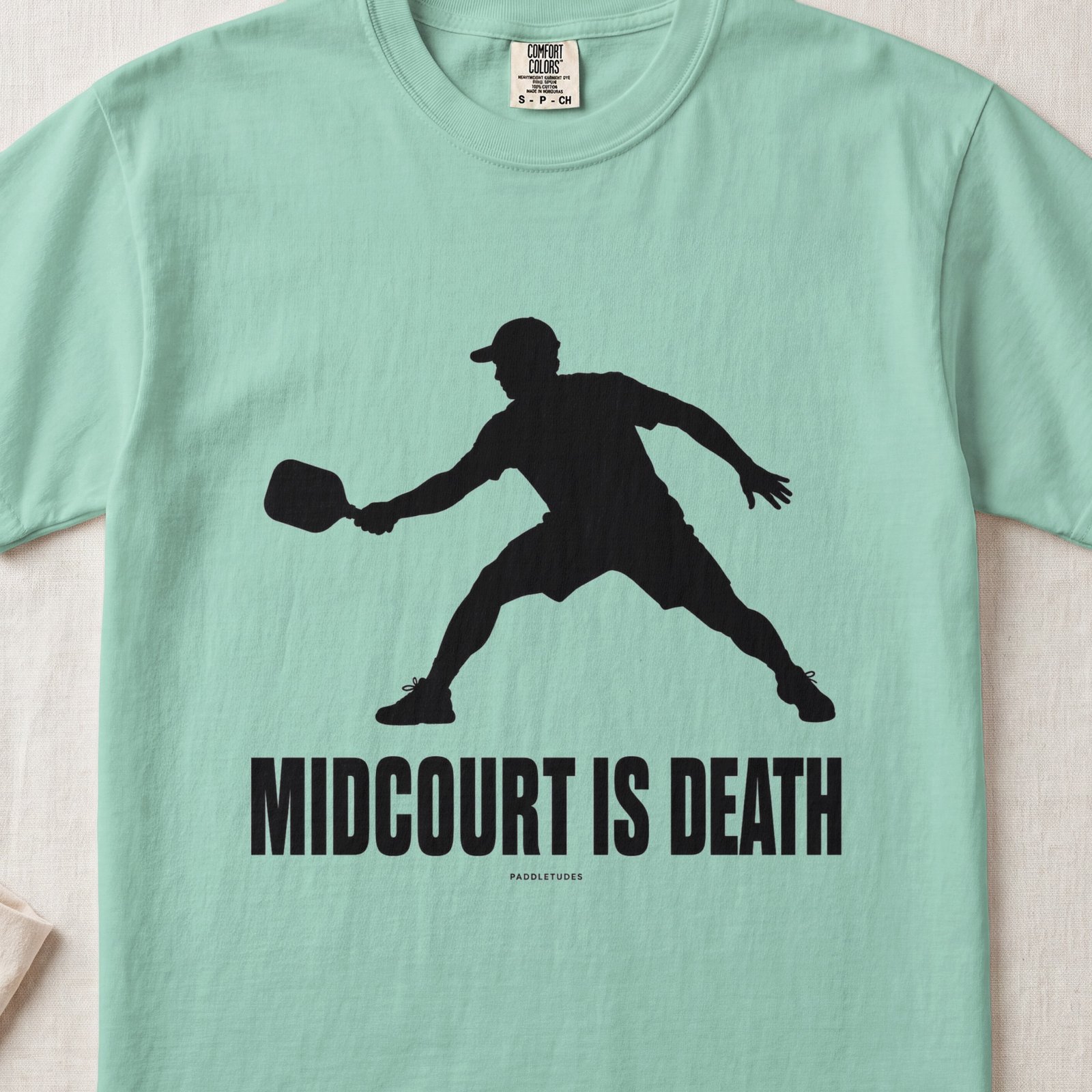
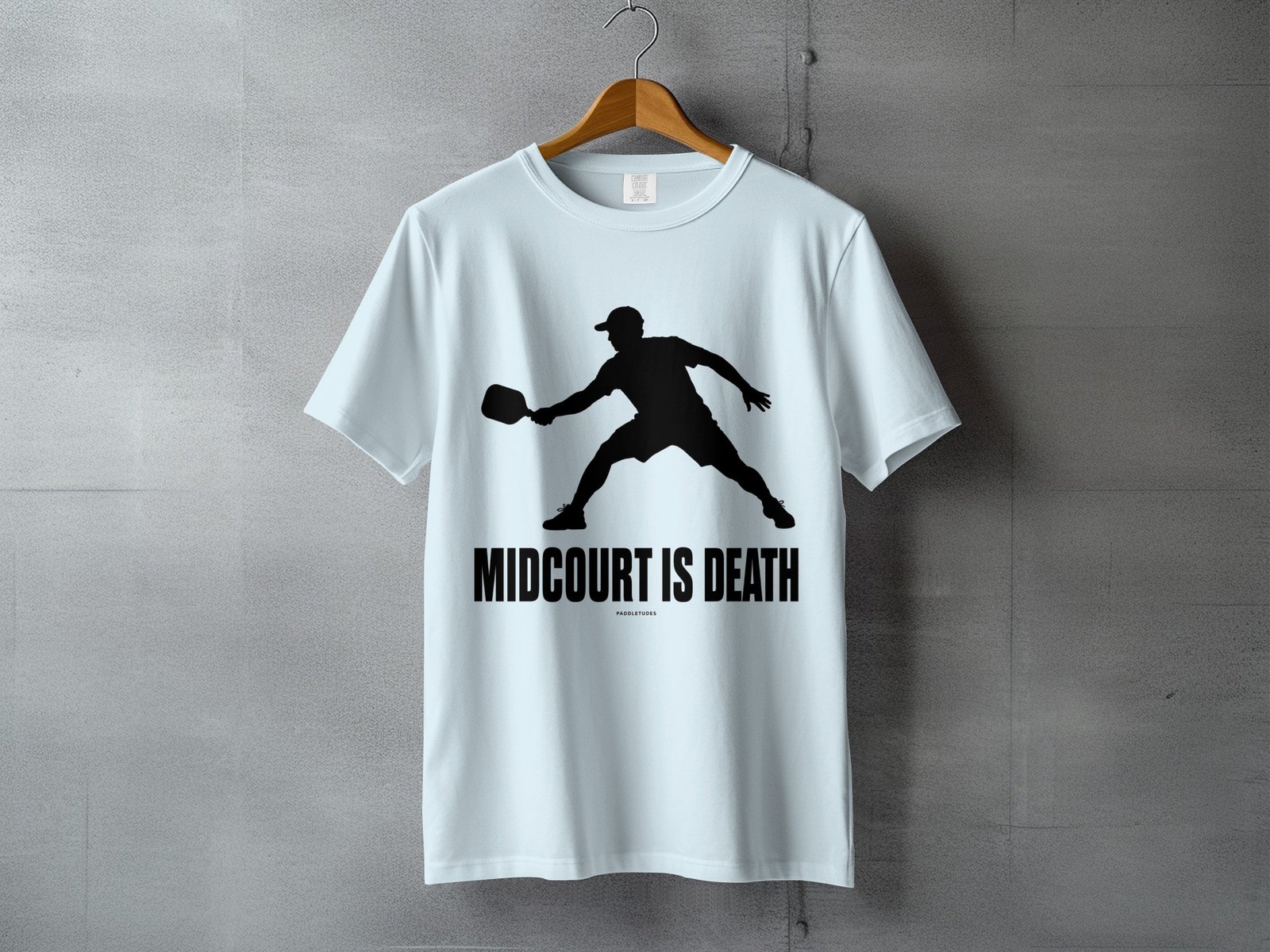
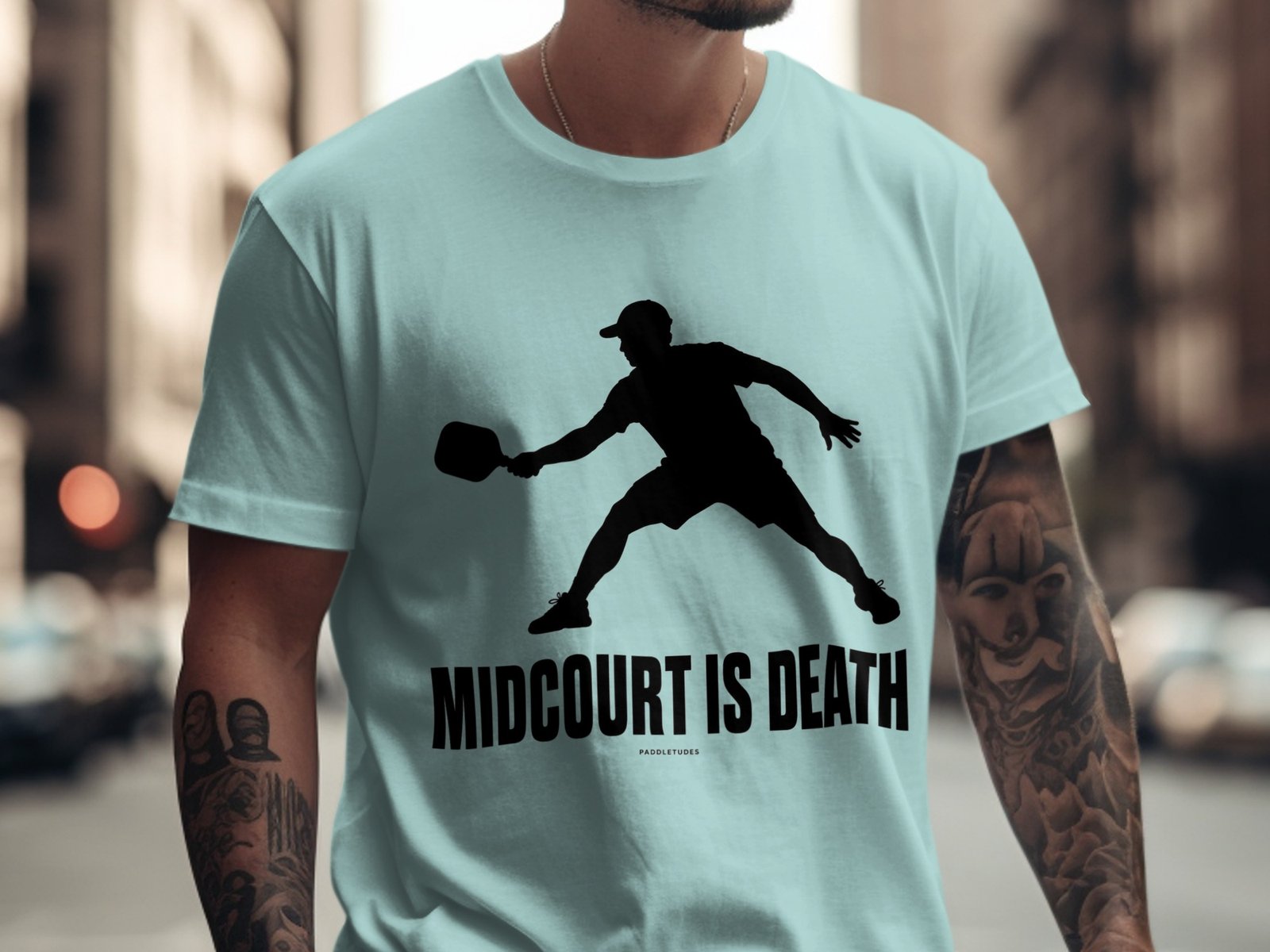
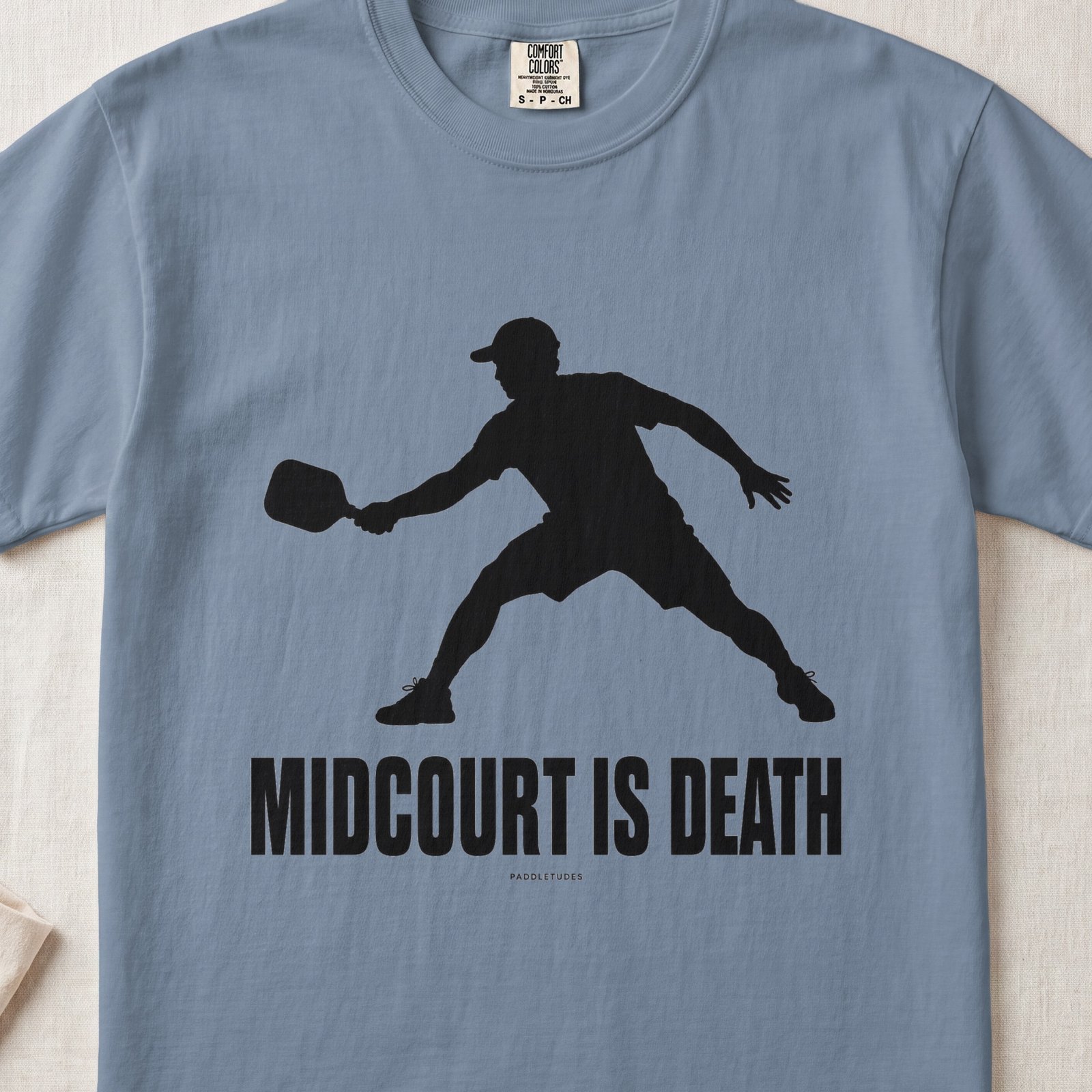
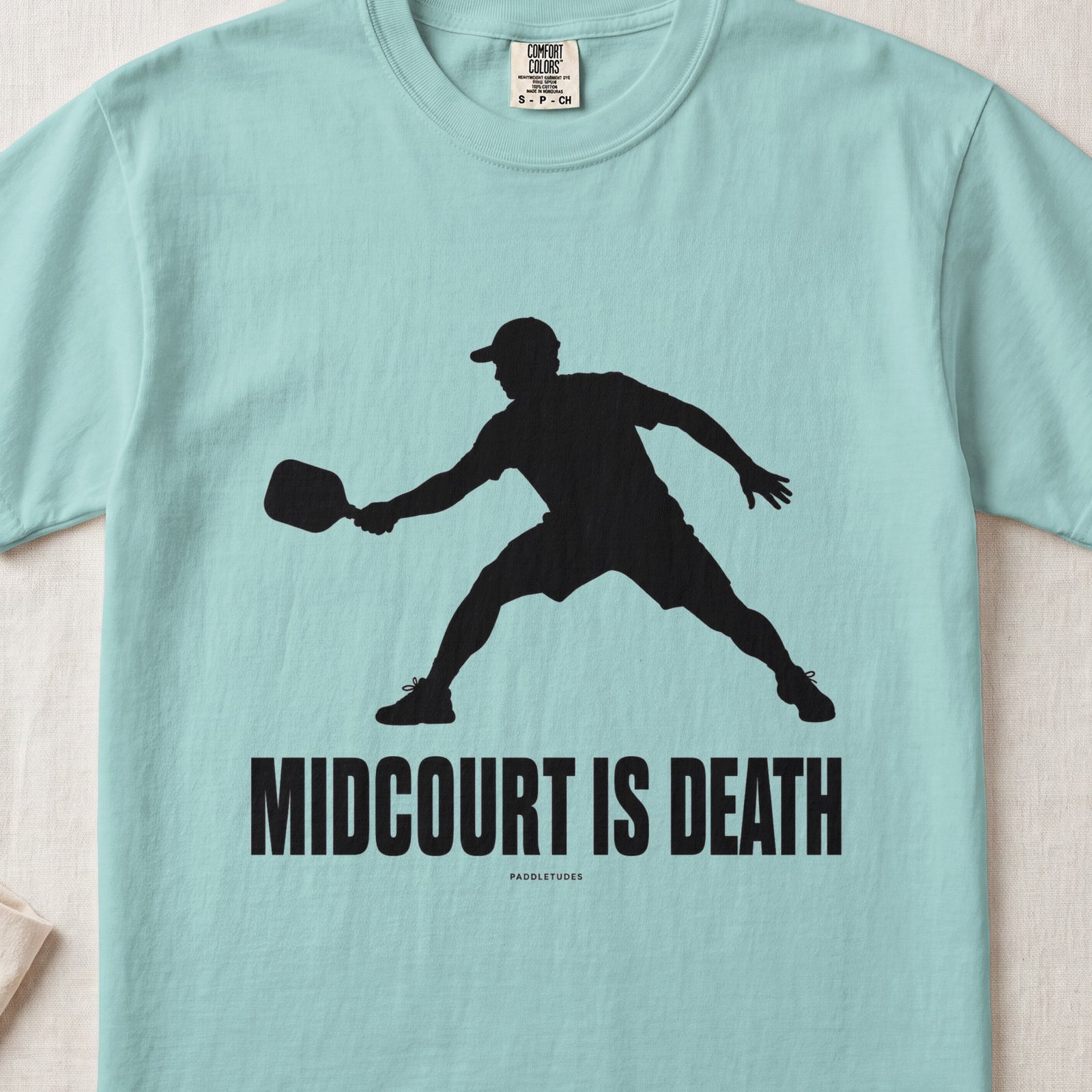
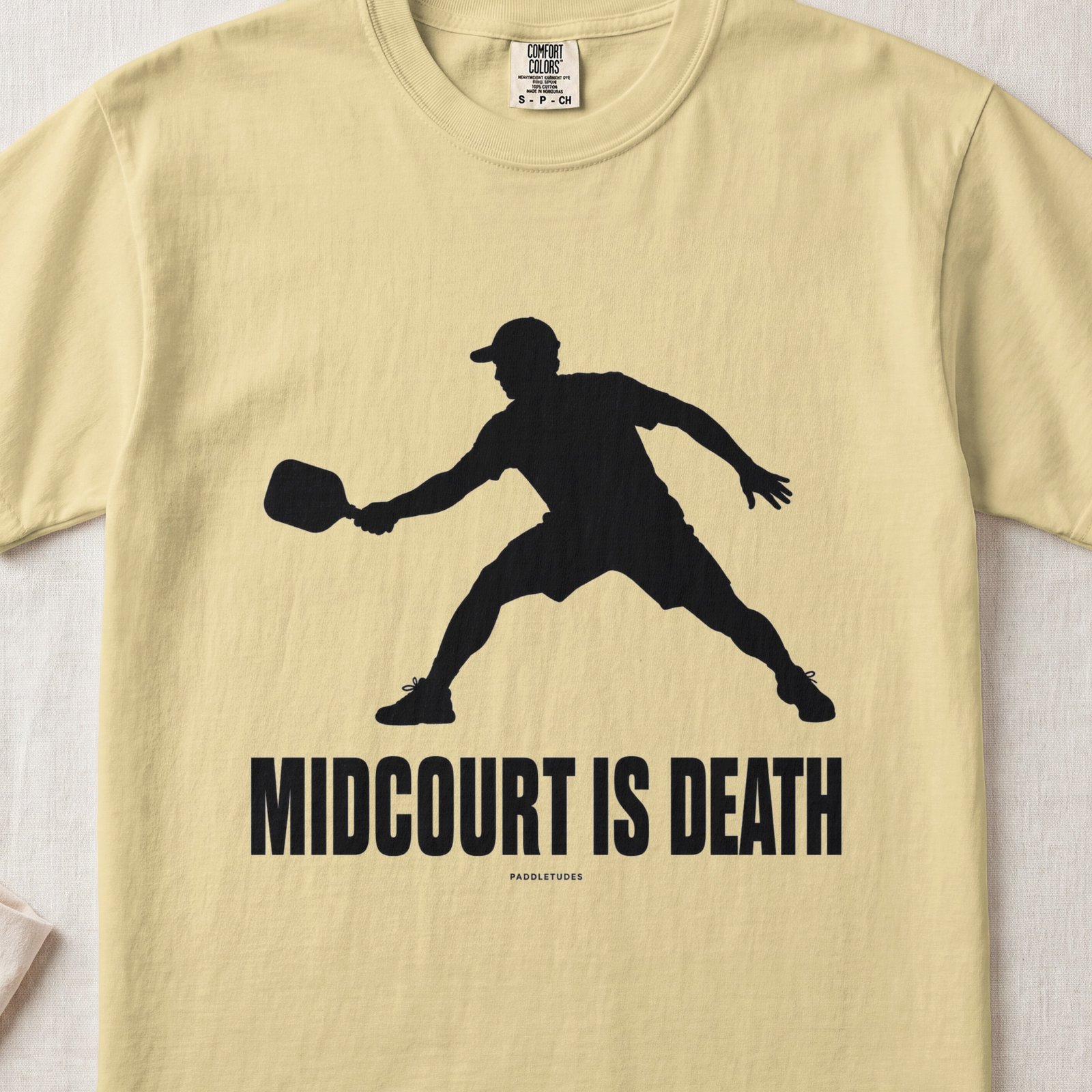
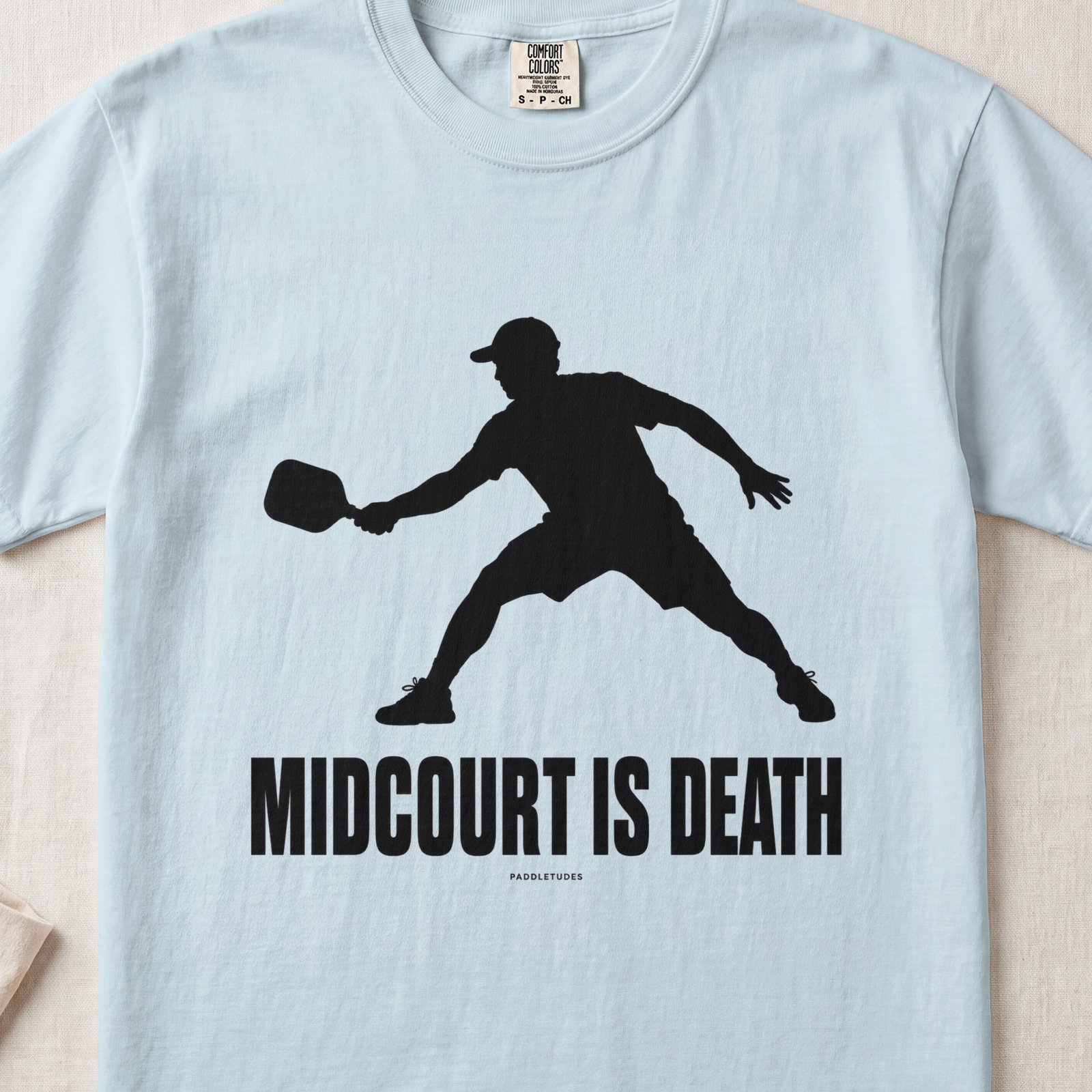
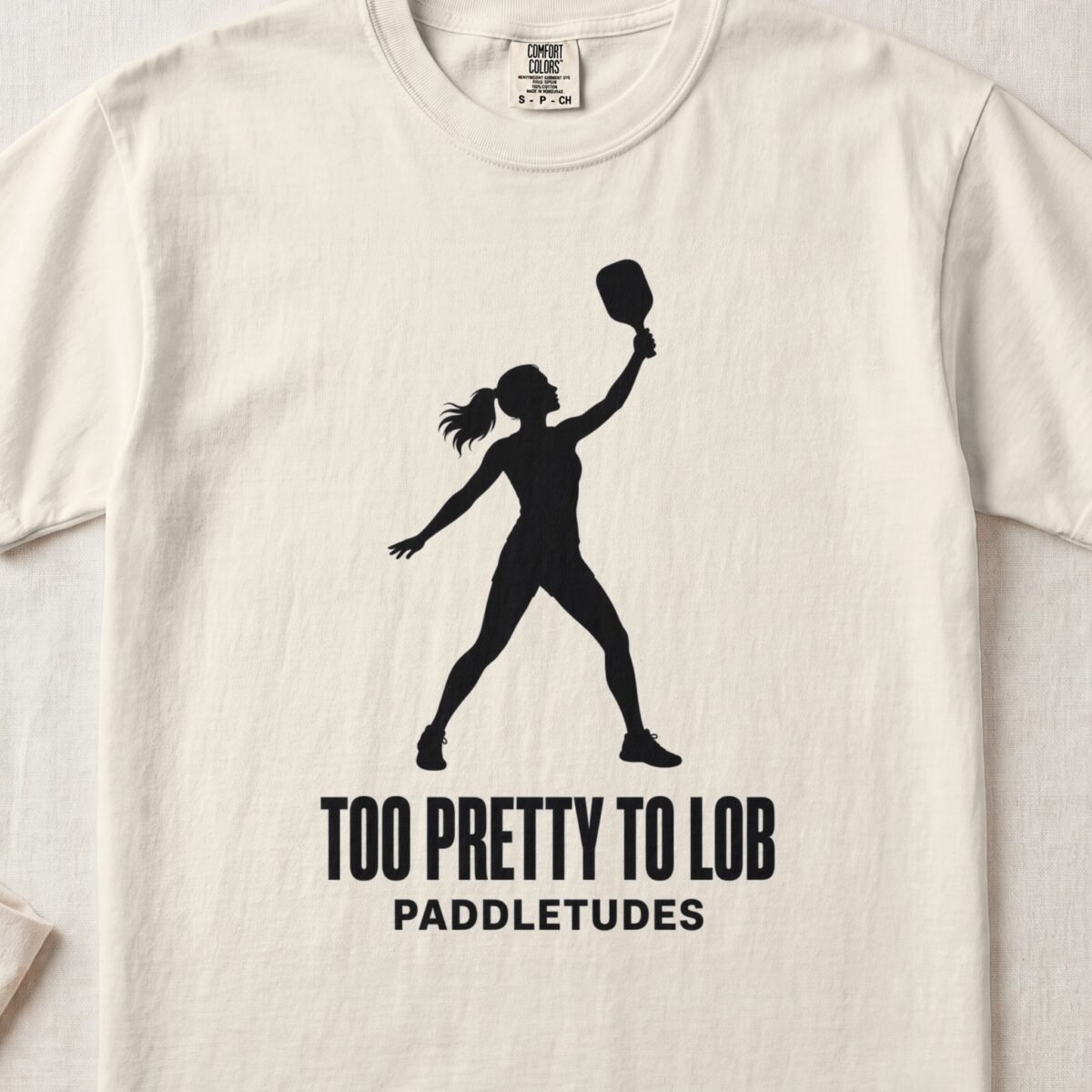
The silhouette on this shirt captures the exact wrong moment — a player reaching awkwardly mid-stride, off-balance, paddle out of position, body language screaming “I have no idea where this ball is going.” It’s the posture every pickleball player recognizes because they’ve been there. The humor isn’t cruelty. It’s shared experience. You bought the shirt because you survived midcourt long enough to laugh about it.
If someone’s birthday is coming up and they already own every piece of pickleball gear manufactured in the last three years, this is the shirt that solves the problem. You can’t buy them a paddle they don’t already have an opinion about. You can’t buy them shoes without knowing their court shoe preference. But you can buy them a shirt that captures the one universal experience every player shares — the moment they realized that standing in the middle of the court was the reason they kept losing. That’s a gift that doesn’t need a size chart to land.
At Indian Wells Tennis Garden, where the courts run under desert sun and the level ranges from recreational to nationally ranked, the transition zone sorts players faster than any rating system. The ones who stop in midcourt lose to the ones who move through it. That’s the dividing line, and it runs horizontally across every court at every facility on Pickleheads.
Transition Zone is the mastery side of this same concept — the player who learned to move through midcourt with purpose instead of panic. Where this shirt is the warning label, that one is the skill badge earned by surviving the warning. For the footwork that makes the transition possible, Deep Return Every Time starts the sequence — push the return deep, split step, and begin your advance through the zone that kills everyone who stops in it.
Printed on a Comfort Colors 1717 garment-dyed heavyweight tee with water-based DTG ink — sizing and care details here.
Why Is Midcourt Bad in Pickleball
Midcourt is the worst position on the court because you’re vulnerable to every shot and in control of none. Standing eight to twelve feet from the net means drives arrive at your feet before your paddle can get down, dinks land short and force you to lunge forward, and lobs sail over your head with just enough arc that you can’t reach them. Every angle favors the opponent, and the geometry gets worse the longer you stand still.
The problem is compounding. When a ball arrives at your feet in midcourt, the natural response is to pop it up — and a ball that pops up from midcourt is an invitation for the opponent at the kitchen line to put it away. One defensive shot from midcourt leads to a harder offensive shot from the opponent, which leads to a worse defensive shot from midcourt, until the rally collapses in two or three exchanges. The player at the kitchen line is hitting down. The player in midcourt is hitting up. Hitting up against someone hitting down is a losing proposition at every skill level.
The fix isn’t complicated but it requires discipline. The serving team’s job after the return is to hit a third shot drop into the kitchen and use the time it creates to move forward. If the drop isn’t good enough, reset it and hold position rather than continuing forward into a worse spot. The USA Pickleball skill progression guidelines identify transition zone competency as the primary separator between 3.0 and 3.5 players — it’s not a shot you learn, it’s a movement pattern you drill until it becomes automatic.
Midcourt is death because it rewards stillness, and stillness in midcourt is the one thing the position punishes most. The player who figured that out graduated from it. The player wearing this shirt graduated from it too — they just want everyone else to know what they learned the hard way.
-
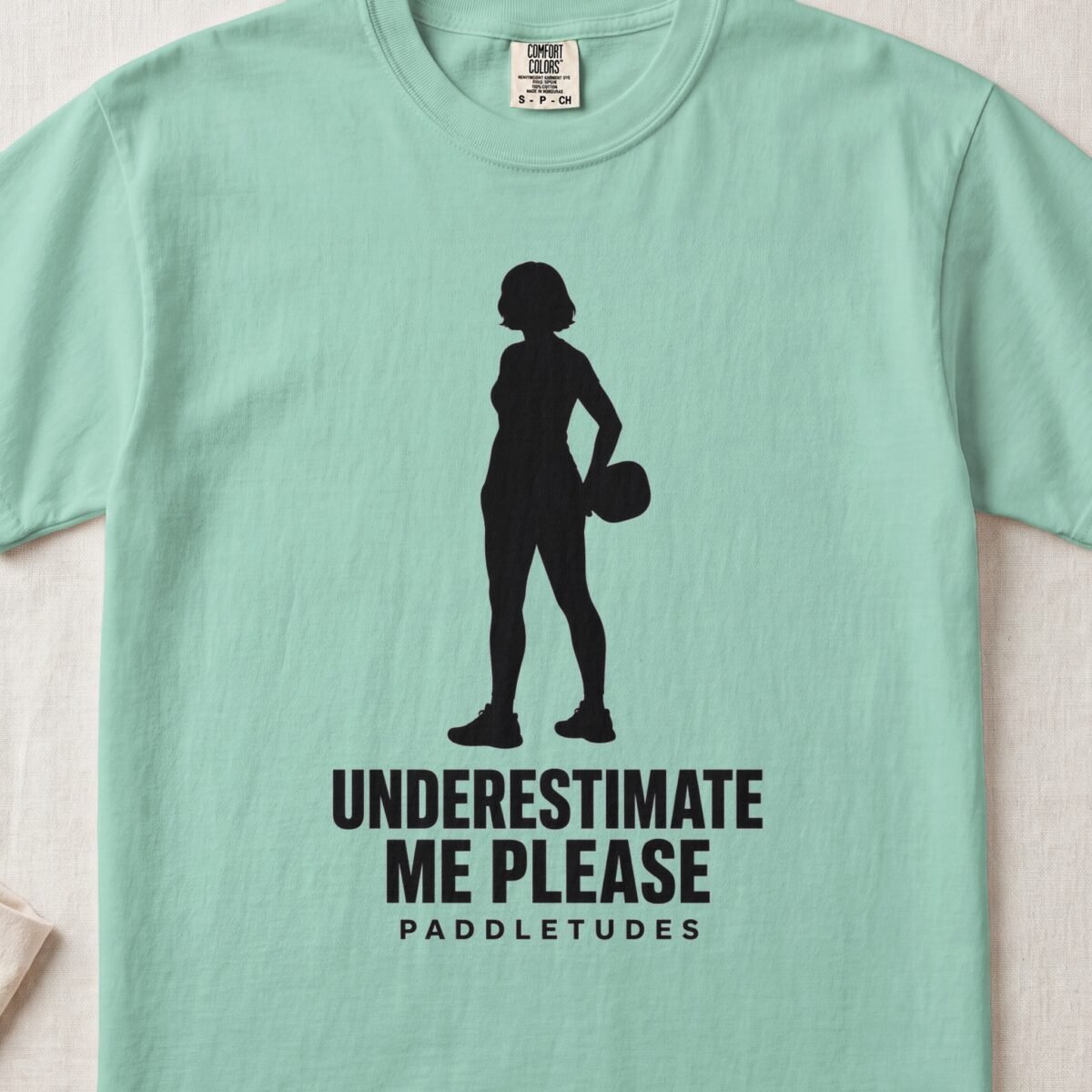
Underestimate Me Please
$29.99 Select options This product has multiple variants. The options may be chosen on the product page -
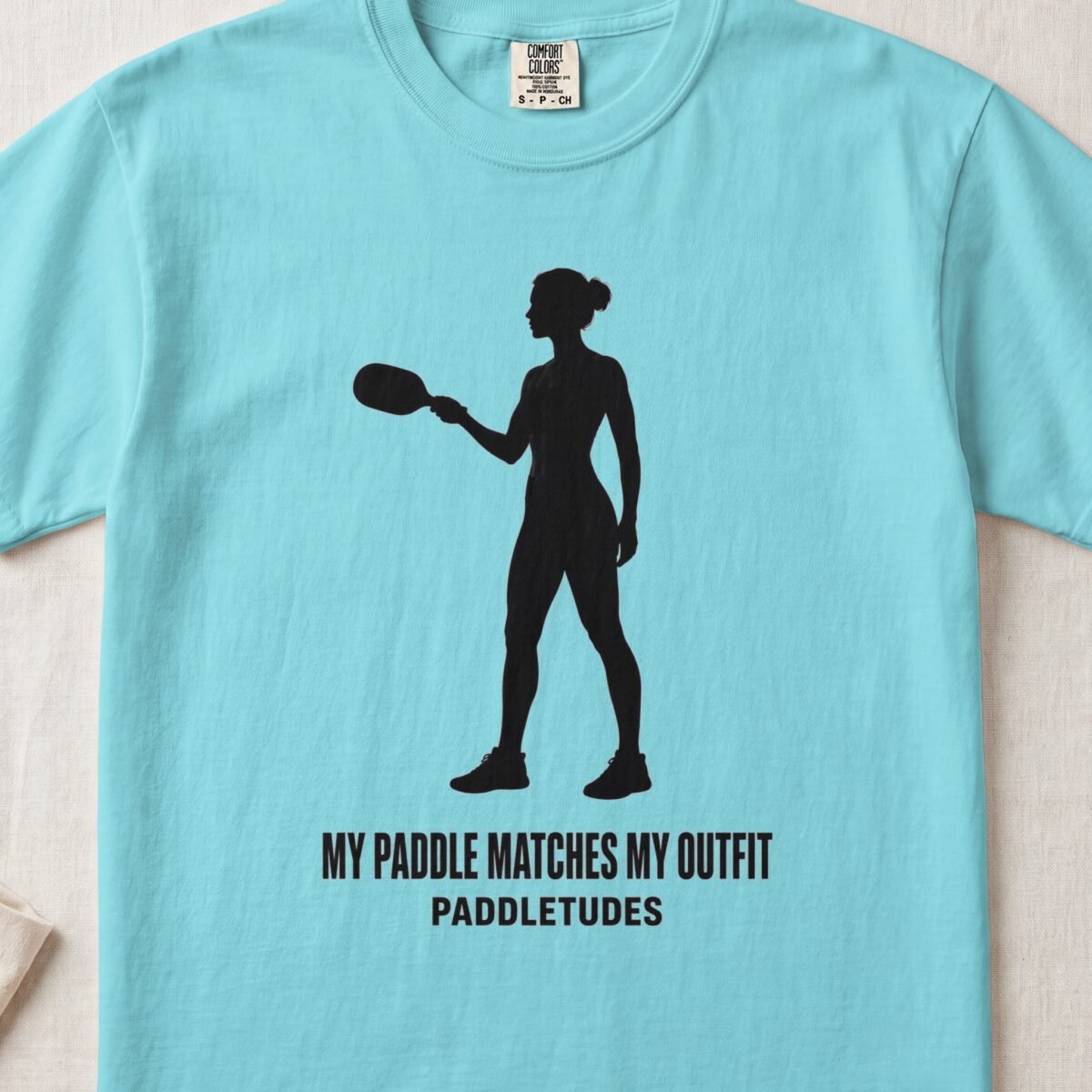
My Paddle Matches My Outfit
$29.99 Select options This product has multiple variants. The options may be chosen on the product page -
Too Pretty To Lob
$29.99 Select options This product has multiple variants. The options may be chosen on the product page