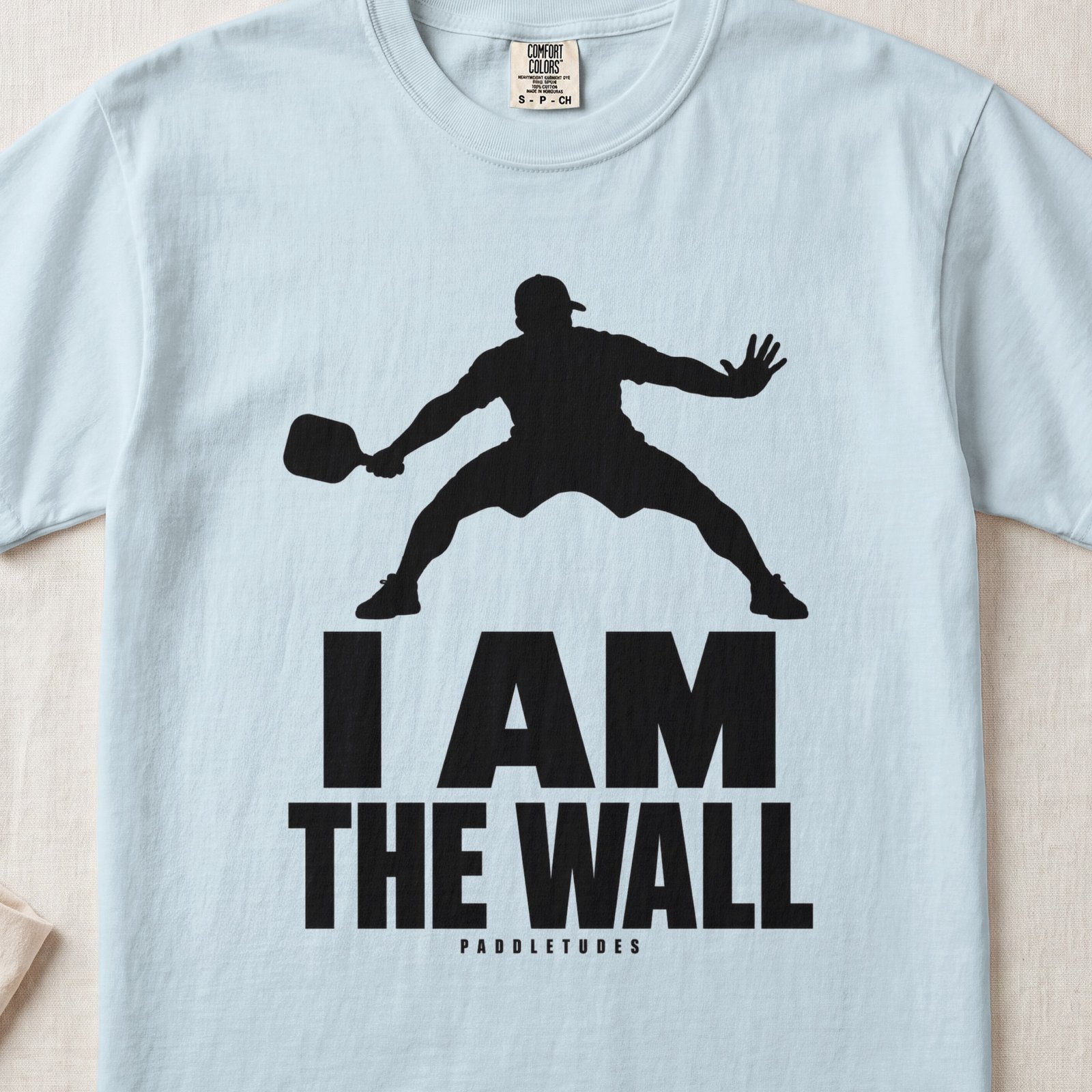
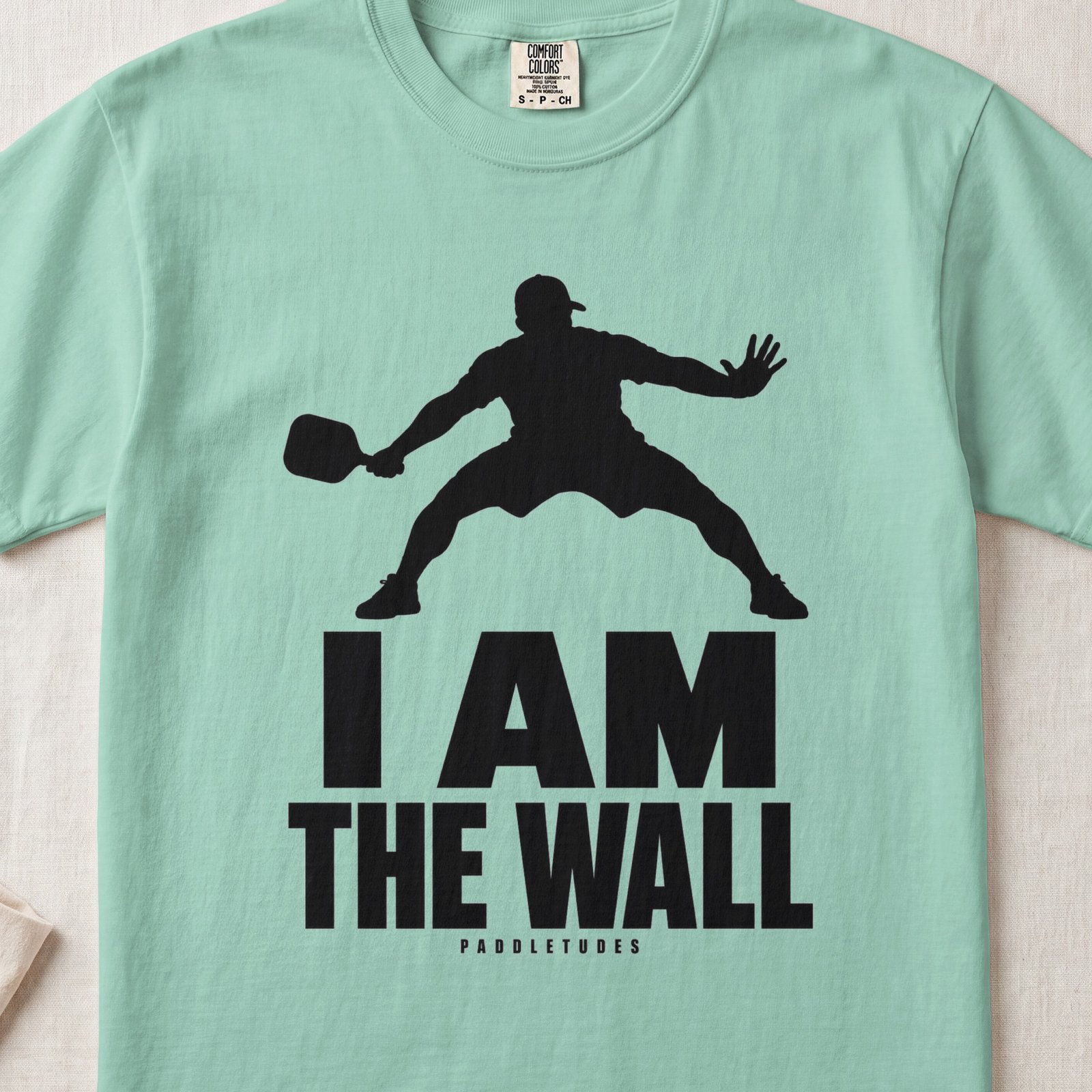
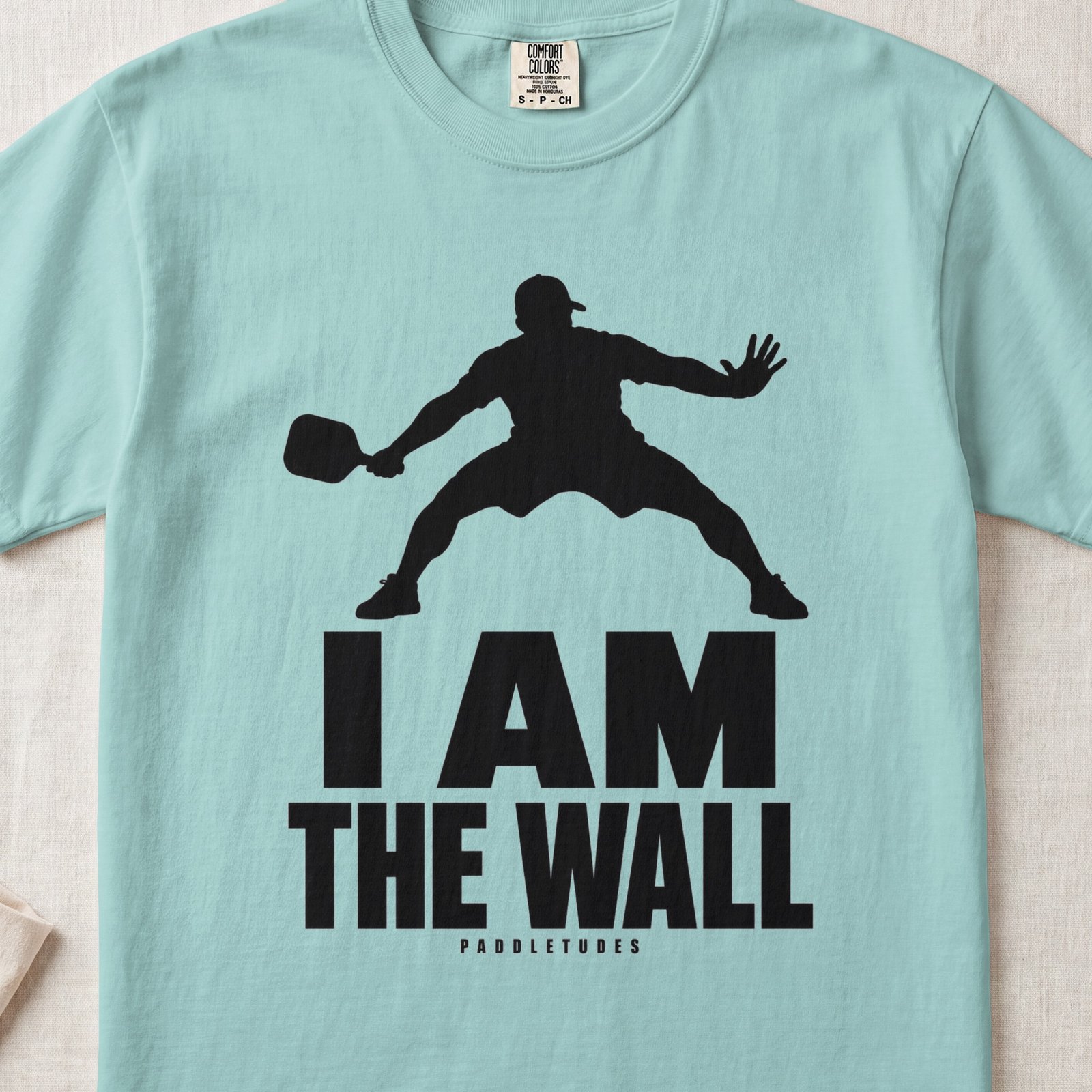
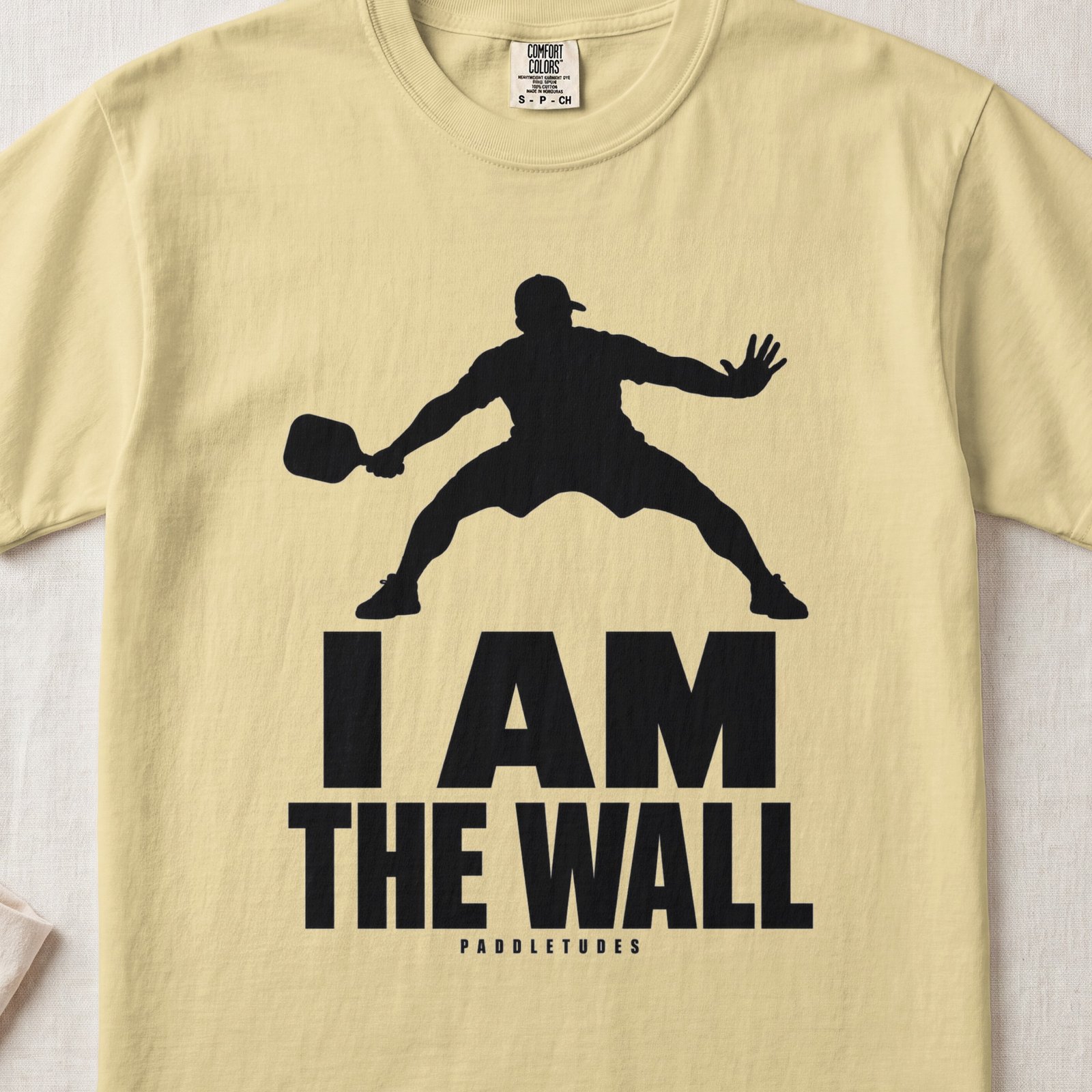
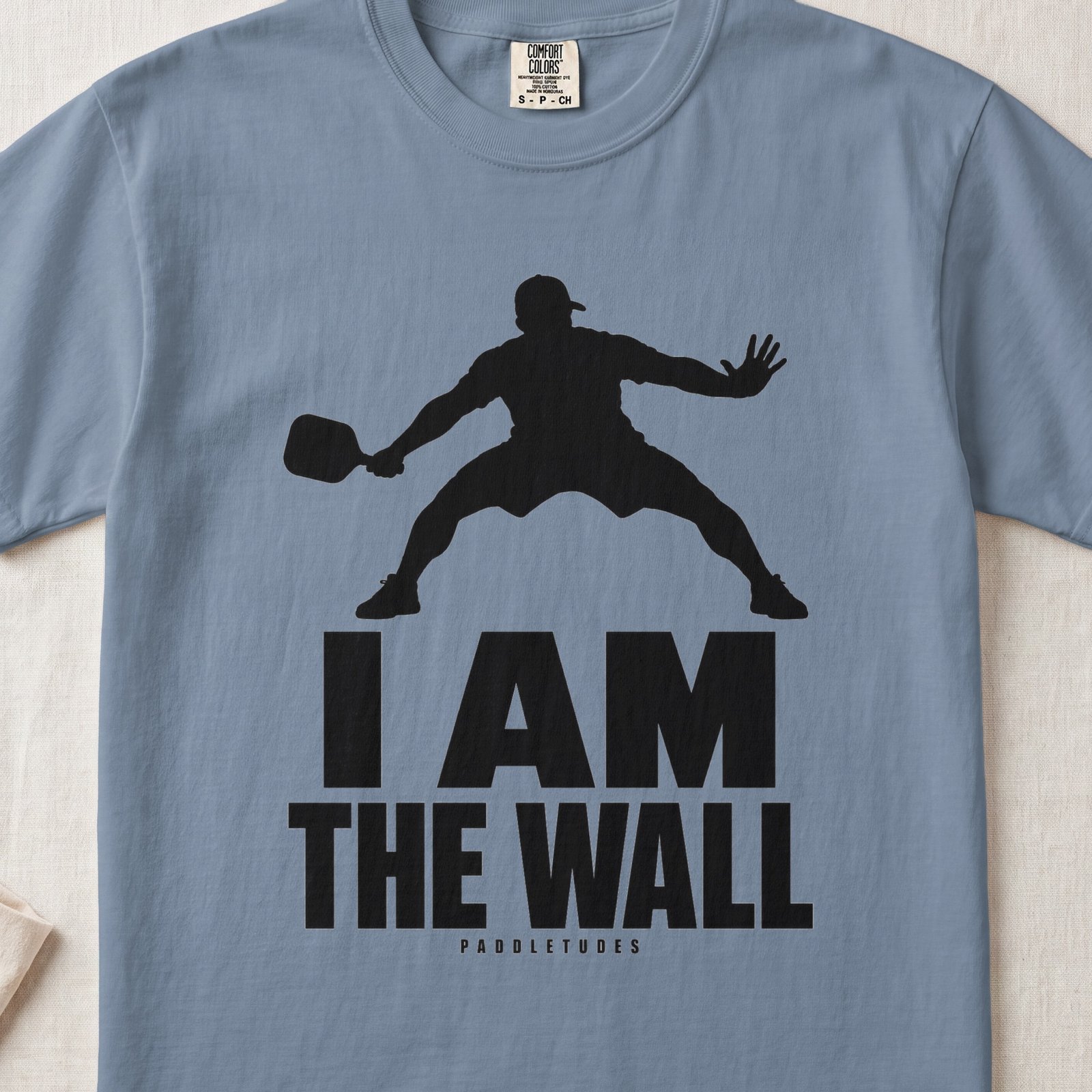
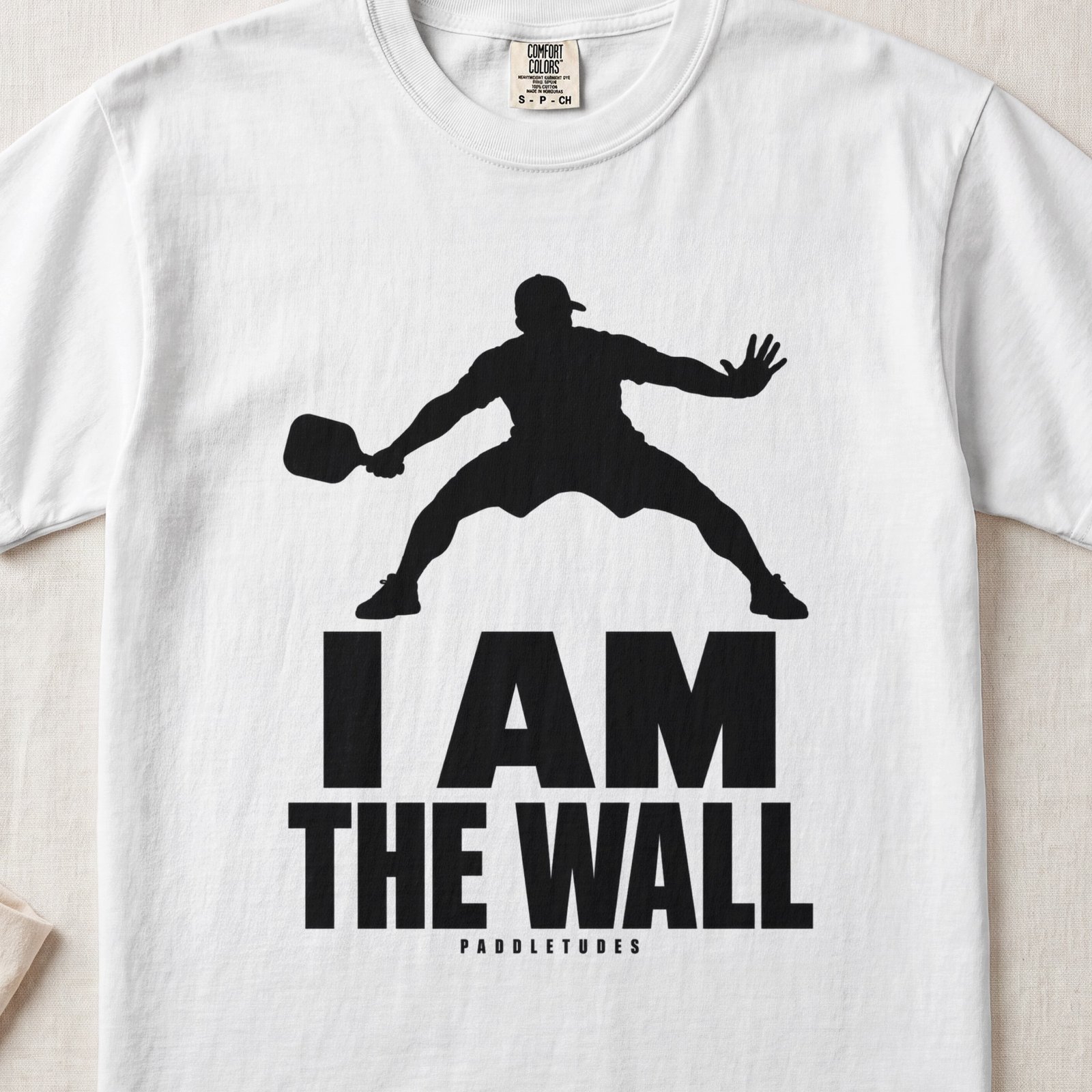
Sports Comfort Colors 1717
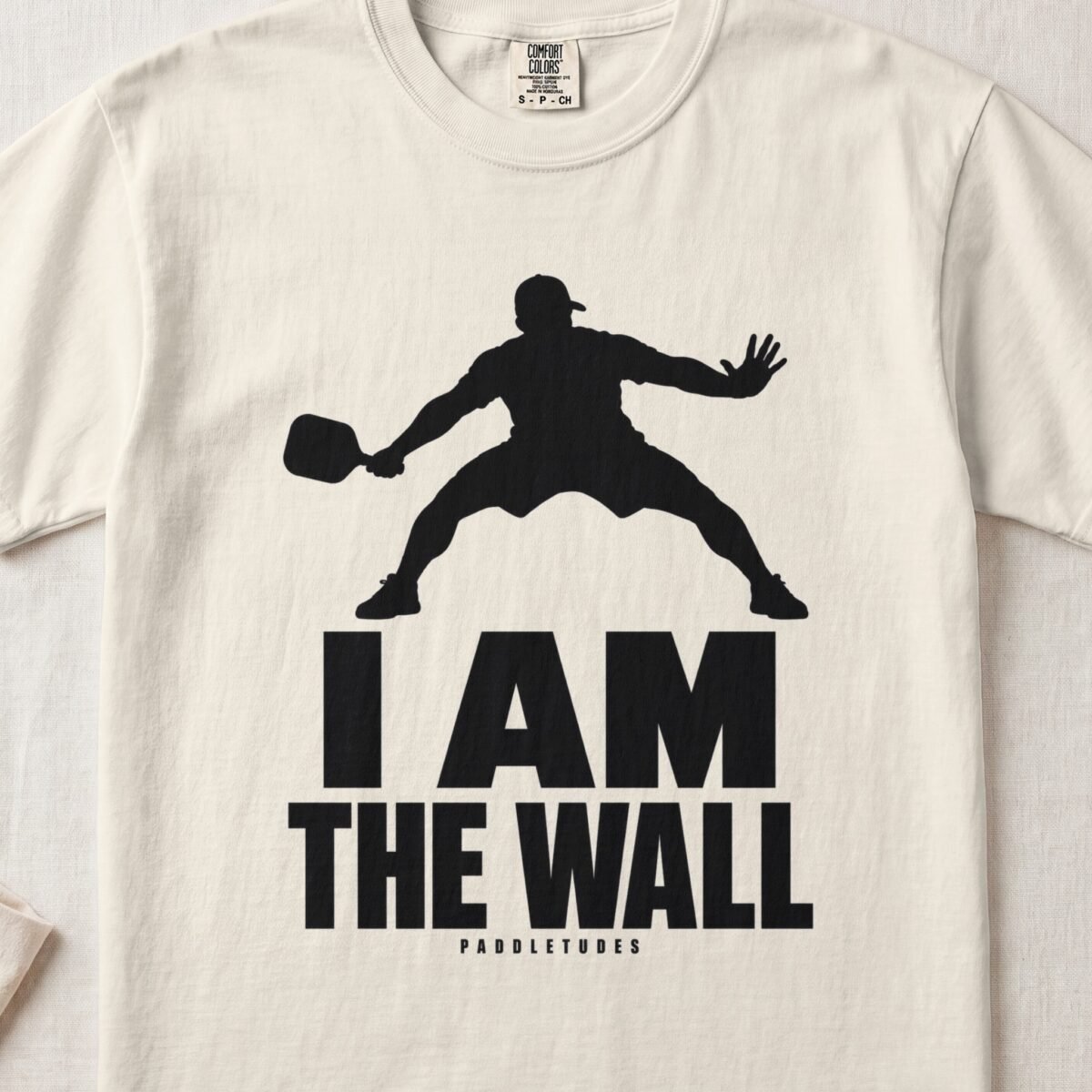
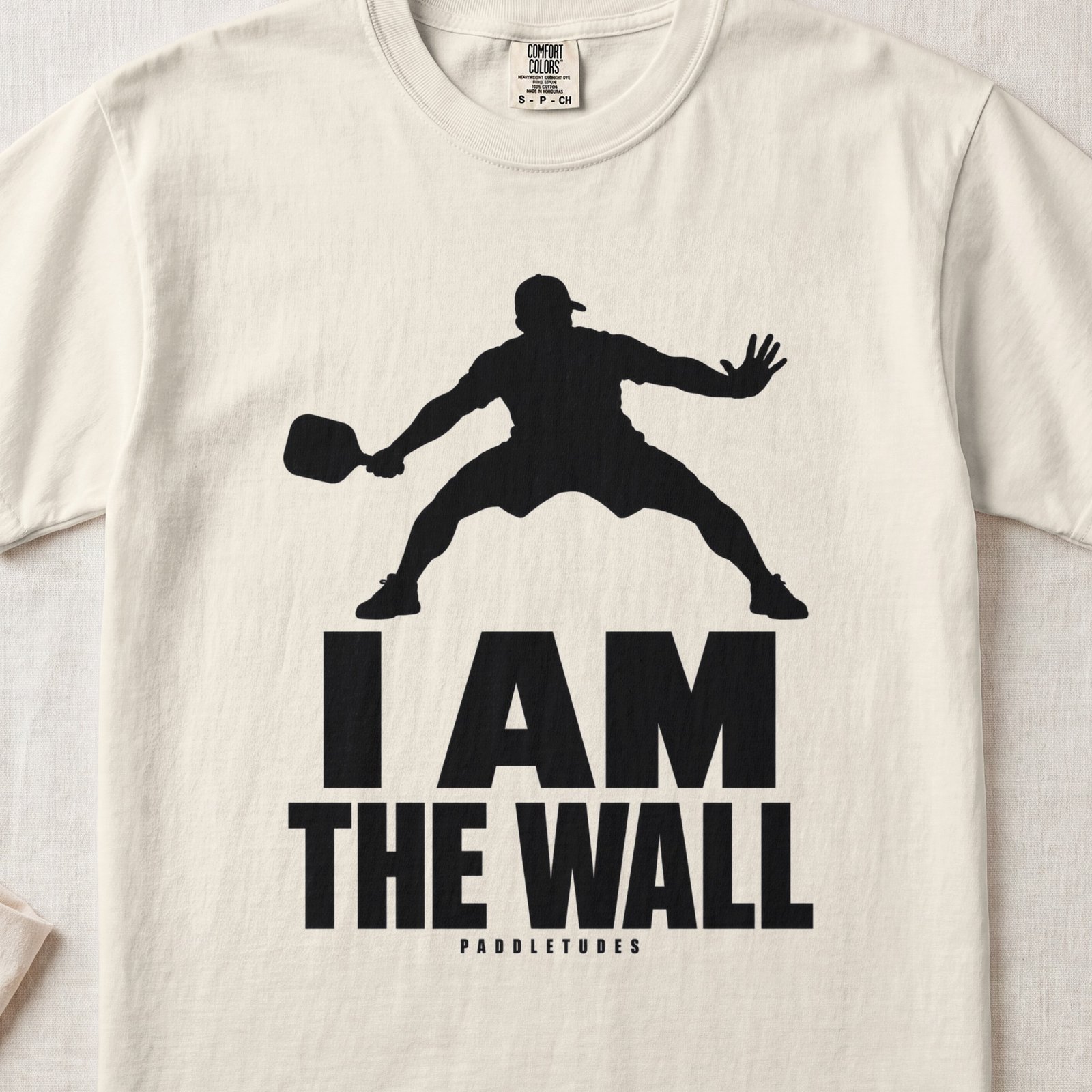
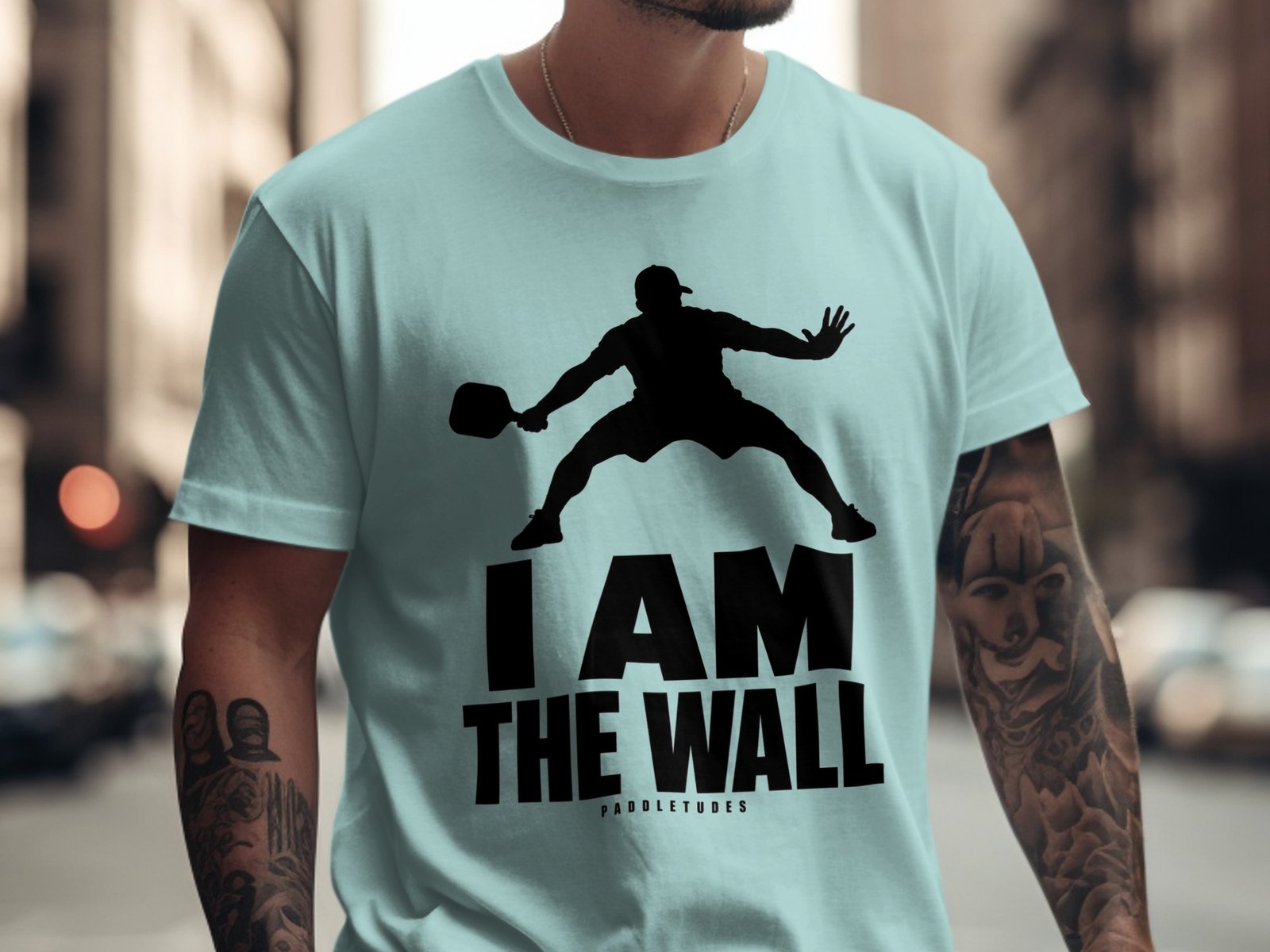
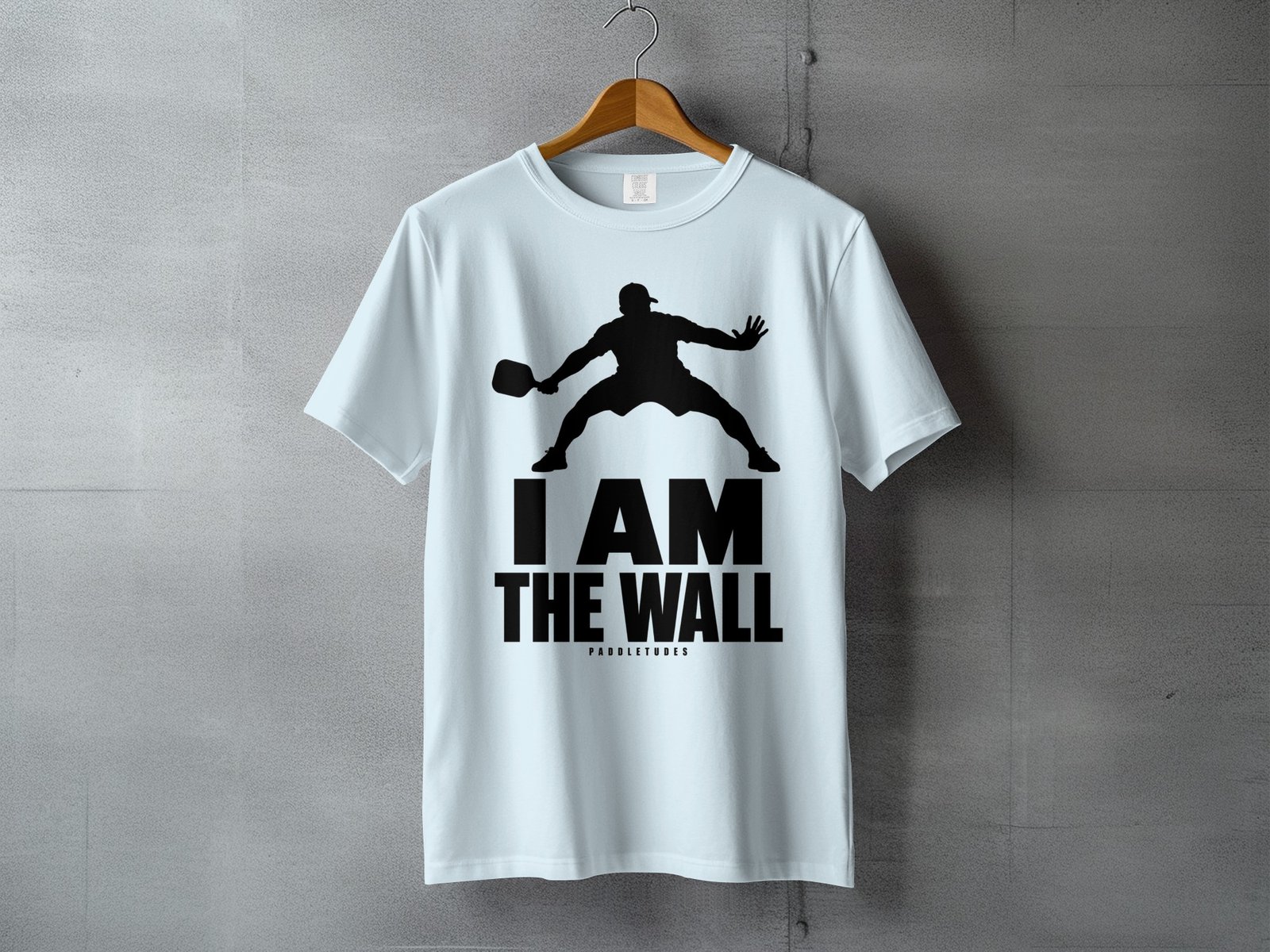
I Am The Wall
$29.99
- Comfort Colors 1717 heavyweight cotton
- Original design · printed to order
- U.S. print partners
I Am The Wall — Pickleball Defense as a Lifestyle
The drive comes in at chest height — fast, flat, aimed at the body to jam the backhand. The paddle barely moves. A slight opening of the face, a grip so loose the handle could slide out, and the ball floats back over the net, lands in the kitchen, and dies. The player who hit the drive stares at it. The player who reset it is already back in position, waiting for the next one. That’s the wall. This shirt is for the player who makes offense feel pointless.
She’s the 57-year-old retired nurse who never played a sport competitively until her daughter dragged her to a beginner clinic four years ago. She doesn’t have a tennis background. She doesn’t have fast hands or explosive footwork. What she has is the ability to stay calm when the ball is coming at her face, to absorb pace instead of matching it, and to send back the kind of soft, low reset that makes aggressive players question their entire strategy. At 3.0, she won by not losing. At 4.0, she wins by making her opponents play one more shot than they planned, every single point, until the unforced errors pile up and the score tilts her way without a single highlight reel moment.
The wall at 3.0 is passive — the ball comes back because the player can block, but the blocks are high and attackable. By 3.5, the blocks start landing in the kitchen instead of popping up, and the difference is enormous. By 4.0, the wall player doesn’t just block — she resets with intention, choosing whether to redirect cross-court or straight ahead based on which opponent is less ready. By 4.5, the reset becomes a weapon. She reads the drive before it arrives, positions the paddle face while the ball is still on the opponent’s side, and places her reset into the exact spot that forces an uncomfortable next shot. The progression isn’t about hitting harder. It’s about absorbing better, and there is no ceiling on absorption.
The drill that builds this game is simpler than it looks and harder than it sounds. One partner stands at the kitchen line and feeds drives — flat, hard, chest height. The wall player stands in the transition zone and resets every ball into the kitchen. Ten forehands. Ten backhands. Ten body shots at the paddle hip. The goal isn’t power. The goal is quiet — a paddle face so soft and a grip so loose that the ball drops over the net with nothing left on it. USA Pickleball’s reset technique guide describes the fundamentals: zero backswing, contact out front, weight balanced, body still before the paddle makes contact. The player who drills this for fifteen minutes before every open play session will improve faster than the player who plays three hours without it.
The paddle for this game absorbs rather than amplifies. A thicker core — 16 millimeters — deadens the incoming pace and gives the wall player more control on the redirect. Joola’s paddle selection guide breaks down how core thickness affects feel, and the control-oriented models are built for exactly this player — someone who doesn’t need to generate power because power is what the opponent brings. The wall just sends it back where power can’t help.
If someone you know drove two hours to a tournament, drew a bracket full of bangers, and ground through every match by getting every ball back without ever speeding up, this is the shirt that validates the approach. The scoreboard already validated it. The shirt just makes it visible to everyone at the courts who watched it happen and still can’t explain how someone who never hits hard wins so often.
Every Ball Back is the other side of this identity — the same defensive philosophy through relentless pursuit instead of immovable positioning. Where the wall stays planted and absorbs, Every Ball Back chases and lunges, covering court that has no business being covered. Same family, different engine. For the player who refuses to speed up when the opponent is begging for a firefight, No Speed Up is the patience manifesto. And for the soft hands that make the wall possible, Can’t Teach Touch is the companion declaration — some things you drill, and some things were already there. Find courts where the defensive game thrives at Pickleheads.
Printed on a Comfort Colors 1717 garment-dyed heavyweight tee with water-based DTG ink — sizing and care details here.
What Is a Reset Shot in Pickleball
A reset is a soft, controlled shot that takes the pace off an opponent’s hard drive and drops the ball into the kitchen, neutralizing their attack and shifting the rally back to neutral. It’s the most important defensive shot in the game — the difference between staying in the point and watching the ball fly past you or pop up for a put-away.
The mechanics are counterintuitive. When a fast ball comes at you, every instinct says to grip harder and swing bigger. The reset requires the opposite. Grip pressure at a two or three on a ten-point scale — so loose the paddle could almost fall out of your hand. No backswing. The paddle face opens slightly upward, and the shot is a gentle push from the legs and shoulder, not a swing from the arm. The ball makes contact out front of the body with the player’s weight balanced and feet still. Any movement during contact — backpedaling, lunging sideways, leaning — causes the ball to pop up instead of dropping low.
The reset can be hit as a volley out of the air or off the bounce, and most players find the bounce version easier because it provides an extra beat of reaction time. At the 3.5 level, learning to reset consistently is what opens the path to the kitchen line — without it, every third shot that doesn’t land perfectly keeps you pinned at the baseline. At 4.0 and above, the reset becomes directional. Instead of just getting the ball back softly, the player chooses where the reset lands to create a weaker reply from the opponent.
The player wearing this shirt has made the reset automatic. Not every drive is worth matching. Not every attack is worth answering with a counter-attack. Sometimes the best response to aggression is patience, a quiet paddle, and a ball that lands in the kitchen so softly the opponent has to generate their own pace all over again. That’s what makes the wall a wall.
-
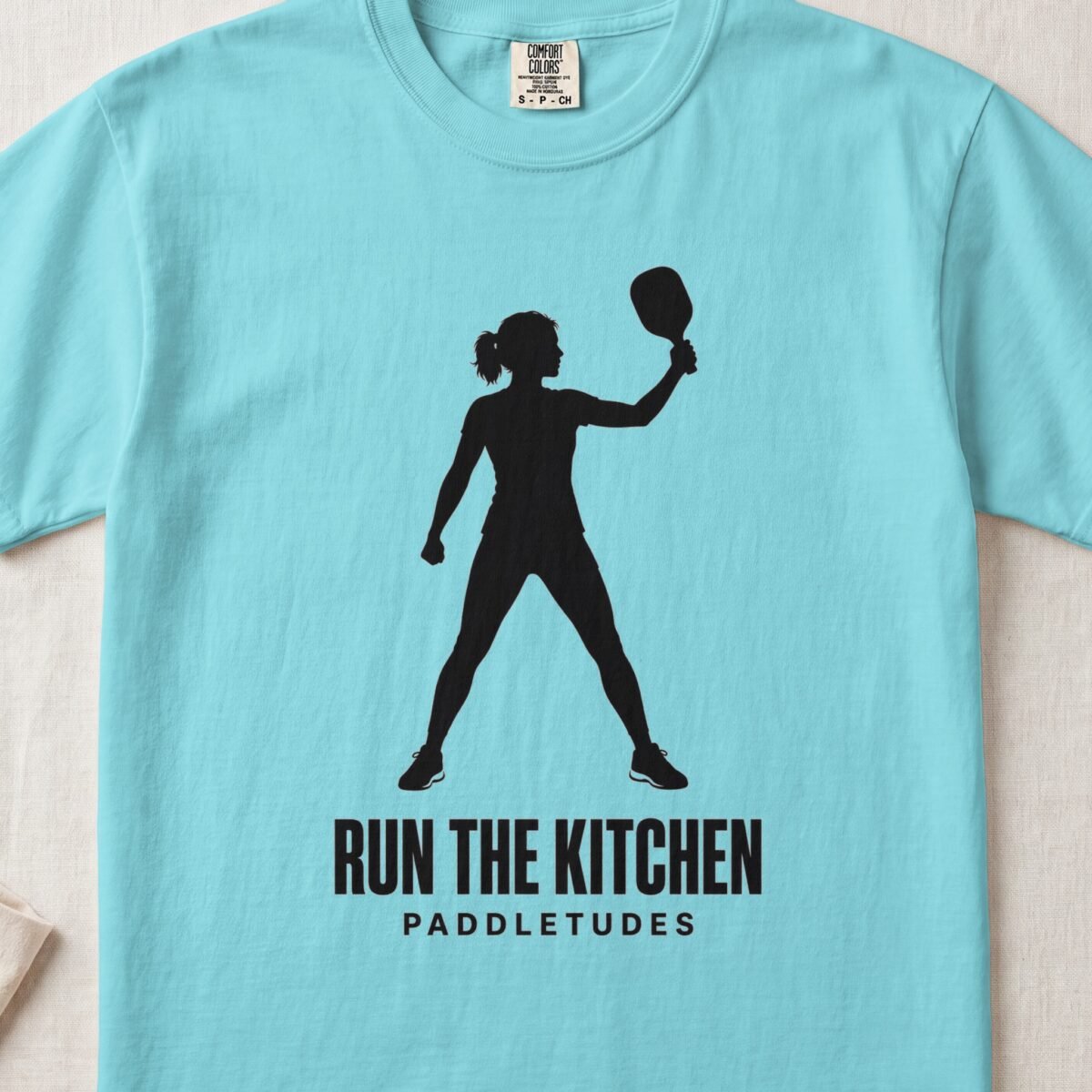
Run The Kitchen
$29.99 Select options This product has multiple variants. The options may be chosen on the product page -
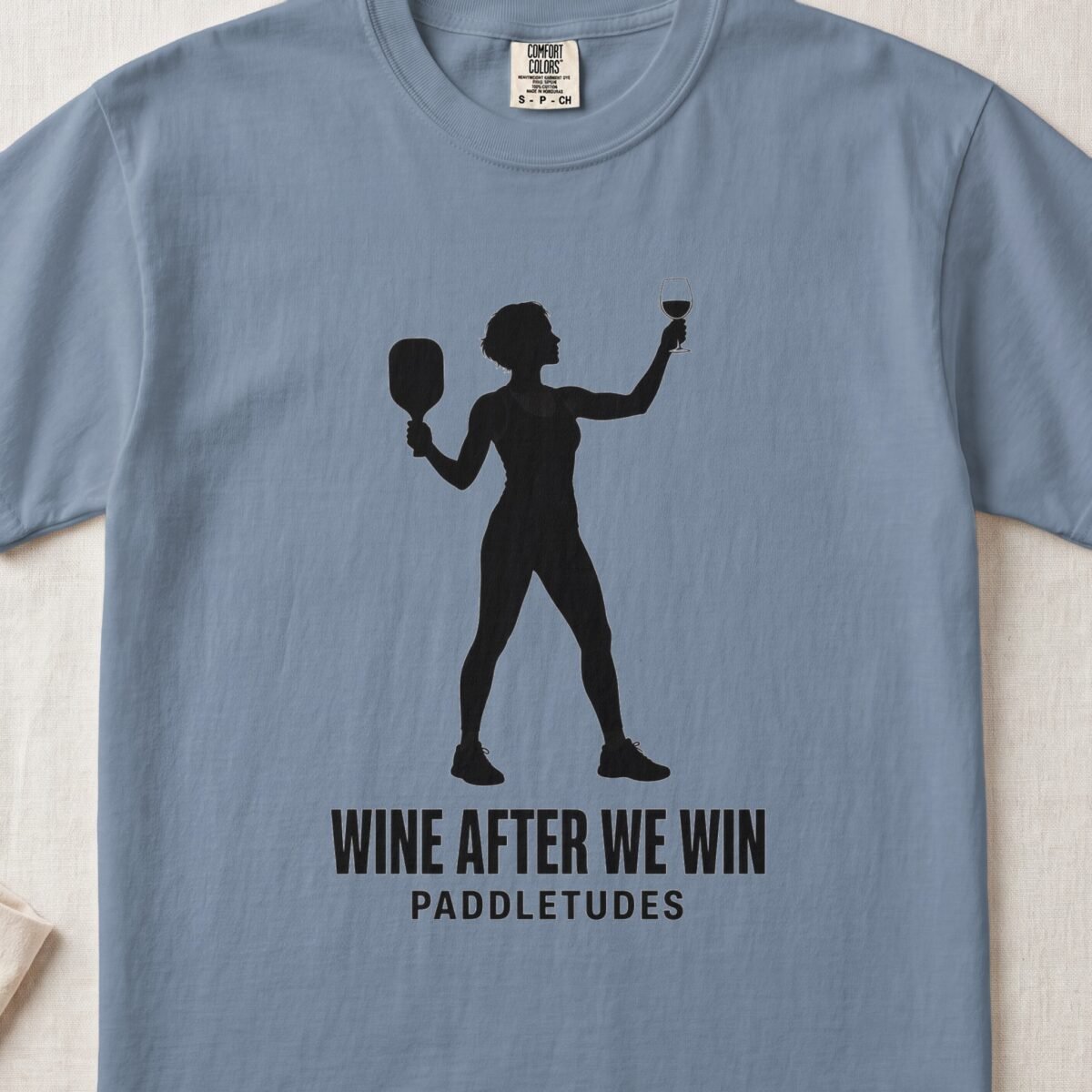
Wine After We Win
$29.99 Select options This product has multiple variants. The options may be chosen on the product page -
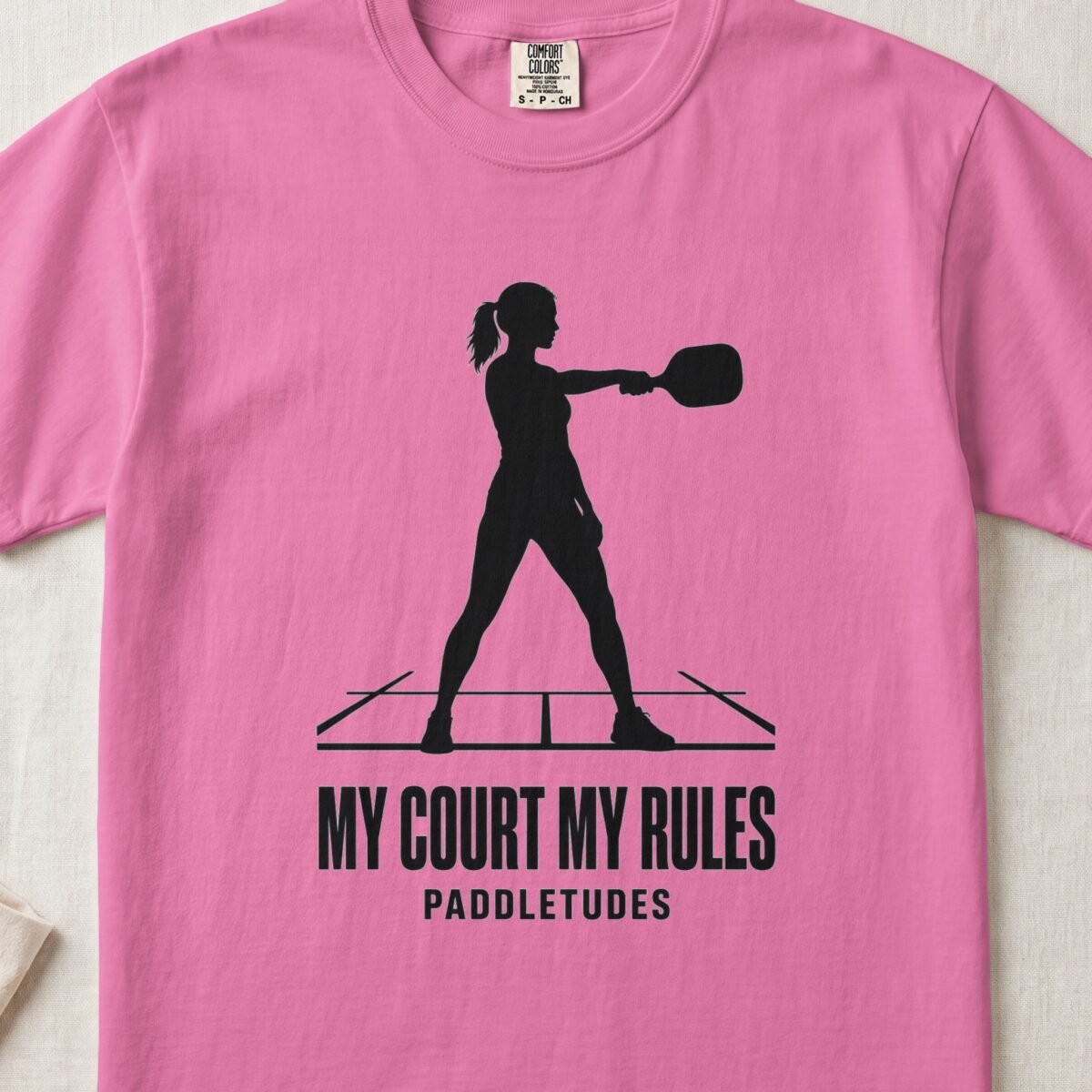
My Court My Rules
$29.99 Select options This product has multiple variants. The options may be chosen on the product page