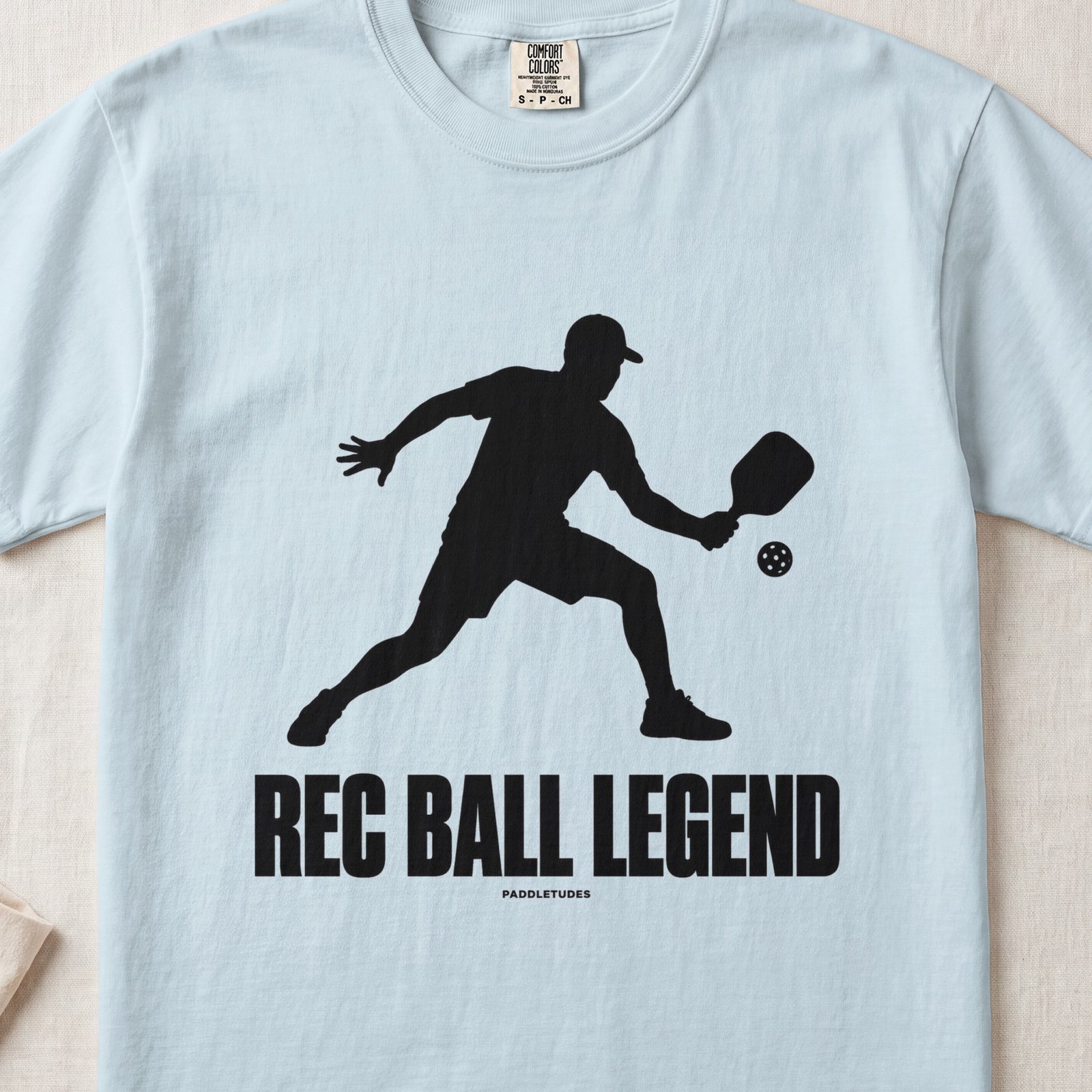
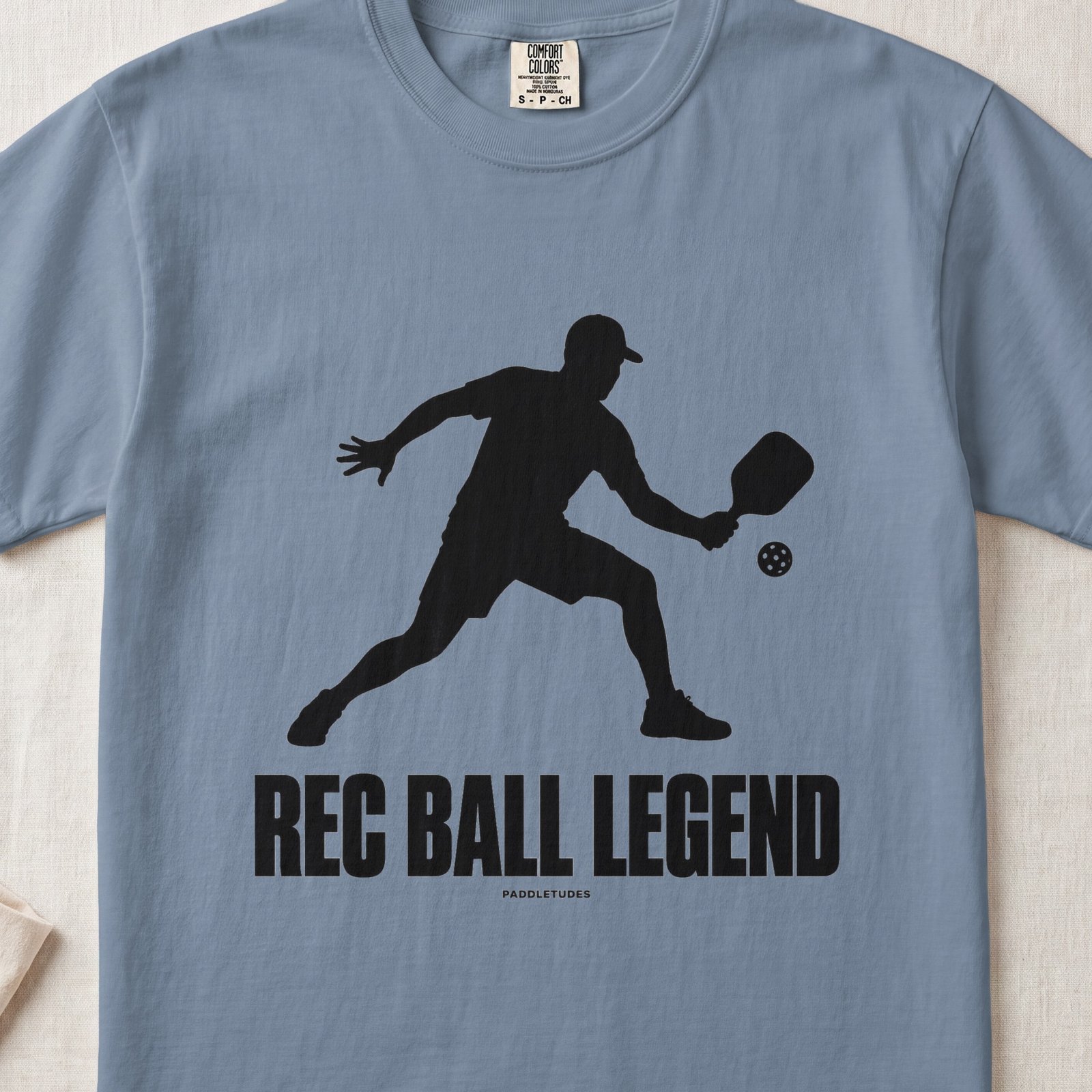
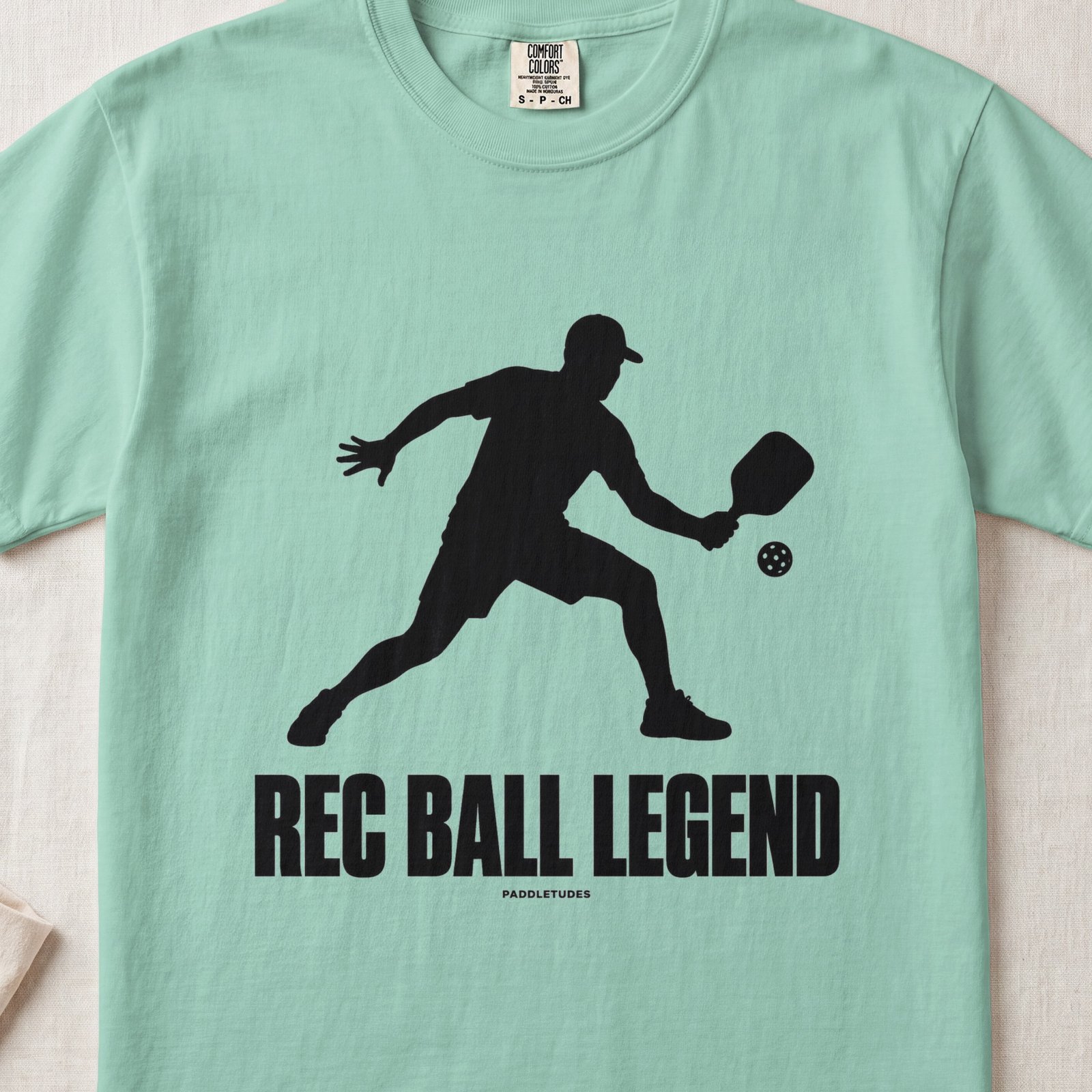
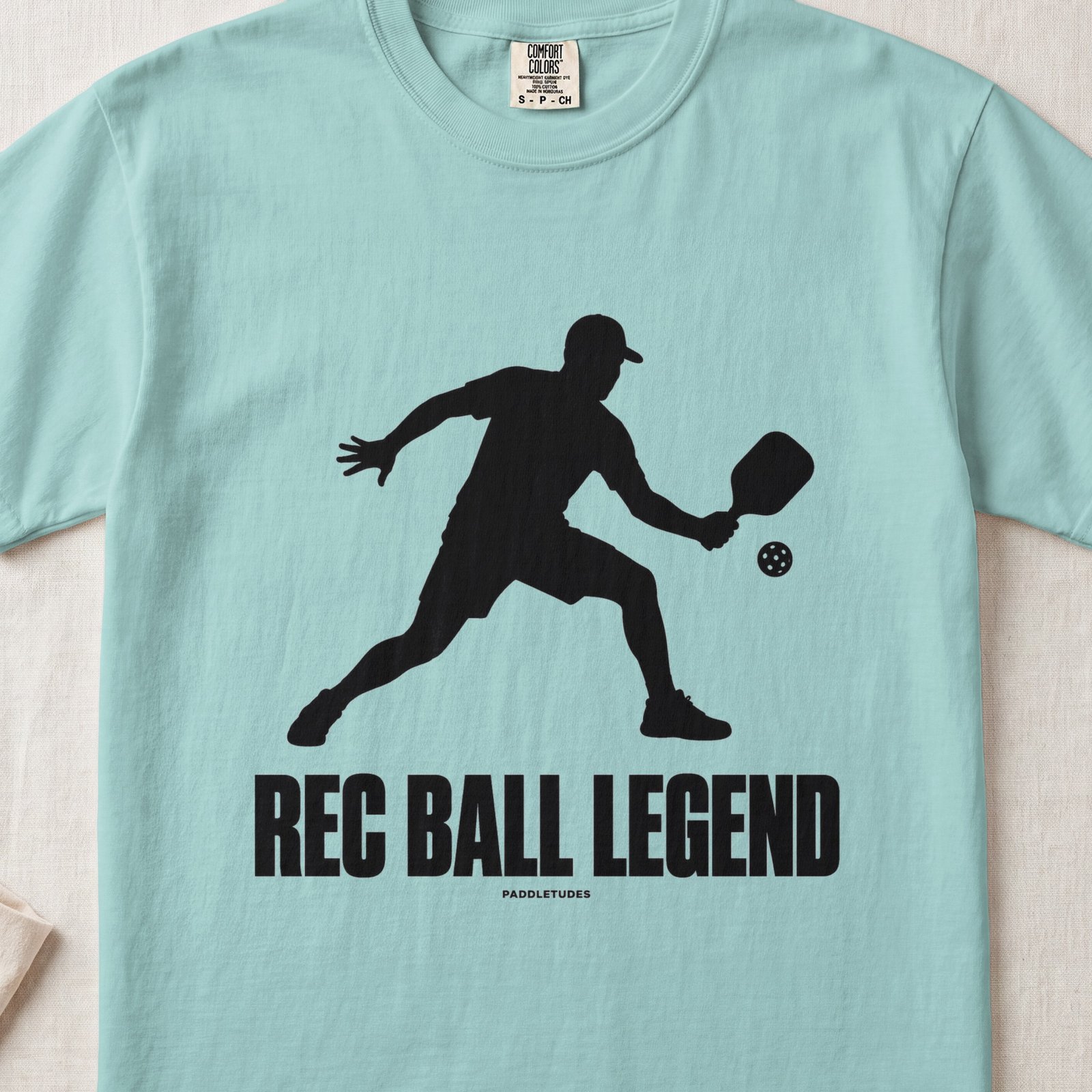
Sports Comfort Colors 1717
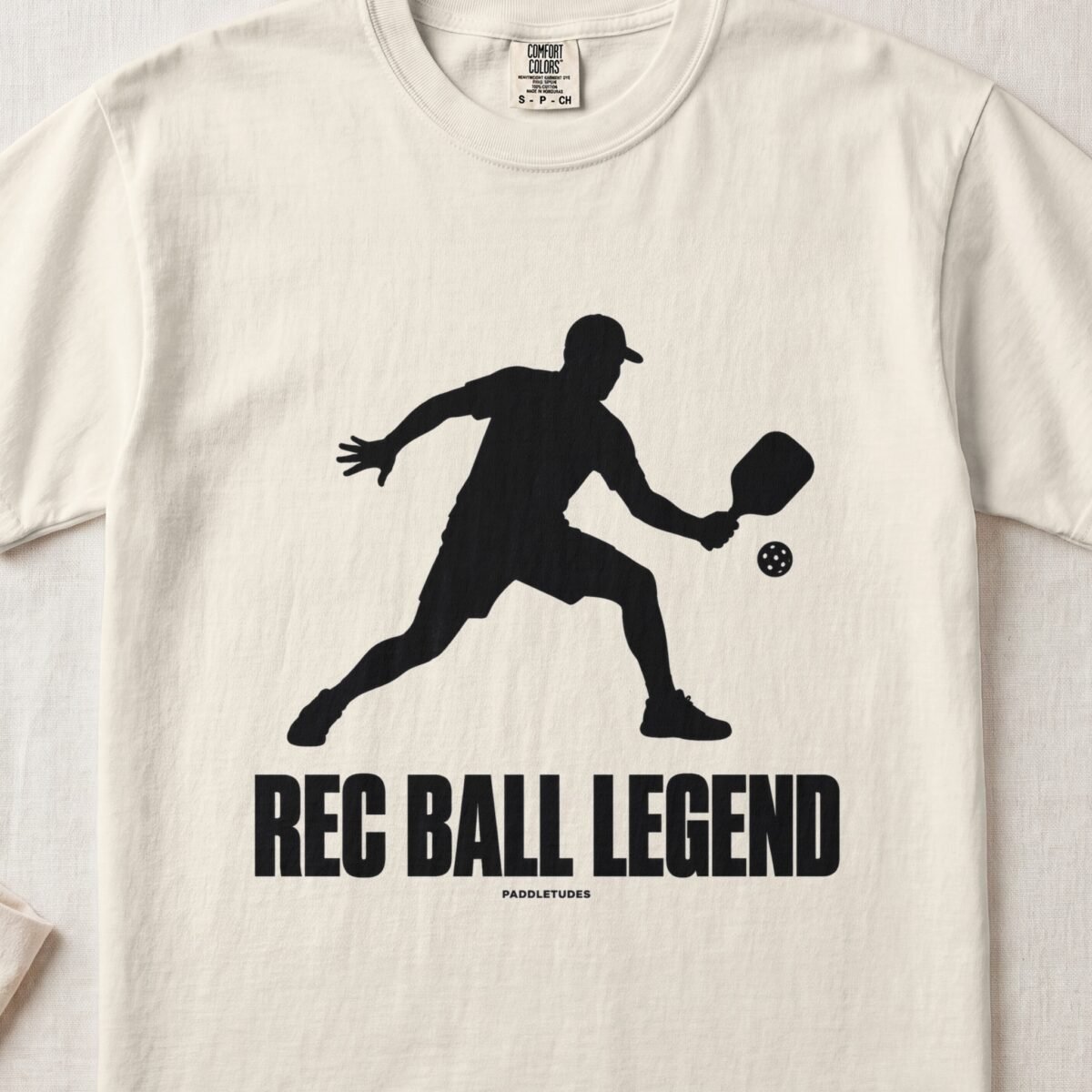
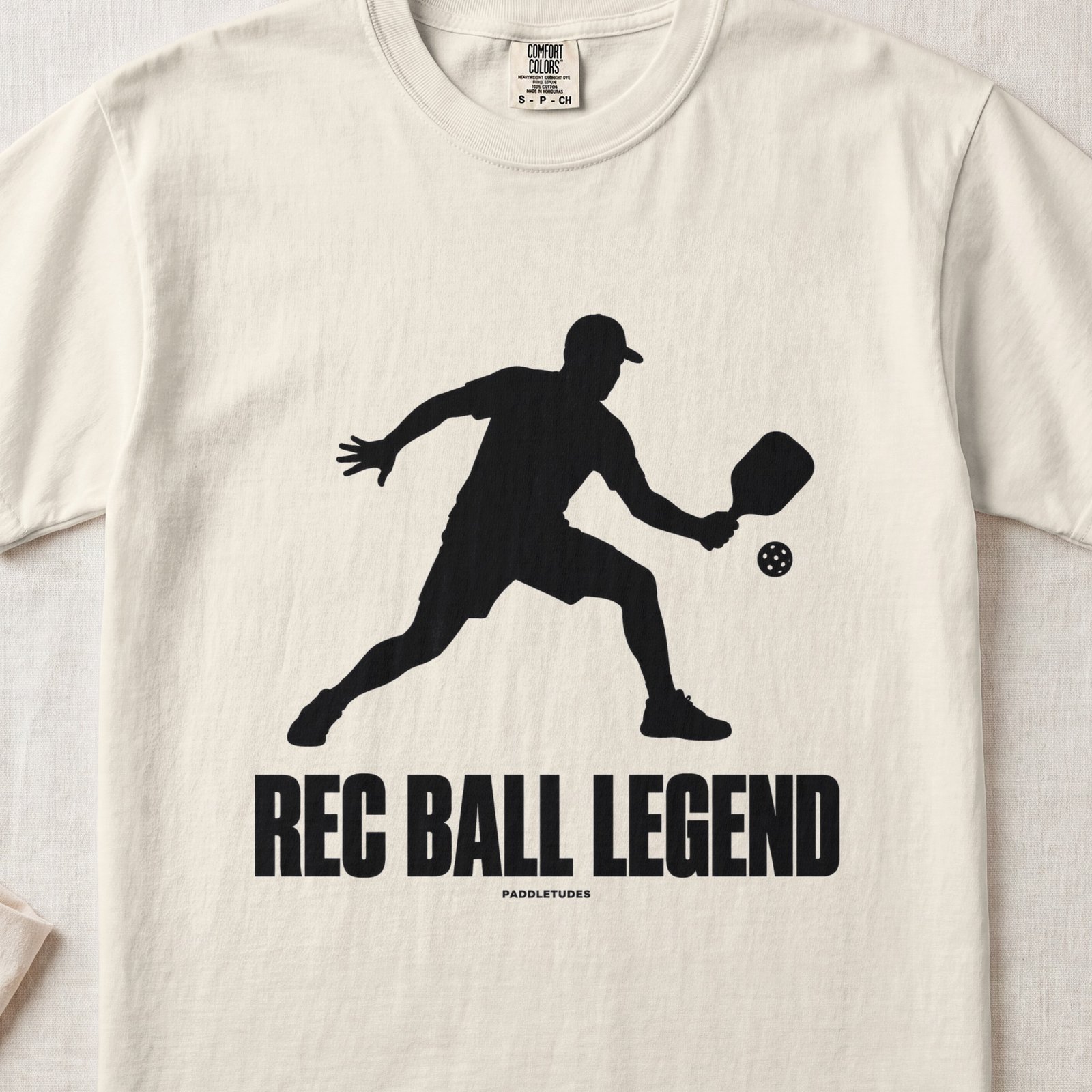
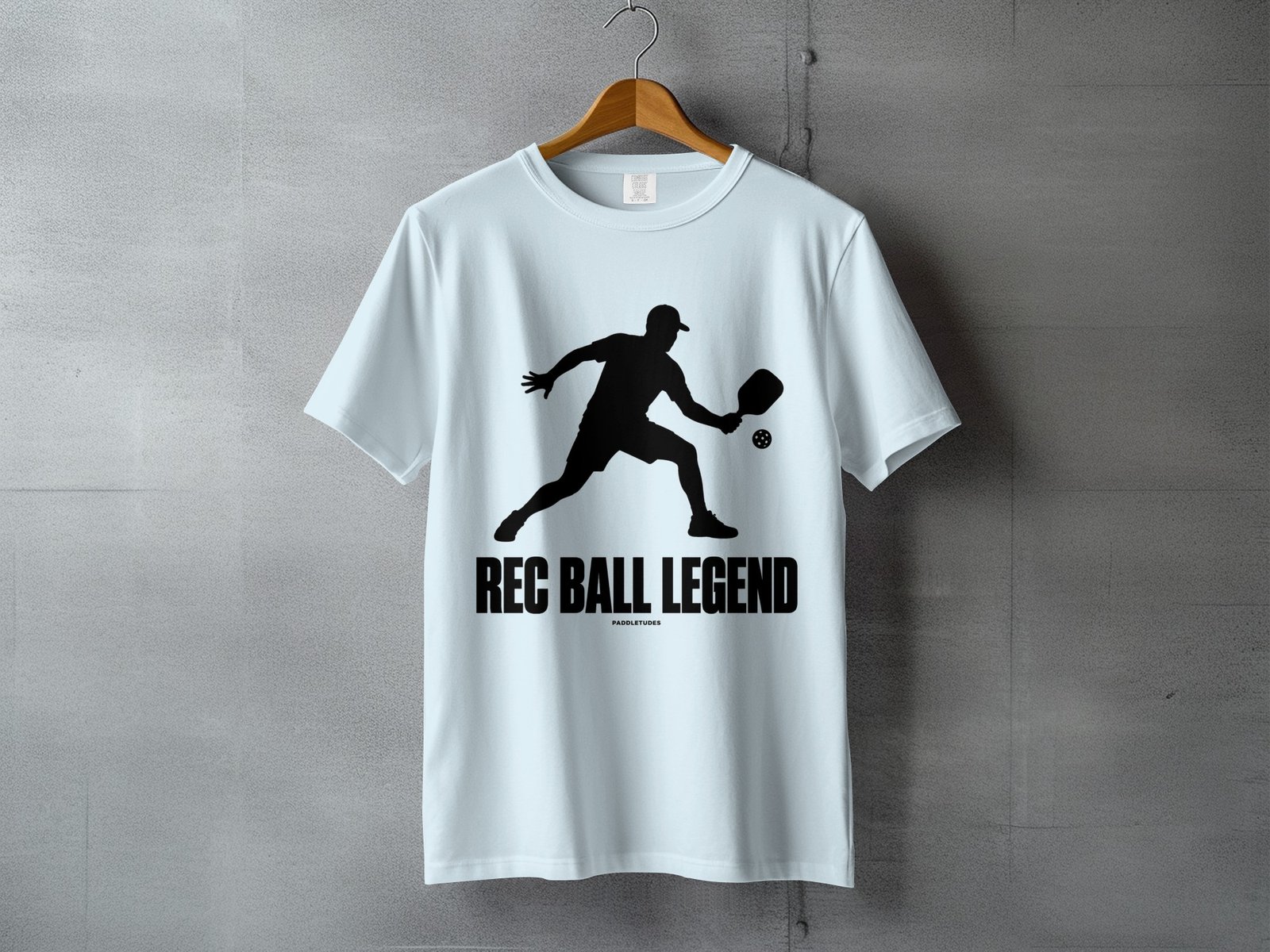
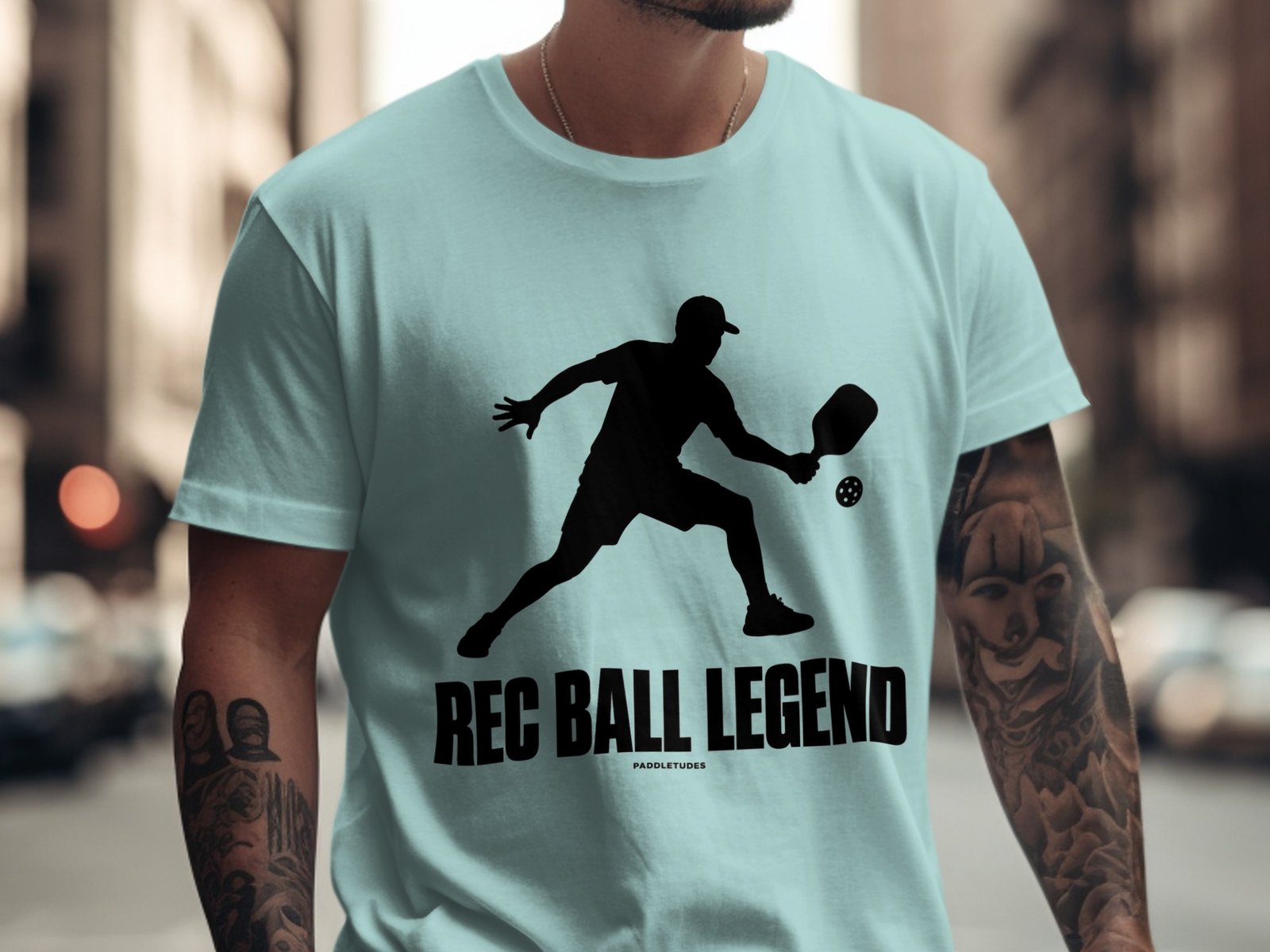
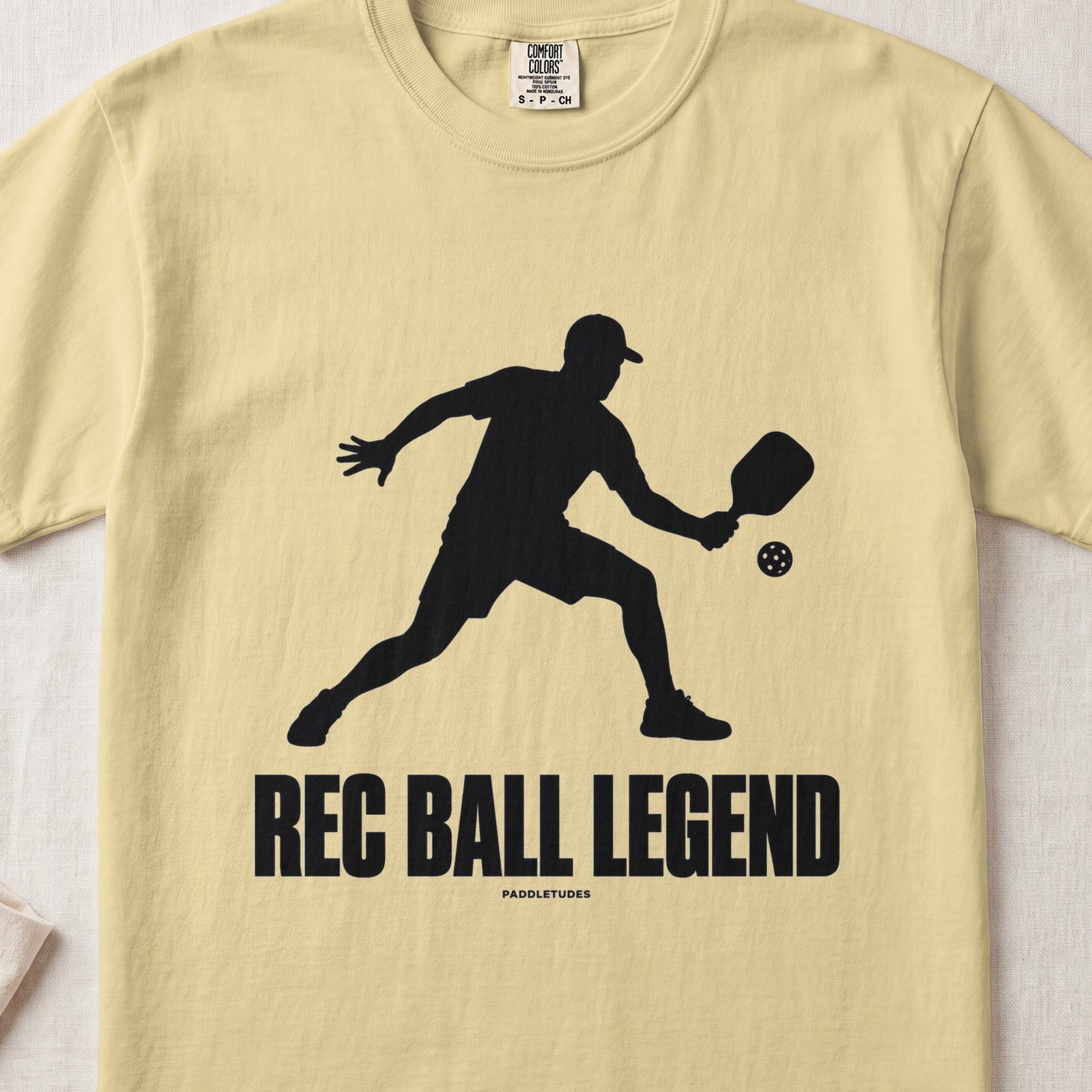
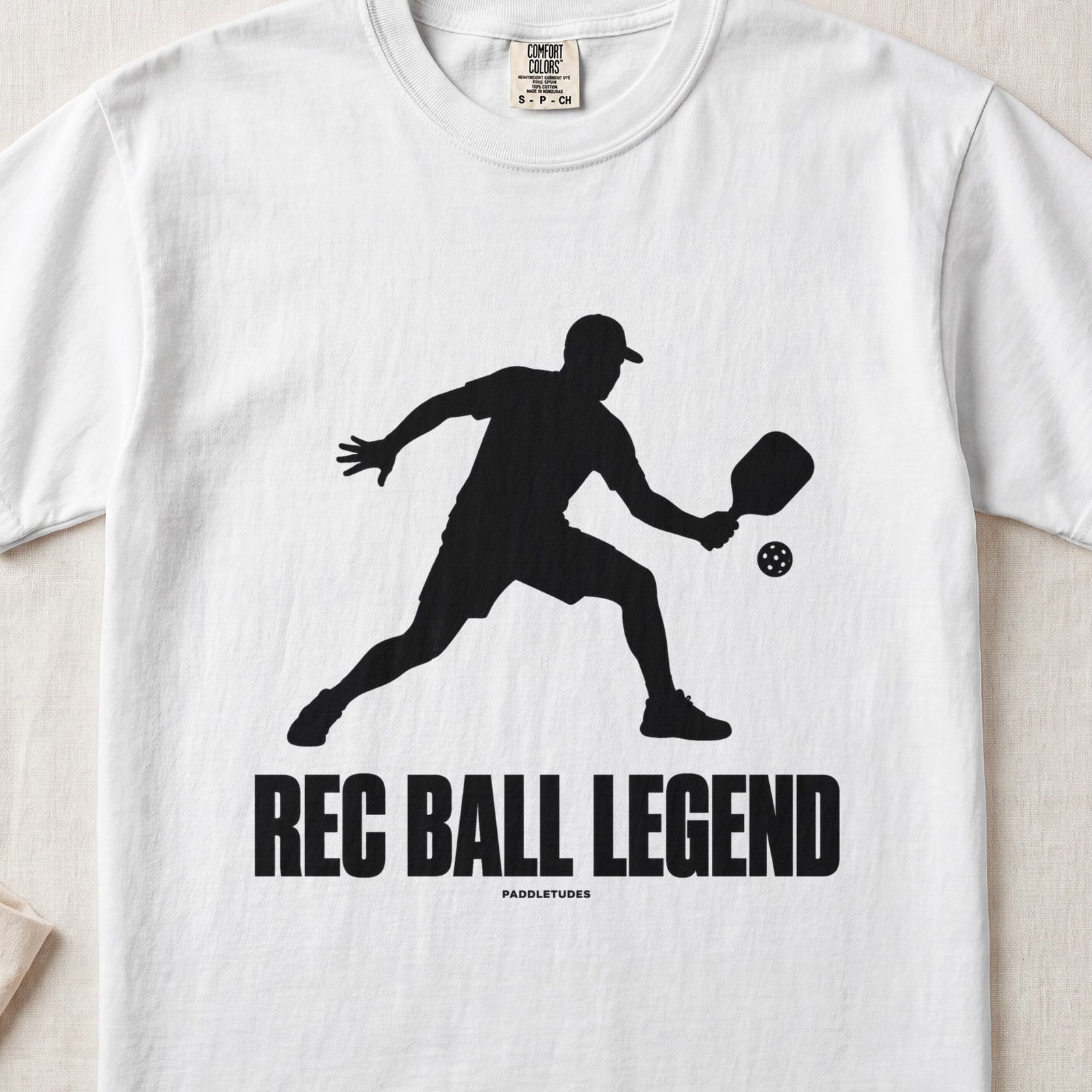
Rec Ball Legend
$29.99
- Comfort Colors 1717 heavyweight cotton
- Original design · printed to order
- U.S. print partners
His Name’s on the Board in Permanent Marker
His name is on the rotation board at Sunset Park in permanent marker because someone got tired of rewriting it every morning. He’s 60 years old, retired from the postal service after thirty-two years, and he has never taken a pickleball lesson, never entered a tournament, never downloaded the DUPR app, and never once googled “how to improve my third shot drop.” He plays four mornings a week in the same pair of New Balances he bought at Costco, carries his paddle in a grocery bag, and beats players half his age who show up in matching kits with $250 paddles and pre-game stretching routines. Nobody taught him the game. The game taught him, one morning at a time, for four years straight.
The moment happens the same way every week. A new player joins the rotation — maybe they’re visiting, maybe they just moved to the area, maybe they’re a 4.0 tournament player looking for court time. They see the older guy in the cotton tee and assume they know how this game ends. The first rally tells a different story. His serves land deep. His returns push the opponent back. His dinks die in the kitchen like they were placed there by hand. He doesn’t have a name for what he does — he’s never heard the term “third shot drop” — but the ball goes where he wants it, every time, because he’s hit it from that exact spot on that exact court four thousand times. The new player loses 11-5 and asks who he is. He’s nobody. He’s just the rec ball legend.
The difference between the rec ball legend and the competitive player isn’t skill — it’s context. He’s never played under pressure from a scoreboard that matters beyond bragging rights. He’s never adjusted his game for a specific opponent he scouted. He’s never played a match where losing meant elimination. What he has is something no tournament can teach: total comfort on a court. Zero nerves. Zero hesitation. He sees the ball and hits it the way he’s been hitting it since his first week, refined by thousands of reps in the same environment, against the same rotation of players, on the same surface. That consistency is invisible in a rating system, because the rating system only counts matches that get reported. His four thousand mornings at Sunset Park don’t count. They just show up in the scoreline.
The paddle in his grocery bag isn’t the newest model. It’s the one he bought three years ago when his first paddle cracked, and he picked it because it was on sale and felt right in his hand. The rec ball legend doesn’t chase gear — gear chases relevance with players like him. But the paddle that rewards this player is one with a forgiving sweet spot and a balanced weight that doesn’t punish off-center contact, because the rec player’s swing is built on feel rather than textbook mechanics. Pickleheads lists courts and open play sessions by location and skill level — the tool for finding the next Sunset Park, wherever you happen to live.
The drill for the rec ball legend isn’t a drill at all. It’s showing up. Four mornings a week, same time, same court, same rotation. Fifteen games before lunch. What looks like casual play is actually the most effective training program in pickleball — high-volume reps against varied opponents with zero structure and zero pressure. The formal version of this, for players who want to replicate it deliberately, is simple: play ten full games in a row with different partners and opponents. Don’t work on anything specific. Just play. Track nothing except whether you won or lost. After ten games, the patterns emerge on their own — the shot that keeps failing, the position you keep getting caught in, the opponent you can’t figure out. The rec ball legend has been running this drill unconsciously for years.
When someone moves into an apartment near the courts — when they picked the location partly because they could hear the paddle sounds from the balcony — this is the housewarming gift that says welcome to the neighborhood, welcome to the rotation, and good luck on the board. The shirt doesn’t come with a DUPR rating. It comes with standing.
The rec ball legend’s confidence echoes through our entire pickleball collection. Living My Best Court Life is the same energy without the competitive edge — the player who’s out there for the sunshine and the community, not the scoreboard. Dinkin Around captures the casual side of the rec game, where the dink rally IS the entertainment, not the means to an end. And Net Gains is the everyday-player pride that comes from showing up consistently and getting better without a coach, a plan, or a spreadsheet telling you how. Find open play sessions across the country at Chicken N Pickle locations or through USA Pickleball’s places to play directory.
Printed on a Comfort Colors 1717 garment-dyed heavyweight tee with water-based DTG ink — sizing and care details here.
What Is the Difference Between Recreational and Competitive Pickleball
Recreational pickleball is casual, drop-in play — typically open play sessions at public courts or community centers where anyone can show up, put their paddle on the rack, and rotate in. Competitive pickleball is structured play with tracked scores, rated opponents, and consequences for losing — leagues, tournaments, and sanctioned matches where results count toward a DUPR or UTPR rating.
The biggest practical difference is structure. Open play uses a rotation board — four players take the court, play a game to eleven, and the next group cycles in. Partners change every game. There’s no seeding, no bracket, and no record of who won. Competitive play locks you into a bracket or ladder with fixed partners, tracked results, and standings that carry from week to week. The stakes are different, and the way you play shifts because of it. A rec player can try a new shot with no consequences. A tournament player who experiments with a new strategy in a bracket match risks elimination.
The skill overlap is bigger than most people assume. A recreational player who plays four or five times a week for several years develops shot consistency, court awareness, and instincts that rival players who train specifically for competition. The gap between a serious rec player and a mid-level tournament player is often narrower than either group thinks. Where the competitive player has the edge is in pressure management — playing under tension, adjusting strategy mid-match against a specific opponent, and performing when the score is 9-9 and the next point matters. The rec player has never practiced that, because open play doesn’t provide it.
The DUPR rating system attempts to bridge this gap by allowing players to log recreational matches alongside sanctioned results, but most casual play still goes untracked. A player who dominates open play four mornings a week but never enters a tournament shows up as “unrated” in the system, which tells you nothing about their actual ability. The rec ball legend exists in the space between measurement and reality — playing at a level the rating system can’t see because it only counts what gets reported.
-
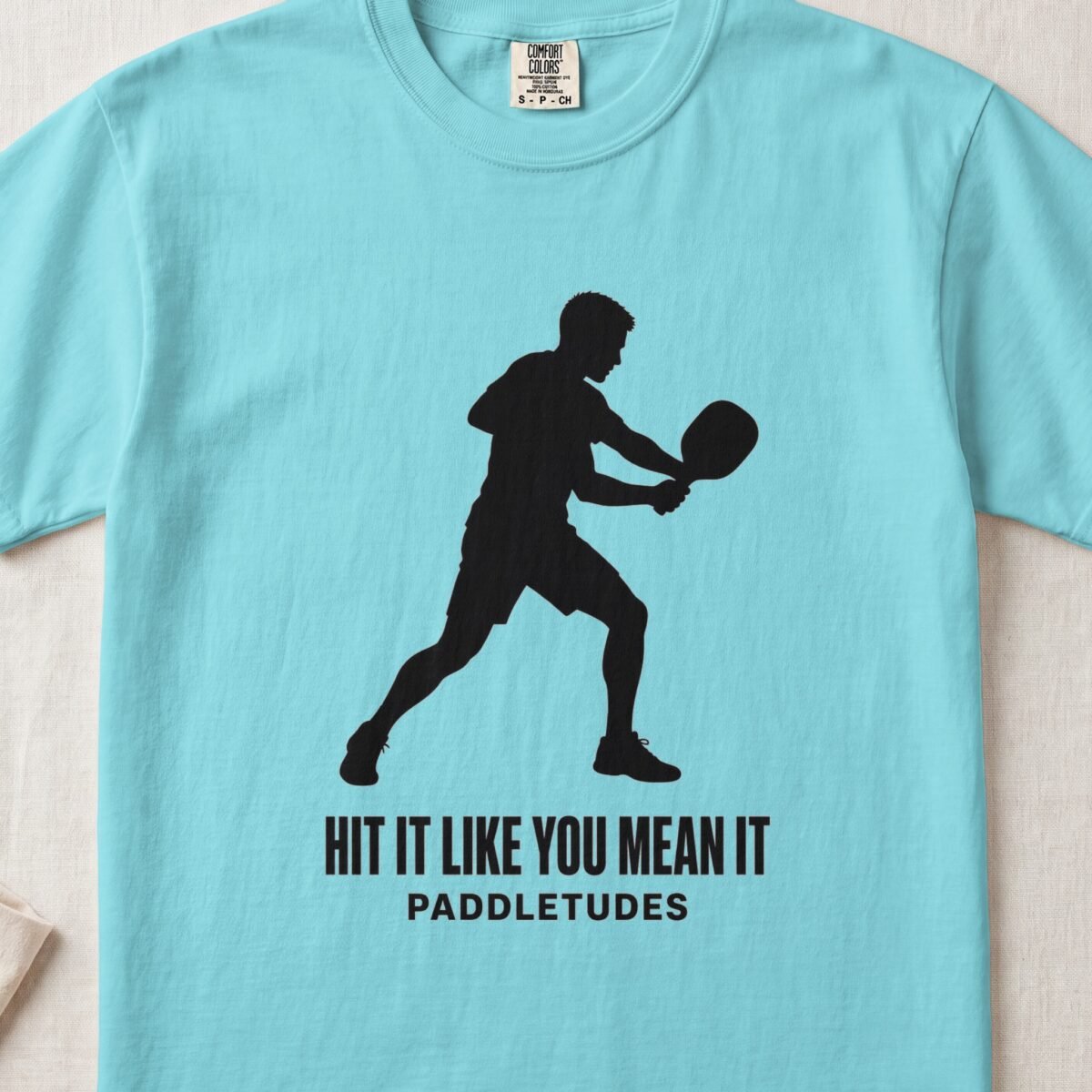
Hit It Like You Mean It
$29.99 Select options This product has multiple variants. The options may be chosen on the product page -
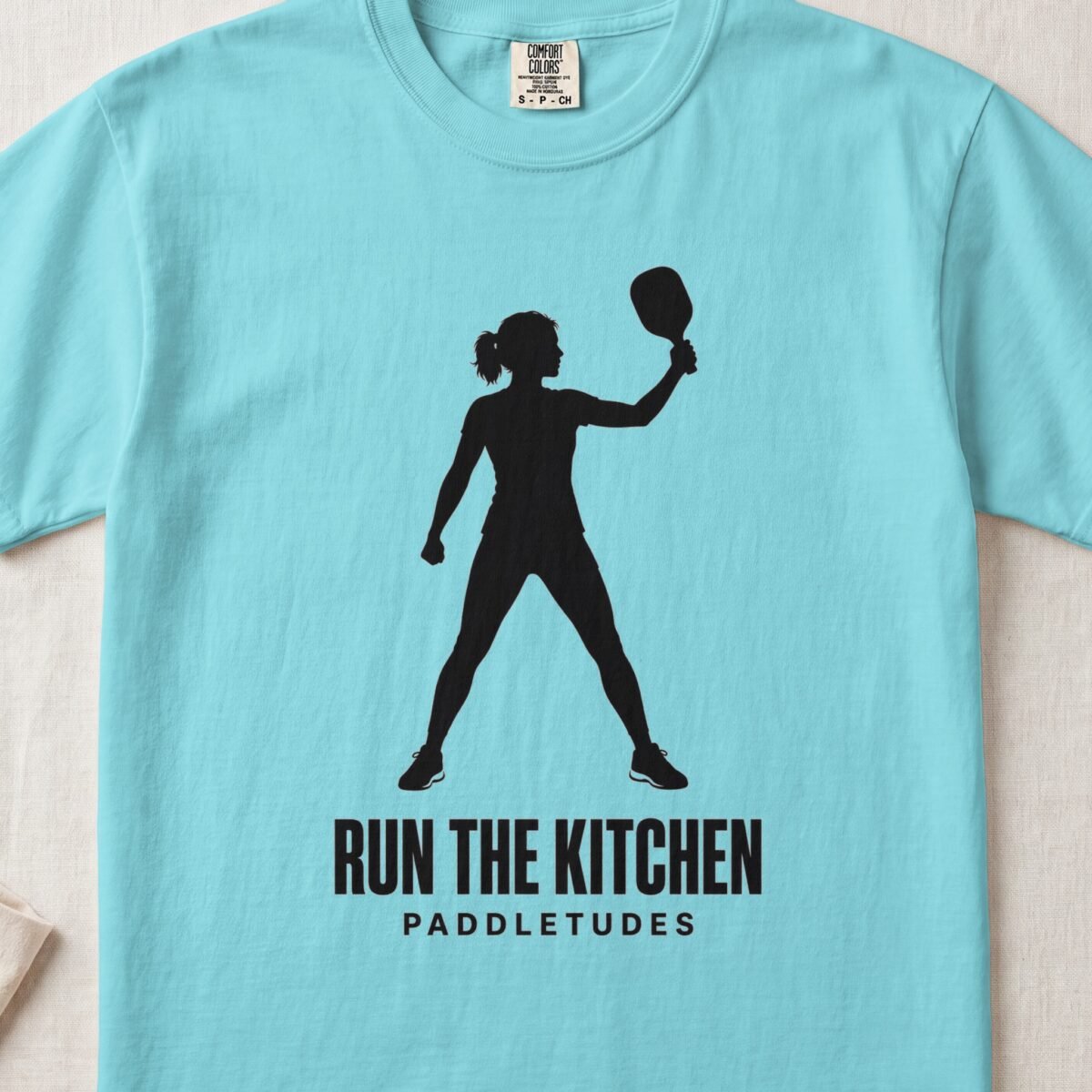
Run The Kitchen
$29.99 Select options This product has multiple variants. The options may be chosen on the product page -
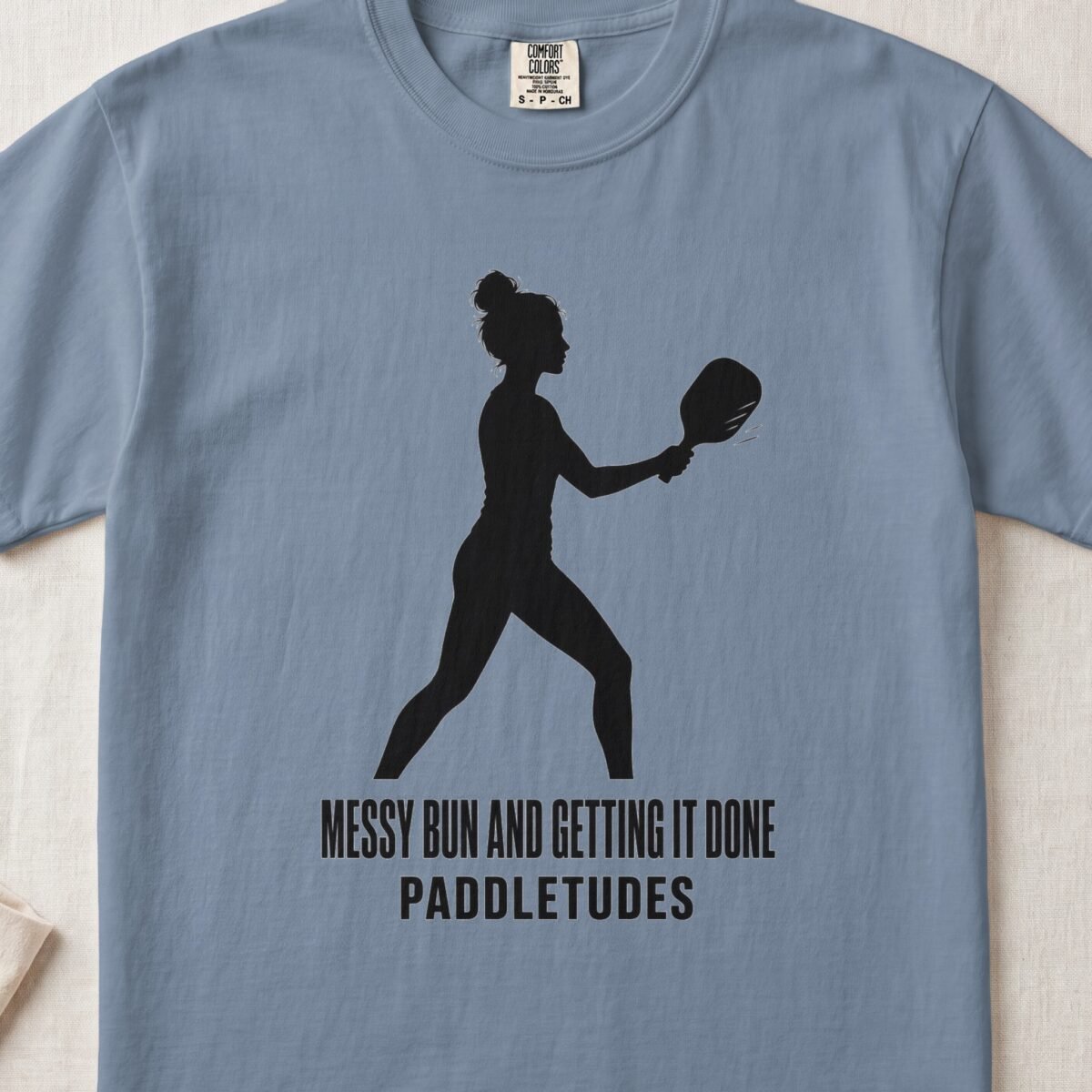
Messy Bun And Getting It Done
$29.99 Select options This product has multiple variants. The options may be chosen on the product page